How Long Does Sod Installation Take?

Sod installation for a typical New Orleans residential yard takes one to two days for the installation itself plus one to two days of site preparation. Small yards under 1,000 square feet can be completed in a single day from prep through installation. Large properties or those requiring significant drainage correction may take three to five days total. Additionally, old grass must be killed with herbicide 14 days before the crew arrives, making the full project timeline from first site visit to completed lawn 17 to 20 days. Big Easy Sod provides clear project timelines during the free quote visit.
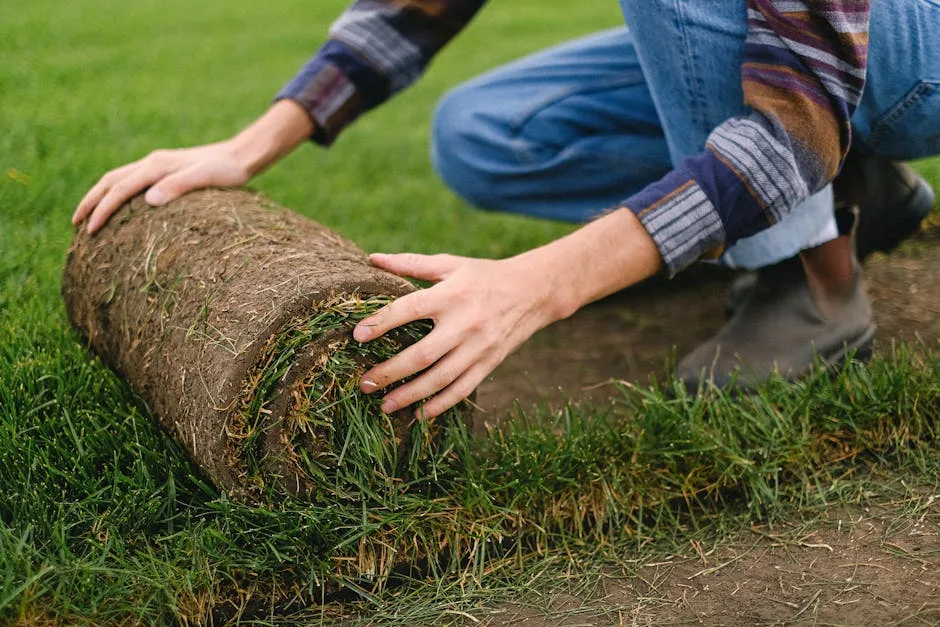
Landscaping crew installing sod efficiently on a residential property

Last Updated: May 2026

One of the most common questions before a sod project is simply how long the whole thing takes from start to finish. The answer varies more than people expect, and most of the variation comes from site prep requirements rather than the installation itself.

Here is the realistic timeline across the three main project scales.

How Long Does Sod Installation Take on a Small Yard?

A small residential yard, under 1,000 square feet of actual lawn area, is typically a one-day project for an experienced crew. Site prep including old grass removal, light grading, and soil amendment takes two to three hours. Sod delivery and installation on a yard this size adds another two to three hours. A crew of three to four completes a small yard by early afternoon on the same day prep begins.

This timeline assumes no significant drainage issues and no extensive grading work. A small yard with a serious low spot or drainage problem adds a day for correction before prep can begin. Understanding what site conditions affect the total installation cost also shows how drainage work changes the budget, not just the schedule.

How Long Does a Typical Residential Sod Installation Take?

A mid-size residential yard in the New Orleans metro area typically has 2,000 to 5,000 square feet of actual lawn area. For this range, the realistic timeline is two days: one for site prep and one for sod installation.

Day one covers old grass removal, grading, soil amendment, rototilling, and final surface raking. Day two covers sod delivery and installation. The crew lays sod in an offset brick pattern, cuts to fit around beds and structures, and finishes edges by hand. At Big Easy Sod, prep is done the day before so sod goes down on fresh, workable soil the following morning.

The full process of what yard preparation involves before sod arrives explains why the prep day is a separate step rather than a same-day rush.

How Long Does Large Property Sod Installation Take?

Properties over 5,000 square feet and commercial installations are two to five day projects depending on complexity. Large properties often have varied site conditions across different zones, some sections drain well while others hold water, requiring different amounts of grading and amendment work in each area.

The physical volume of sod also takes time to install. A 10,000 square foot lawn requires roughly 80 to 100 pallets of sod, each weighing 2,000 to 3,000 pounds. Moving, cutting, and laying that volume correctly is two full days of installation work for a full crew.
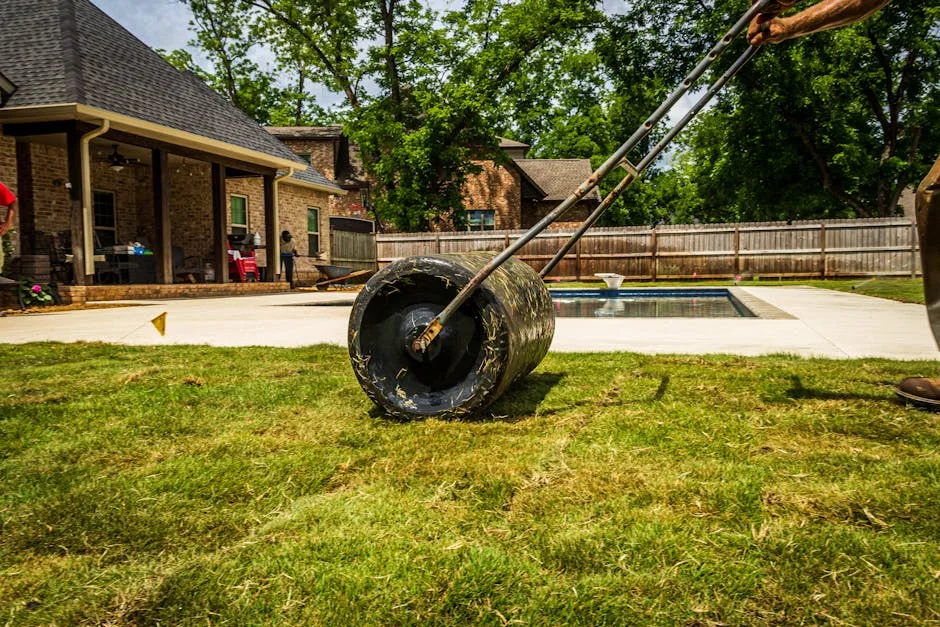
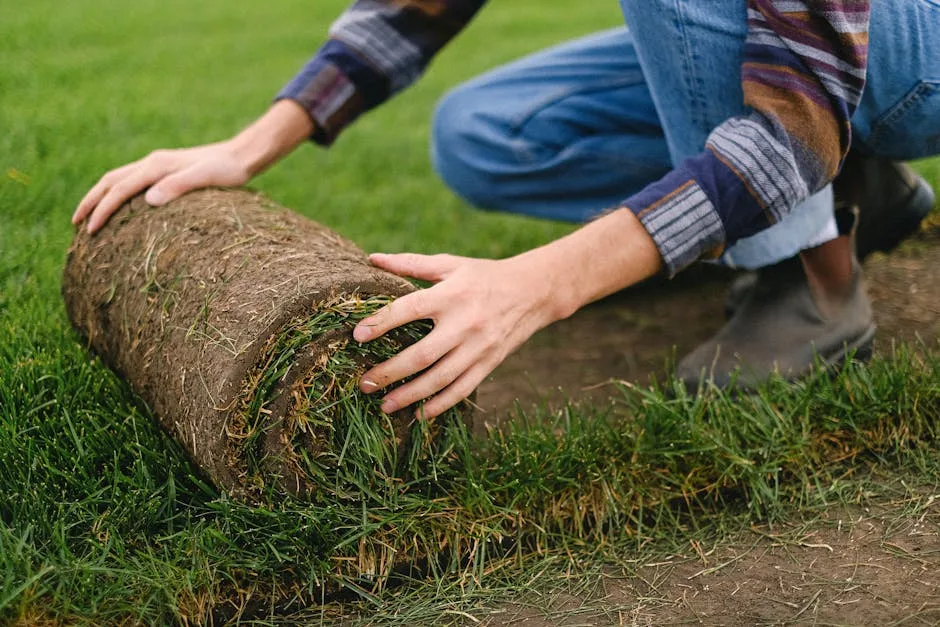
Step-by-step sod installation process showing crew rolling out grass pallets

Large projects require careful scheduling to stage sod delivery as each zone is prepped. Sod left on a pallet in New Orleans summer heat for more than 24 hours degrades significantly. Coordinating delivery in stages keeps the material fresh through the installation. The crew lead confirms zone boundaries and irrigation head locations before any sod is unloaded so there are no stops once the pallets start moving. On a 10,000 square foot property, a single unplanned interruption to locate a buried sprinkler head can cost an hour of crew time. Pre-staging the delivery route and walking the site the morning of installation are standard practice on every large Big Easy Sod project.

On commercial and estate-size properties, crew scheduling is structured differently than residential work. A lead crew handles site prep zone by zone, with the installation team following directly behind as each section is ready. This staged approach keeps the full crew working across the property without waiting for prep to finish on the entire footprint before any sod goes down. Marking irrigation heads and noting sprinkler zone boundaries before the first pallet arrives also prevents costly interruptions once installation is underway.

What Is the 14-Day Step That Changes the Full Project Timeline?

The herbicide application to kill existing grass happens approximately 14 days before the crew arrives for prep and installation. This step is frequently overlooked in planning because it does not involve heavy equipment or visible work, but it is critical. Skipping it or abbreviating it leaves viable root systems in the soil that regrow through the new sod within weeks of installation.

When you schedule a project with Big Easy Sod, the timeline is set with that two-week buffer built in. The crew applies herbicide on the initial site visit, and the installation date is set two weeks out. The full project timeline from first site visit to completed lawn is typically 17 to 20 days.

How Much Does Drainage Work Add to the Project Schedule?

Yards with significant drainage issues require correction before prep can begin. The time added depends on scope:

  • Surface regrading only: adds half a day to the prep phase
  • Installing a French drain or perforated drain line: adds one to two full days
  • Raising the yard grade with fill material in a severely low yard: adds two to three days depending on volume

Drainage correction in New Orleans is not optional on the wrong yard. Sod installed over a drainage problem fails within the first month as waterlogged soil prevents rooting. Fixing drainage before sod goes down is always faste
Completed sod installation showing a freshly transformed New Orleans yard

r and cheaper than replacing dead sod after the fact.

What Happens the Day Installation Is Completed?

The day the sod goes down, the crew walks the yard to check for gaps between pieces, tucks edges at beds and pavement, cuts out any irrigation heads that were covered, and does a final quality pass. Then the lawn is handed off with care instructions for the first 30 days.

The homeowner’s job starts immediately after. Daily watering for the first two to three weeks is the most important thing that happens after the crew leaves. The complete week-by-week guide to the first 30 days after installation covers exactly what to expect from the lawn during the establishment period.

Can Sod Be Installed in One Day for a Standard Yard?

For standard 2,000 to 5,000 square foot residential yards, compressing prep and installation into a single day typically means the sod goes down on soil that has not been properly graded or allowed to settle after tilling. Poor soil prep is the main cause of sod failure in New Orleans. The two-day sequence is worth the extra day.

For small yards under 1,000 square feet with no drainage issues, same-day completion is realistic and the standard approach.

How Far in Advance Should You Schedule a Sod Installation in New Orleans?

Sod installation is not a same-week service, especially during peak seasons. Planning the timeline correctly means accounting for the herbicide window, the quote visit, and booking availability before your target date.

Spring is the busiest season for sod installation in the New Orleans area. March through May books out 3 to 4 weeks in advance as homeowners take advantage of ideal growing conditions. If you want a spring install, reaching out in February or early March puts you in a good position.

Summer scheduling is more flexible. Demand spreads across more weeks as homeowners stagger projects around vacations and heat concerns. A 1 to 2 week lead time is usually enough for summer installs, though popular date slots still fill quickly.

Fall, September through October, books 2 to 3 weeks out as temperatures drop and homeowners look to establish new lawns before winter dormancy slows rooting.

The 14-day herbicide window is a planning factor that often catches people off guard. Vegetation kill needs to happen at least two weeks before sod goes down. That means the site visit and project scope need to be finalized at least 3 weeks before your target installation date, not 3 weeks before you call. Big Easy Sod schedules free quote visits the same week in most cases. Call (504) 486-9100 to get on the schedule.

What Does the Post-Installation Walkthrough Cover?

A completed sod installation is not finished until the crew walks the homeowner through everything they need to know to protect the investment during the critical first 30 days.

Big Easy Sod’s post-installation walkthrough covers the grass variety installed and the total square footage, so you have an accurate record for future purchases or repairs. Irrigation head placement and adjustment is reviewed during the walkthrough, including which zones cover the new lawn and whether any heads needed repositioning to match the new sod layout.

The watering schedule for the first 30 days is explained in specific terms, not general advice. You will know exactly how many minutes to run each zone and how often during each phase of establishment. What to watch for, including yellow patches, corners lifting off the soil, and standing water after rain, gets covered so you can identify a problem early when it is still fixable.

The expected timeline for the first mow is also part of the walkthrough, along with when the lawn can handle regular foot traffic. Big Easy Sod provides written post-install instructions so you have a reference after the crew leaves and do not have to rely on memory for the watering schedule details.

Frequently Asked Questions

How many pallets of sod can a crew install in one day?

An experienced crew of four typically installs 15 to 25 pallets per day, depending on how much cutting and fitting the layout requires. One pallet covers approximately 450 square feet of lawn area.

Does rain delay sod installation in New Orleans?

Light rain does not delay installation and often helps by keeping the soil moist during the laying process. Heavy rain that saturates the soil and makes grading impractical can cause a brief pause, but New Orleans’ afternoon thunderstorms rarely delay full project completion by more than a few hours.

How soon can I use my yard after sod installation?

Keep foot traffic minimal for the first three weeks until the tug test confirms rooting. After three weeks the lawn can handle occasional use. Full recovery that supports regular play and heavy foot traffic takes the full 6 to 8 weeks of establishment.

What time of day does sod installation start?

Installation crews typically start at 7 to 8 a.m. to complete as much work as possible before peak afternoon heat. Laying sod in full New Orleans summer sun during the hottest hours of the day stresses the newly placed rolls before they can be irrigated.

Can I speed up the sod installation timeline?

The 14-day herbicide window cannot be safely shortened without risking old vegetation regrowing through the new sod. The installation pace itself can be accelerated with a larger crew, but the quality limit of laying sod correctly is a practical ceiling that rushing past creates alignment and gap problems.

Does the crew remove the old grass before installation?

Yes. Old grass removal is part of the site prep process after the herbicide has completed its work. The crew removes dead vegetation, then grades, amends, and tills before any sod is laid.

Big Easy Sod provides a clear project timeline during the free site visit so there are no schedule surprises. From the initial herbicide application through the final quality walk, the crew manages every step. See what professional sod installation in New Orleans covers from start to finish. Request your free quote to get the project on the calendar.

How many people are on a Big Easy Sod installation crew?

Crew size depends on the scope of the project. A standard residential installation runs with a 3 to 4 person crew. Larger properties use bigger crews so the installation can be completed in a single day where the project size allows it.

What if my sod installation is delayed by rain?

Big Easy Sod monitors weather forecasts and will reschedule if heavy rain is forecast for the installation date. A delay of 1 to 2 days for weather conditions does not restart the herbicide clock, so the total project timeline is not significantly affected by a short weather postponement.
How to Fix a Patchy or Dying Lawn in New Orleans

Quick Summary: Patchy lawns in New Orleans fail for one of six reasons: fungal disease, chinch bug infestation, drought stress, dense shade, soil compaction, or a grass variety that is wrong for the site conditions. Treating a patch without identifying the cause first leads to repeated failure. The standard extension threshold for repair versus full renovation is 50 percent: if less than half the lawn is healthy grass, full replacement is more cost-effective than patching. St. Augustine, the dominant grass in the New Orleans metro, cannot be restarted from seed and must be sodded. Spring, from April through mid-June, is the primary resodding window.

Last Updated: May 2026

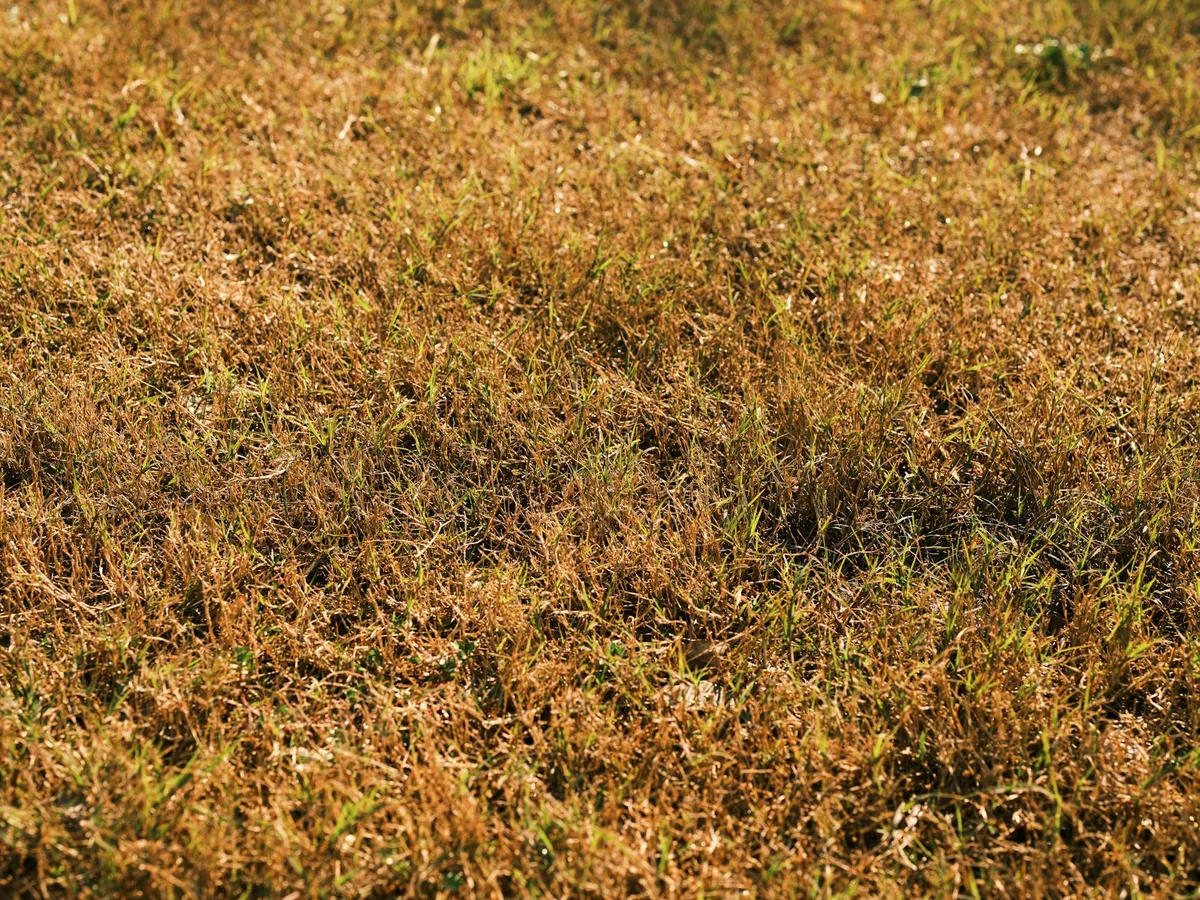
Patchy lawn with bare spots and dying grass needing repair in New Orleans

A brown, patchy lawn in New Orleans is almost never caused by just one thing. The humid subtropical climate, below-sea-level lots with heavy clay, dense urban tree canopy, and year-round warm-season grass management create a situation where multiple stressors often overlap. A chinch bug infestation in August opens bare soil to large patch infection in October, which a homeowner fertilizes over in November trying to speed recovery, making the disease worse. Breaking that cycle starts with identifying the actual cause before spending money on treatment.

Big Easy Sod performs lawn assessments across the New Orleans metro. You can start the process at bigeasysod.com to schedule an evaluation before committing to any repair approach.

What causes bare patches in a New Orleans lawn?

Six causes account for the vast majority of patchy lawns in the New Orleans area. Most can be identified with a visual inspection and one or two simple tests.

Large patch disease produces circular or ring-shaped patches that appear in fall and spring, return to the same spots annually, and leave a soft, rotting smell at the base of pulled grass blades. It is the most common lawn disease in Louisiana, per LSU AgCenter.

Chinch bugs are tiny black insects with white wings that drain sap from St. Augustine grass. Their damage always begins near hot concrete surfaces such as driveways, sidewalks, and curbs, then spreads outward. Peaks in June through August during the hottest stretches.

Drought stress creates uniform thinning across exposed, sunny areas rather than defined patches. The lawn greens up within 48 hours of adequate irrigation. In NOLA’s clay soil, true drought stress is less common than disease, but dry spells in June and October do affect lawns without irrigation coverage.

Dense shade eliminates grass over time in areas under mature live oaks, southern magnolias, and other canopy trees. LSU AgCenter states plainly that no fertilizer or watering routine can replace sunlight. Areas receiving fewer than 4 hours of direct sun per day will not sustain any warm-season grass long-term.

Soil compaction from clay and heavy foot traffic restricts root penetration and water infiltration. The rod test: if a screwdriver will not press 6 inches into moist soil, compaction is likely limiting growth.

Take-all root rot destroys the root system before surface symptoms appear. Roots pulled from affected soil are short, dark brown, and brittle rather than white and abundant. Irregular, diffuse yellowing without a defined circular pattern is the above-ground clue.

How do you identify the cause before treating?

The sequence matters. Running through these steps in order prevents misdiagnosis and wasted treatment cost.

First, count sunlight hours in the affected area. If the patches are under a tree canopy or on the north side of a structure and receive fewer than 4 hours of direct sun, shade is the primary problem. No disease treatment or repair sod will hold long-term until the light issue is addressed.

Second, check the location and timing of the damage. Large patch produces circular patches appearing in October through November or February through April. Chinch bug damage starts at the edges of hot concrete in June through August and expands outward in irregular shapes. Drought stress appears uniformly in exposed areas during dry periods and responds to irrigation within 48 hours.

Third, do the base-of-blade test for fungal disease. Pull a grass blade from the edge of the affected area. If the base pulls away from the stem easily and shows dark brown rot with a bad smell, large patch is the likely cause. Clean, unrotted base tissue points away from Rhizoctonia.

Fourth, do the soap flush test for chinch bugs. Pour a solution of 2 tablespoons of dish soap in one gallon of water over one square foot of grass at the edge of the dead patch. Wait 10 minutes. Chinch bugs float to the surface if present. A confirmed pest infestation is treated differently from a fungal disease and requires an appropriate insecticide, not a fungicide.

Fifth, dig a plug from the dead edge of the patch and examine the roots. For large patch and drought stress, roots will be intact. For take-all root rot, roots are short, dark, brittle, and sparse. For grub damage (a less common NOLA problem), roots are severed near the surface and the sod layer lifts off like loose carpet.

When does a patchy lawn need full replacement instead of spot repair?

The extension rule from Clemson HGIC and UF/IFAS is consistent: if less than 50 percent of the lawn is healthy grass, full renovation is more cost-effective than patching. Spot repairs on a lawn that is more dead than alive rarely hold because the underlying conditions that killed the original grass are still present.

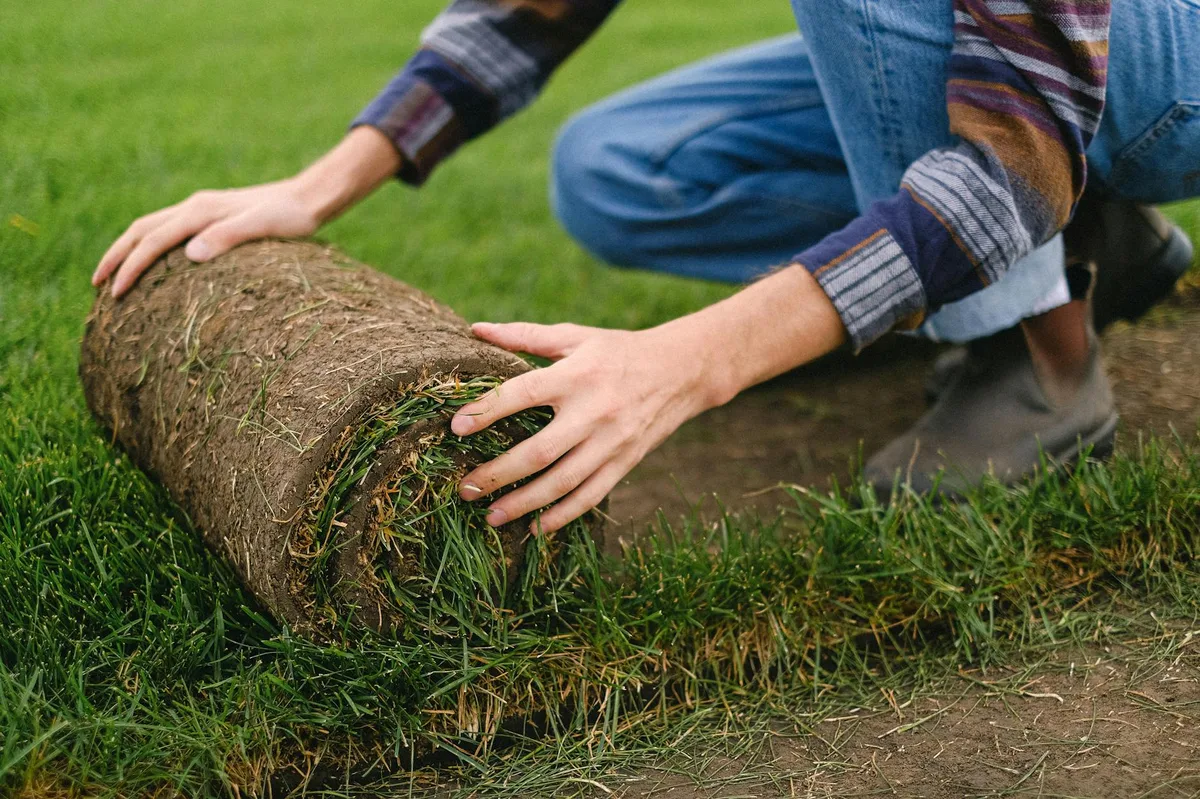
Laying fresh sod patches to repair bare and damaged areas of a lawn

Full replacement is the right call when multiple problems overlap simultaneously, when perennial weeds have taken over more than 40 percent of the area, when the wrong grass species was planted for the conditions, or when a drainage or grading problem makes the entire area prone to standing water. In those cases, the right approach is a complete renovation: treat the soil, fix the drainage, and install the correct grass variety for the site.

The sod installation specialists at Big Easy Sod assess whether spot repair or full renovation makes sense based on the percentage of healthy grass, the underlying cause, and the site conditions.

How do you prepare bare soil for resodding in New Orleans?

Laying new sod over an untreated problem guarantees the same result as before. The preparation work takes almost as long as the installation itself, but it is what determines whether the new grass survives.

Remove all dead grass and thatch from the area. If disease killed the patch, bag and discard the dead material rather than composting it. Treat the underlying cause: apply the appropriate fungicide for disease, treat for insects if confirmed, correct drainage issues before laying sod over wet soil.

Do the rod test: push a screwdriver into moist soil. If it will not penetrate 6 inches without significant resistance, the soil needs core aeration or tilling before amendment. For areas with NOLA clay and compaction, till to 6 to 8 inches and incorporate organic matter at 3 to 6 cubic yards per 1,000 square feet.

Grade the patch to match the surrounding lawn, sloping slightly away from the house at 1 to 2 percent. Avoid leaving low spots that collect standing water. This step matters especially for below-sea-level NOLA lots where poor drainage is often the original cause of the patch. Water immediately after laying the new sod and keep it moist for 2 to 3 weeks as the roots establish.

What is the best time of year to repair patches in a New Orleans lawn?

Spring is the primary window, from April through mid-June. Warm-season grasses need warm soil and at least 3 to 4 months of growing conditions before winter dormancy to establish properly. Sod laid in spring has a full growing season ahead of it.

Healthy lush green lawn after sod repair and proper maintenance in Louisiana

Late summer installs from late July through mid-August can succeed in New Orleans because there are still 3 or more months of warm weather ahead, but the combination of peak heat and transplant stress means strict watering discipline is required. Avoid installing sod in peak summer heat in June and early July unless the homeowner can commit to the watering schedule detailed in the Big Easy Sod maintenance guide.

Do not resod in fall or winter. Sod laid in October and November will not root before dormancy. The same applies after late-season hurricanes: wait until spring to evaluate whether damaged grass will recover before replacing it. Warm-season grasses look completely dead all winter and may come back from the crown.

What grass works in shaded New Orleans yards where St. Augustine fails?

New Orleans is a heavily canopied city. Live oaks, magnolias, and old-growth shade trees are part of what makes neighborhoods like Uptown, the Garden District, and Bayou St. John so visually distinctive. They also create conditions where no warm-season grass survives permanently in the deepest shade zones.

St. Augustine is the most shade-tolerant of the warm-season grasses used in New Orleans, needing 4 to 6 hours of direct sun. Shade-tolerant varieties including Seville, Captiva, and Mercedes perform better under partial canopy than standard varieties. Fine-textured Zoysia varieties such as Emerald and Zeon handle moderate shade as well.

Under dense canopy where no grass will hold, LSU AgCenter’s own research recommends mondograss (Ophiopogon japonicus) as the top alternative. Mondograss thrives in deep shade, requires no mowing, multiplies steadily, and outcompetes weeds once established. Liriope muscari is a second option with broader leaves and visible flowers in late summer.


Frequently Asked Questions

Can you reseed a bare patch in a New Orleans lawn?

Not with St. Augustine, which is the dominant grass across the New Orleans metro. St. Augustine cannot be established from seed and must be repaired with sod pieces or plugs. Bermuda can be seeded in bare patches, but sod or plugs establish faster and more reliably.

When is the best time to resod a bare spot in New Orleans?

Spring, from April through mid-June, gives new sod the full growing season to establish before winter dormancy. Late summer installs from late July through mid-August can also succeed with disciplined watering. Avoid fall and winter installations; sod will not root before the grass goes dormant in December.

What kills grass in patches in New Orleans?

Large patch fungal disease causes the majority of circular, recurring brown patches. Chinch bugs cause irregular patches that start near concrete in summer. Shade kills grass gradually under dense tree canopy. Take-all root rot destroys roots underground, causing diffuse yellowing. Soil compaction and the wrong grass variety for the site are also common factors.

How do I treat a bare spot in my lawn before resodding?

Remove all dead material and bag it. Treat the underlying cause: apply fungicide for disease, use appropriate insecticide for pests, improve drainage if pooling was a factor. Test for compaction with the screwdriver rod test and till if soil is hard. Grade the area to eliminate low spots, then lay sod and water immediately.

Will my New Orleans lawn come back after hurricane damage?

Often yes. Warm-season grasses look completely dead all winter and after stress events, but the crown may still be viable. After a late-season hurricane, do not resod in fall. Wait until April to May to see whether recovery occurs from the crown. Remove debris immediately after any storm event; every day debris sits on the lawn extends damage.

What grass can I plant in heavy shade in New Orleans?

For areas with fewer than 4 hours of direct sun, no warm-season grass will hold permanently. LSU AgCenter’s own research at the Burden Research Center recommends mondograss (Ophiopogon japonicus) as the top deep-shade alternative. It requires no mowing, thrives in dense shade, and spreads to fill an area within a few seasons.

How much does it cost to resod a bare patch in New Orleans?

National cost data from Fixr shows St. Augustine sod at $0.85 to $1.75 per square foot fully installed, with small project minimums typically starting around $1,200 to $2,000 for 200 to 500 square feet. DIY patch repairs using a partial pallet run $90 to $195 in materials plus soil prep and labor time. The risk in DIY patching is that failing to address the underlying cause leads to the same result within one to two seasons.

What to Expect the First 30 Days After Sod Installation in New Orleans

The first 30 days after sod installation in New Orleans require daily irrigation, limited foot traffic for the first two to three weeks, and close monitoring for drought stress and fungal disease. The grass looks established from day one but roots are not anchored until week two or three. By the end of the first month, a well-maintained lawn is rooted, ready for its first mow, and beginning to knit at the seams. Big Easy Sod provides post-installation guidance to homeowners throughout the New Orleans metro area.
Sprinkler system watering newly installed sod during the 30-day establishment period

Last Updated: May 2026

New sod looks like a finished lawn the day it goes down. Green, full coverage, and easy to assume the hard part is behind you. The hard part is actually the 30 days that follow.

This first month is when roots develop, when the lawn transitions from transplanted grass to something actually growing in your soil, and when the biggest mistakes happen. Here is what the week-by-week progression looks like in a New Orleans yard.

What Does Week One After Sod Installation Look Like?

The first seven days are entirely about keeping the sod alive while roots begin reaching into your prepared soil. The grass has almost no root contact yet and is surviving on whatever moisture it carried from the farm plus what you apply through irrigation.

Water twice per day during week one if temperatures exceed 85 degrees, which is standard in New Orleans from May through September. Morning watering around 6 to 8 a.m. followed by an afternoon session around 4 to 5 p.m. gives the soil time to absorb before peak midday heat. The target is moisture 2 to 3 inches deep, not just wet grass blades on the surface.

Stay completely off the lawn during week one. The sod rolls are not anchored and foot traffic creates air gaps between the sod underside and the soil, exactly the condition that prevents rooting. Some yellowing at cut seams and edges during the first week is normal. As long as the interior of each sod piece stays green and upright, this edge yellowing typically resolves by week two as new growth begins.

What Should You Watch for in Week Two?

By day 10 to 14, the first roots are reaching into the soil. Test this by gently tugging a corner of a sod piece. Some resistance means rooting is underway. A piece that lifts easily means roots have not formed yet in that spot.

Continue twice-daily watering in hot weather through week two. If conditions are cooler or overcast, once-daily watering may be sufficient, but push a finger 2 to 3 inches into the soil to confirm moisture is reaching that depth.

Two specific problems to watch for in week two. Circular brown patches that spread outward indicate brown patch fungus, which spreads in New Orleans’ humidity when water sits on grass blades overnight. If you see this pattern, shift to morning-only watering and treat with a fungicide labeled for your grass type. Yellowing across large sections of the lawn, not just at seams and edges, signals drought stress. Increase irrigation immediately. The detailed watering schedule for new sod covers how to calibrate irrigation through the full first month.

What Changes in Weeks Three and Four?

Weeks three and four are the transition from new installation to establishing grass. The tug test shows firm resistance by week three. Seams between sod pieces begin knitting as the grass spreads horizontally. Color deepens from the slightly pale transplant-shock appearance to the full green of established turf.

Reduce watering to every other day in week three and two to three times per week by week four. The roots are now reaching several inches into the soil and can access more moisture between cycles. Daily watering at this stage actually discourages deep root growth beca

Homeowner caring for new sod lawn in the weeks following installation

use the grass does not need to reach deeper for water when the surface stays consistently wet.

Week three is also when the first mow becomes appropriate, once the tug test confirms rooting. Mow high on the first pass, removing no more than one third of the blade height. Set the deck to 3.5 to 4 inches for St. Augustine, 2 to 3 inches for Zoysia or Bermuda. Use sharp blades. Dull blades tearing at newly rooted grass can pull sod pieces off the soil surface.

What Warning Signs Require Immediate Attention?

A gray or bluish-green tint appearing across large sections of the lawn is the first sign of drought stress in St. Augustine before browning sets in. Increase irrigation at the first visible color shift, not after the lawn turns fully brown.

Sod seams that widen rather than narrow over multiple days indicate the sod is dehydrating. Increase irrigation immediately. Gaps that widen over several days despite adequate watering suggest an underlying drainage or soil contact problem in that zone.

Standing water on the lawn surface that persists more than 24 hours after installation points to a drainage issue that was not corrected during site prep. Persistent waterlogging prevents rooting just as effectively as drought. Contact Big Easy Sod to assess whether drainage correction is needed.

Irregular brown patches, not circular, more often indicate pest damage. Chinch bugs are the most common summer pest for St. Augustine in New Orleans. Check for them at the margins of brown patches by parting the grass and looking for small black-and-white insects at the soil surface. Understanding how long roots take to develop in Louisiana helps distinguish normal slow establishment from a problem that needs intervention.

When Is the Lawn Fully Established?

Full establishment, where the root system supports normal lawn use and a standard maintenance schedule, happens at 6 to 8 weeks. After that point, the lawn handles regular mowing, foot traffic, and irrigation reduced to 2 to 3 times per week.

After the first month, transition to the standard maintenance schedule for your grass type. For St. Augustine in New Orleans, that means mowing every 7 to 10 days during the growing season, fertilizing three to four times per year, and monitoring for chinch bugs and brown patch during summer. Sod maintenance services from Big Easy Sod cover everything the lawn needs after it is fully established

Fully established green sod lawn thriving after proper aftercare and watering

.

What Does the Second and Third Month After Sod Installation Look Like?

The first four weeks after sod installation get the most attention, but months two and three are where the lawn transitions from fragile to functional. Understanding what to expect during that window helps you know whether your lawn is progressing normally or needs attention.

By month two, the sod should handle normal foot traffic without damage. The root system is deep enough at this point to support regular use. This is also the right time for the first fertilizer application. A balanced starter fertilizer with phosphorus applied 6 to 8 weeks after installation supports root development without pushing excessive top growth before the lawn is fully established.

Mowing frequency increases in month two as the grass shifts into active growing mode. Bermuda will need attention every 7 to 10 days. St. Augustine every 10 to 14 days. If minor bare patches appear during this period, they can usually be addressed with small sections of spot sodding rather than a full reinstall.

Month three is where the lawn looks and functions like an established yard. Full irrigation schedules, regular mowing, and weed treatment if needed are all appropriate. Louisiana summer heat during months two and three may require supplemental irrigation even when rain is frequent, because afternoon storms often evaporate quickly without penetrating the root zone. Check soil moisture at a 2-inch depth before running irrigation rather than going by schedule alone.

How Do You Transition from New Sod Watering to a Normal Lawn Schedule in New Orleans?

Watering transitions are where many homeowners either underwater and stress the new lawn or continue over-watering long past when it is needed. The transition happens in stages, not all at once.

Weeks 1 and 2 require daily watering, sometimes twice daily during summer heat. The goal is to keep the top 2 inches of soil consistently moist. Watering for 20 to 30 minutes per zone in the morning is standard. If the afternoon brings intense heat, a second cycle in the early evening helps.

Weeks 3 and 4, as roots begin anchoring, shift to every other day. You are starting to train the grass to tolerate slightly drier surface conditions while the deeper root zone stays moist.

Month two means moving to 2 to 3 times per week. Watering sessions can run slightly longer at this stage to push moisture deeper and encourage deeper rooting.

By the time the lawn is fully established, you are at a normal schedule of about 1 inch of water per week, total. In New Orleans, natural rainfall during summer often covers that amount or exceeds it. Check actual soil moisture before running irrigation rather than going by the calendar. Deep and infrequent watering, once roots are established, is better than frequent shallow cycles. Call (504) 486-9100 with any questions about your specific lawn’s watering needs.

Frequently Asked Questions

Is it normal for new sod to turn yellow in the first week?

Light yellowing at seams and cut edges during the first week is normal transplant stress and typically resolves as new growth begins. Yellowing across the center of sod pieces or across large sections of the lawn signals drought stress and calls for increased irrigation.

Can I fertilize new sod in the first 30 days?

Wait until after the first mow, typically around week three, before applying any fertilizer. Fertilizing before roots are established can burn the grass. A light starter fertilizer after the first mow helps push growth through the remainder of the establishment period.

Why is my new sod turning brown in spots?

Irregular brown spots in new sod typically point to drought stress, pest damage, or fungal disease. Check soil moisture 2 to 3 inches deep first. If moisture is adequate, look for circular spread patterns that suggest brown patch, or inspect the grass edges for chinch bugs.

When can I let my dog back on new sod?

Keep pets off new sod for at least three weeks until the tug test confirms rooting. Dog traffic on unrooted sod creates air gaps that prevent establishment and can kill sections of the lawn.

How do I know if my new sod is getting enough water?

Push a screwdriver or your finger 2 to 3 inches into the soil next to a sod piece. It should meet moist, workable soil at that depth. Dry, hard soil below the surface means you need to increase irrigation frequency or duration.

What happens if it does not rain for two weeks after installation?

A two-week dry stretch in New Orleans is unusual but possible. During that kind of stretch in the first month, twice-daily irrigation is essential. Maintain the schedule and check soil moisture daily to ensure the root zone stays consistently moist.

Big Easy Sod installs across the New Orleans metro and provides post-installation support so the first 30 days go as expected. If your new lawn shows signs of trouble during establishment, the team can assess before a small issue becomes a replacement situation. Professional sod installation from Big Easy Sod includes follow-up guidance during the critical first month. Request a free quote for your property.

When can I apply fertilizer after sod installation in New Orleans?

Wait 6 to 8 weeks before the first fertilizer application. Applying fertilizer too early forces top growth before the root system is ready to support it, which weakens the overall lawn. A balanced starter fertilizer at the 6 to 8 week mark is the right timing for Louisiana conditions.

How long before I can run my irrigation system normally after new sod?

Plan to transition to a normal irrigation schedule around weeks 5 and 6, as the root system is anchoring well by that point. During the first four weeks, run the system more frequently but for shorter durations to keep the top 2 inches of soil moist without oversaturating the root zone.

How Often Should You Mow Your Lawn in New Orleans?

Quick Summary: Mow New Orleans lawns every 5 to 7 days during the peak growing season from April through September. Reduce to every 10 to 14 days as growth slows in fall, and mow only as needed through winter when warm-season grasses go semi-dormant. Never remove more than one-third of the blade in a single cut. Mowing heights by grass type: St. Augustine 3 to 4 inches, Bermuda 1 to 2 inches, Zoysia 1.5 to 2.5 inches, Centipede 1 to 2 inches. Most New Orleans homeowners schedule 20 to 26 cuts per year across an active mowing season that runs from March through early December.

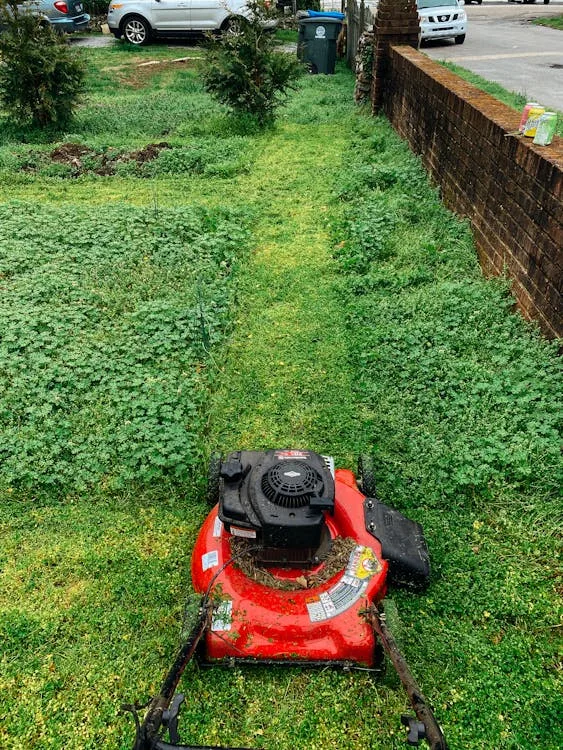
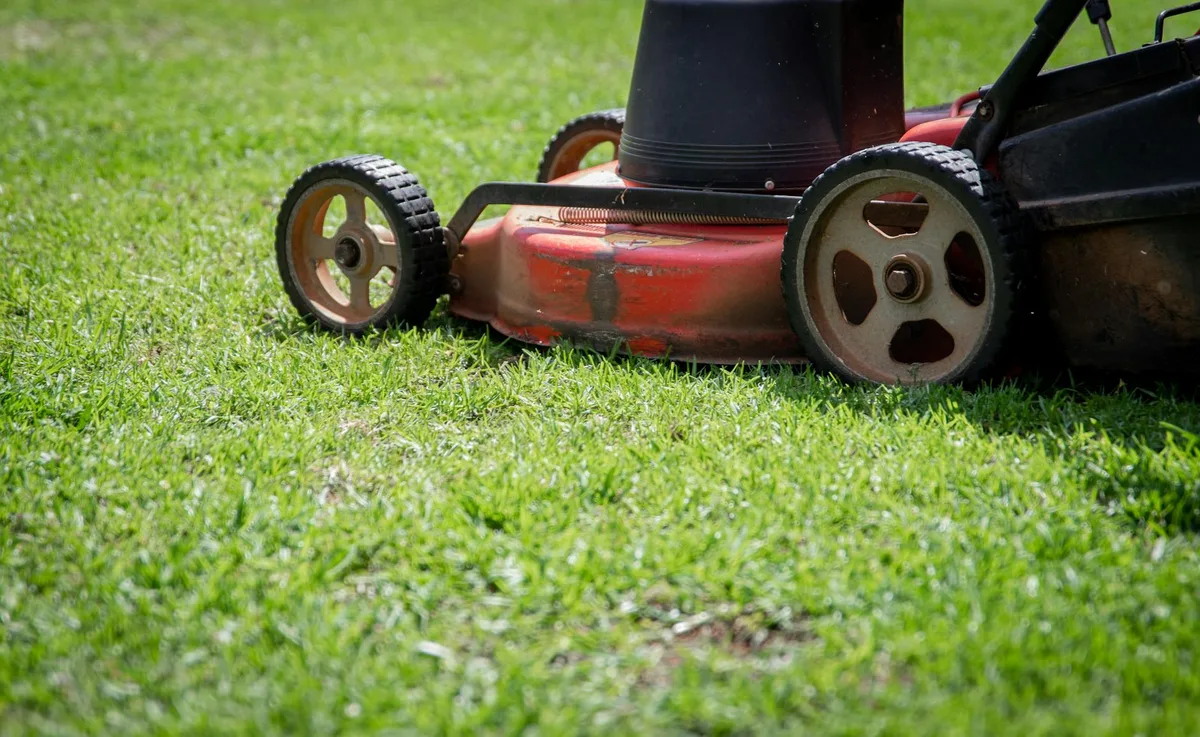
Red push lawn mower cutting visible straight path through vibrant green suburban backyard

Last Updated: May 2026

New Orleans has one of the longest mowing seasons in the country. Warm temperatures, high humidity, and regular rainfall from April through October push warm-season grasses into aggressive growth cycles that punish homeowners who skip a week. The flip side is that mowing too short during summer heat stresses the grass just as badly as neglect. Big Easy Sod follows LSU AgCenter guidelines on every install, and this guide covers the schedule, the heights, and the rules that keep New Orleans lawns looking right all year.

How often should you mow in New Orleans during peak season?

During the peak growing season from April through September, most New Orleans lawns need mowing every 5 to 7 days. Bermuda grass in full sun during July can require cuts as frequently as every 4 to 5 days if growth conditions are ideal. St. Augustine, Zoysia, and Centipede typically fall in the 7-day range during peak months.

The rule that governs frequency is the one-third rule: never remove more than one-third of the blade length in a single cut. If you are maintaining St. Augustine grass at 3.5 inches and let it reach 5 inches, cutting it back to 3.5 inches removes more than one-third of the blade and stresses the plant. Stick to the schedule and the math stays in your favor.

When does the mowing season start and end in New Orleans?

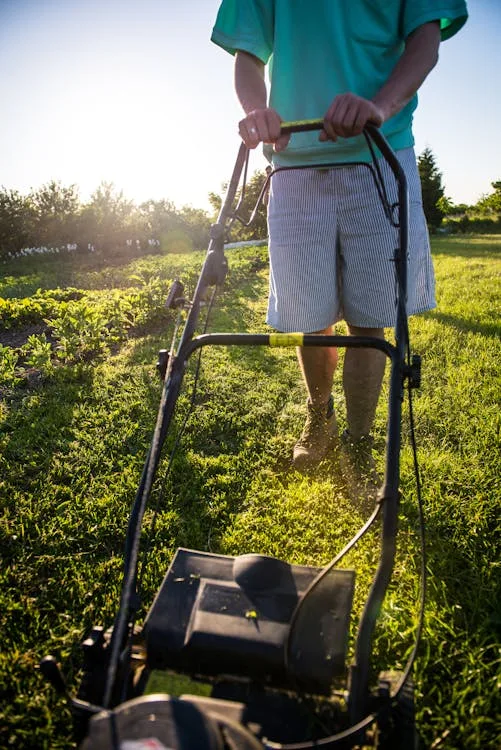
Man in shorts pushing gas lawn mower across sunny green residential lawn in summer

The mowing season in New Orleans typically runs from March through early December — roughly 9 months of the year. Most homeowners log 20 to 26 total cuts per season. The schedule breaks down like this:

March: Begin mowing as grass breaks dormancy and starts active growth. Once every 10 to 14 days is usually sufficient in early spring.

April through September: Weekly or near-weekly mowing. This is the period when missing a cut creates visible problems. Bermuda in particular grows fast enough that two missed weeks can leave a lawn looking overgrown.

October and November: Growth slows as temperatures drop. Reduce to every 10 to 14 days. This is also when fungal pressure from brown patch disease increases, and mowing at the correct height helps reduce humidity at the soil surface.

December through February: Most warm-season grasses slow significantly or go semi-dormant. Mow only as needed, which may be once a month or less depending on conditions and the previous fall’s growth.

What height should you mow each grass type in New Orleans?

Mowing height is not one-size-fits-all in New Orleans. Each warm-season grass has an optimal range, and cutting outside that range reduces density, increases weed pressure, and stresses the root system.

St. Augustine grass: Maintain at 3 to 4 inches during the growing season. This is the tallest recommended height of any common New Orleans lawn grass. The taller canopy shades the soil, retains moisture, and suppresses weed germination — critical advantages in Louisiana’s summer heat. Drop to 2.5 inches in cooler months to allow more sunlight to reach the crown and reduce fungal risk.

Bermuda grass: Keep between 1 and 2 inches year-round. Bermuda tolerates and prefers a low cut. Letting Bermuda grow taller than 2.5 inches produces a stemmy, thatchy surface and reduces density. This is the grass most likely to need cutting every 5 days during summer.

Zoysia grass: Maintain between 1.5 and 2.5 inches. Zoysia is slower-growing than Bermuda, which means less frequent mowing, but it does not tolerate scalping. Stay in the middle of its range and avoid cutting below 1.5 inches.

Centipede grass: Keep between 1 and 2 inches. Centipede is the lowest-maintenance grass in terms of both mowing frequency and fertilization, but it does not tolerate being cut short. Scalping Centipede opens the canopy to weed invasion and is one of the primary causes of Centipede lawn failure.

Should you mow differently in summer to protect your lawn from heat?

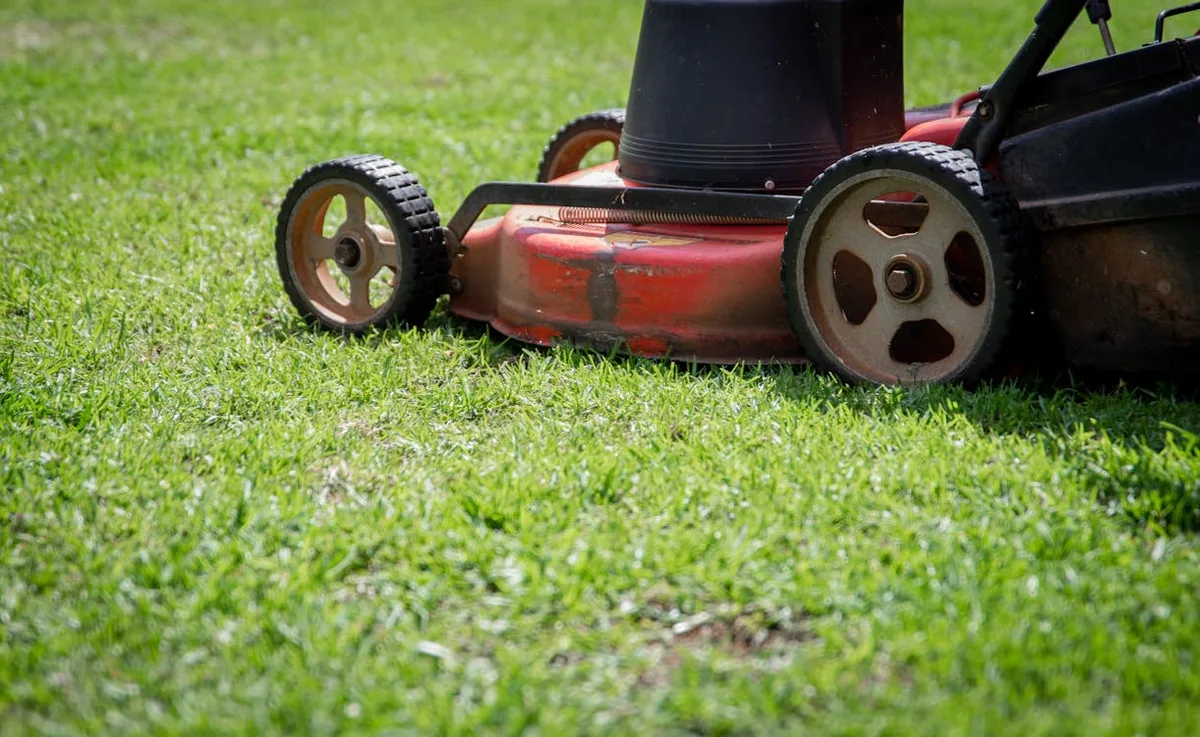
Close-up view of lawn mower deck cutting fresh green grass blades on sunny day

Yes, with one exception. For St. Augustine, leaving the grass at the taller end of its range (3.5 to 4 inches) during July and August provides measurable heat protection. The taller canopy shades the root zone, reduces soil moisture evaporation, and keeps the crown cooler. For Bermuda, which prefers a short cut, there is less room to adjust — keep it in its normal 1 to 2 inch range and ensure it is getting adequate water rather than raising the cut height.

Avoid mowing during the hottest part of the day in summer. Mowing in early morning when the grass is dry but temperatures are lower reduces immediate heat stress on freshly cut blades.

What mowing mistakes do New Orleans homeowners most commonly make?

The most common mistake is cutting too short on a single pass after the lawn got ahead of schedule. Scalping — removing more than one-third of the blade at once — shocks the plant, exposes the soil to direct sun, and opens the door to weed germination. If the lawn is overgrown, bring it back to the correct height over two or three cuts spaced a few days apart.

The second most common mistake is mowing wet grass. New Orleans gets an average of 62 inches of rainfall per year, and mowing after a rain results in uneven cuts, clumping, soil compaction from heavy equipment on saturated ground, and increased fungal disease risk. Wait until the grass surface is dry before mowing.

The third mistake is ignoring blade sharpness. A dull mower blade tears the grass rather than cutting it cleanly. Torn blades are more susceptible to fungal infection and turn brown at the tips within a day or two. Sharpen mower blades at least twice per season in New Orleans.

Regular mowing is one piece of a complete lawn maintenance program. Combined with proper fertilization timing and the right watering schedule, consistent mowing keeps warm-season grass dense, green, and resistant to weeds. If your current lawn has thinned out or developed bare patches despite good maintenance, patchy lawn repair may be the right next step.

Frequently Asked Questions: Mowing a New Orleans Lawn

How many times per year should you mow a lawn in New Orleans?
Most New Orleans homeowners mow 20 to 26 times per year across a mowing season that runs from March through early December. During peak growing months from April through September, weekly cuts are typical for St. Augustine, Zoysia, and Centipede. Bermuda may need cuts every 5 days during July and August.

What is the correct mowing height for St. Augustine grass in New Orleans?
Maintain St. Augustine grass at 3 to 4 inches during the growing season, dropping to 2.5 inches in cooler months. The taller summer height protects the root zone from heat stress, retains soil moisture, and suppresses weed germination. Never scalp St. Augustine below 2 inches.

Is it bad to mow wet grass in New Orleans?
Yes. Mowing wet grass produces uneven cuts, causes clippings to clump rather than disperse, compacts saturated soil under mower weight, and increases the risk of fungal disease including brown patch. Wait until the grass surface has dried before mowing, even if that means adjusting your schedule after New Orleans’ frequent afternoon storms.

Should you leave grass clippings on the lawn in New Orleans?
Yes, in most cases. Grass clippings return nitrogen to the soil and decompose quickly in New Orleans’ heat and humidity. The exception is when the lawn has a brown patch or other active fungal infection — in that case, bag and remove clippings to avoid spreading fungal spores across the lawn.

Why does my New Orleans lawn look brown after mowing?
Brown tips after mowing are usually caused by a dull mower blade that tears rather than cuts the grass. Torn blade tips dry out and turn brown within 24 to 48 hours. Sharpen your mower blade and the problem resolves on the next cut. Brown patches in larger areas after mowing may indicate scalping — cutting the lawn below the crown and exposing the stem.

If your lawn needs a fresh start, get a free assessment from Big Easy Sod. We install the right grass for your yard conditions and give you a complete maintenance plan from day one.

How Long Does New Sod Take to Root in Louisiana?

New sod in Louisiana typically develops its first roots within 10 to 14 days and reaches full establishment in 6 to 8 weeks. Warm soil temperatures, consistent irrigation, and proper soil preparation all accelerate the process. In New Orleans, summer heat can slow root development if watering is insufficient, while spring and fall installations root faster and more reliably. Big Easy Sod provides post-installation guidance to homeowners throughout the metro area so the lawn establishes correctly.
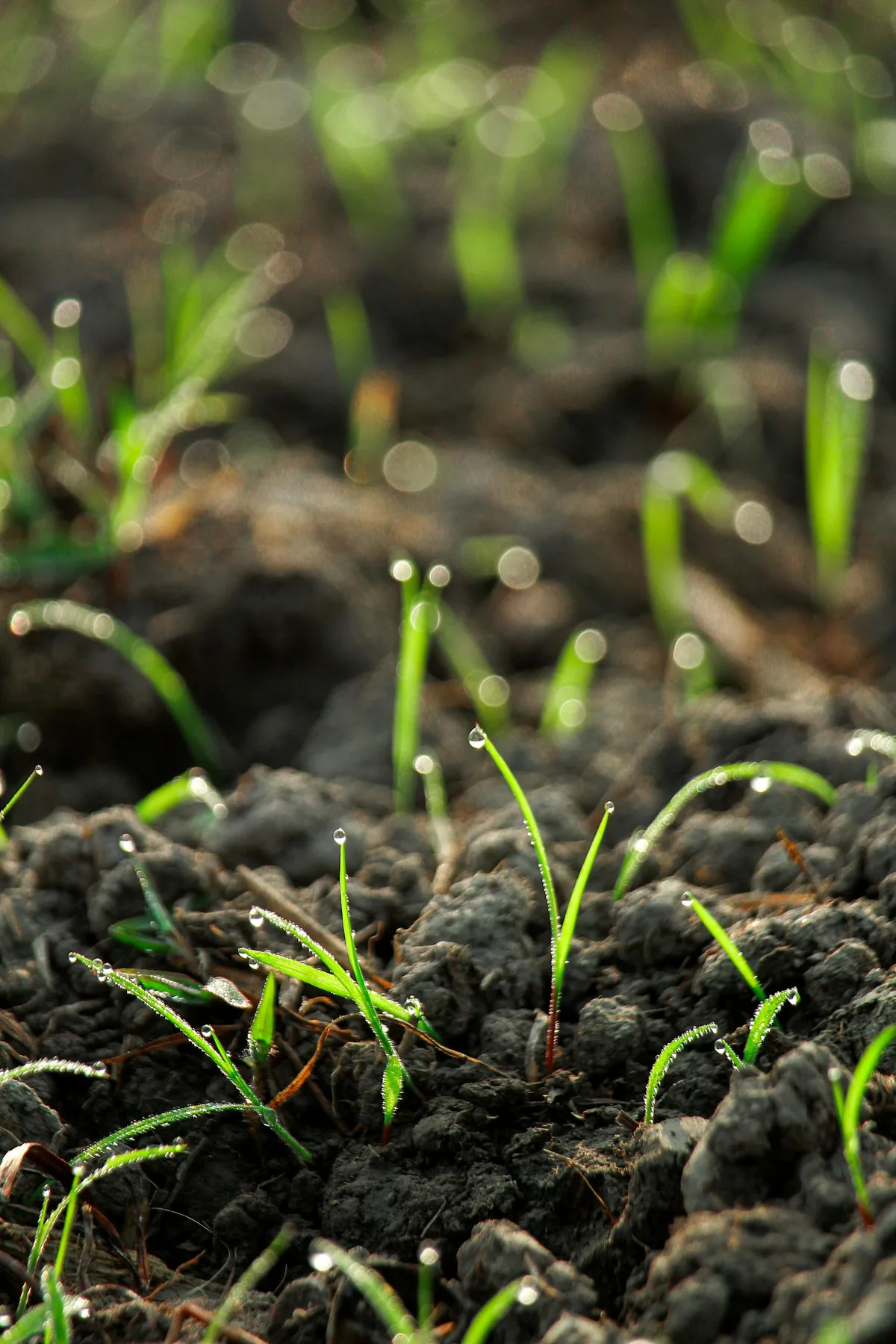
New grass blades emerging from soil after sod installation, showing early root establishment

Last Updated: May 2026

Sod looks established from day one. It is green, it covers the yard, and it is easy to assume the hard part is over. The grass is actually in a fragile state until roots reach into your soil and take hold, a process that takes longer than most homeowners expect.

Knowing the rooting timeline tells you when to water, when to mow, and when you can use the lawn. It also tells you when something is wrong and why.

When Do New Sod Roots Start Growing After Installation?

The first roots appear in the 7 to 10 day range under good conditions. During this window, the sod is surviving entirely on the moisture in the rolled grass and whatever irrigation you apply. The roots from the sod underside are beginning to reach into the prepared soil below, but they have not anchored yet.

This first week is when the lawn is most vulnerable. Foot traffic, heat stress, and inconsistent watering between days 1 and 10 can create air gaps between the sod and soil or let the contact layer dry out before roots form. Keep foot traffic off the lawn entirely and maintain the irrigation schedule without gaps.

By day 14, most well-installed sod in Louisiana shows visible root anchoring. You can test this by gently tugging a corner of a sod piece. A piece that lifts with no resistance has not rooted yet in that spot. One that offers some resistance before releasing has begun anchoring. By week three, you should not be able to lift a piece without tearing the grass.

How Long Until Sod Is Fully Established in Louisiana?

Full establishment, where the root system is deep and dense enough that the lawn can handle normal use and reduced irrigation, takes 6 to 8 weeks in Louisiana under spring or fall conditions. During summer installations, when heat stresses the grass during the rooting period, establishment can take 8 to 10 weeks.

Once the lawn is fully established, transition to a standard maintenance schedule: watering 2 to 3 times per week instead of daily, mowing on a regular cycle, and beginning any fertilization program the grass type requires. Sod maintenance services from Big Easy Sod cover the ongoing lawn care schedule after establishment is complete.

What Slows Sod Root Development in New Orleans?

Several factors specific to New Orleans can delay normal rooting:

Inconsistent watering is the most common cause of slow establishment. New sod needs the soil kept moist 2 to 3 inches deep throughout the full establishment period. Homeowners who reduce watering after the first week because the lawn looks fine often find

Homeowner watering new sod daily to encourage deep root growth after installation

thin spots and brown patches in week three when roots hit dry soil and stop growing.

Poor soil contact causes localized failure. Air gaps between the sod underside and the soil surface, from lumpy grading or debris left during prep, prevent roots from reaching the soil at all in those spots. The sod above the gap dies while the surrounding lawn roots normally. This is why thorough yard preparation before installation is not a step to shortcut.

Compacted clay soil resists root penetration. In much of the New Orleans metro, native soil is heavy clay. Sod roots attempting to push into unbroken clay slow significantly compared to tilled and amended soil. Rototilling and soil amendment before installation solves this.

Heavy foot traffic in the first three weeks physically disrupts the root-to-soil connection before it is strong enough to withstand pressure.

How Do You Test Whether Your New Sod Is Rooting?

The tug test is the most reliable method. Grab a corner of a sod piece with two fingers and pull upward gently. In week one, it lifts with almost no resistance. By week two, you should feel the roots beginning to hold. By week three to four, the piece should resist lifting. If it still comes up easily at week three, rooting is not happening normally in that spot and you need to investigate why.

Color also signals root health. Healthy rooting sod holds a consistent medium green. A gray or bluish-green tint appearing across large sections, rather than the normal green, is the first sign of drought stress in St. Augustine before it turns brown. Increase irrigation at the first sign of that color shift.

Seam gaps that widen rather than narrow over the first two weeks indicate the sod is shrinking from dehydration, not knitting together as it should.

When Can You Mow New Sod in Louisiana?

Wait until the tug test confirms rooting before mowing, typically around week three. The first mow should remove no more than one third of the blade height using sharp blades set higher than your normal mowing height. Dull blades tearing at newly rooting grass can pull sod pieces off the soil surface.

For St. Augustine in New Orleans, the first mow height is typically 3.5 to 4 inches. Set the deck higher than feels right and resist the urge to cut short. Lower mowing heights come after full establishment.

What Does the First 30 Days Look Like Week by Week?

Each week brings specific milestones you can watch for. The

Established sod lawn with deep roots thriving in a New Orleans yard

complete guide to the first 30 days after sod installation breaks down the full week-by-week progression, including what normal color changes look like, when to adjust irrigation frequency, and how to tell the difference between expected transplant stress and a problem that needs attention.

How Deep Do Sod Roots Grow Over the First 90 Days in Louisiana?

Root depth is what separates a lawn that looks established from one that actually is. In Louisiana’s climate, the rooting timeline follows a predictable pattern when watering is consistent and installation conditions were right.

During weeks 2 and 3, roots are extending 1 to 2 inches into the soil. The grass is still fragile at this stage. At 6 weeks, roots reach 4 to 6 inches in well-prepared soil. By the 90-day mark, sod installed in warm Louisiana conditions can develop roots 8 to 12 inches deep, which is enough depth to access subsurface soil moisture and tolerate dry periods without stress.

Soil temperature matters significantly during this process. Roots develop fastest when soil temperature is between 65 and 75 degrees Fahrenheit. Louisiana’s warm soil from April through October keeps root development active. The clay soil common in the New Orleans area slows initial penetration but holds moisture well once roots get through the upper layer.

Consistent watering during the first 30 days is more important than volume. Frequent, moderate irrigation keeps the top 2 inches of soil moist and encourages roots to follow moisture downward. Infrequent deep watering during establishment can leave surface roots without moisture long enough to set back development.

Does Root Development Differ Between St. Augustine, Zoysia, and Bermuda in Louisiana?

Yes, and the differences are meaningful when you are deciding which grass type fits your establishment timeline and patience level.

Bermuda grass roots fastest of the three. In warm Louisiana soil, Bermuda anchors within 10 to 14 days. It is an aggressive grower that sends roots down quickly and spreads laterally through stolons and rhizomes at the same time. This makes it the most forgiving of the warm-season grasses during the critical establishment window.

St. Augustine follows at 14 to 21 days for initial rooting. It spreads through stolons at the surface and develops a moderately deep root system. Palmetto, a St. Augustine variety, behaves similarly. Both adapt well to the shade conditions common in older New Orleans neighborhoods with tree cover.

Zoysia is the slowest of the three to anchor, typically 21 to 28 days before the root system has enough depth to support the grass through a dry period. The trade-off is that established Zoysia has the densest, most uniform root mat of any warm-season grass. Once it takes hold, it is the most difficult to kill. All three varieties reach full establishment at 6 to 8 weeks in Louisiana conditions with proper watering. Call Big Easy Sod at (504) 486-9100 to discuss which variety matches your yard conditions and timeline.

Frequently Asked Questions

How do I know if my new sod is dying or just dormant?

In Louisiana, warm-season grasses rarely go fully dormant in the first month after installation. Brown patches during summer or fall installation almost always indicate drought stress rather than dormancy. Check soil moisture 2 to 3 inches deep. If it is dry, increase irrigation immediately.

Why is my new sod not rooting after three weeks?

The most common causes are insufficient watering, compacted soil the roots cannot penetrate, or air gaps between the sod underside and the soil surface. Check moisture, look for signs of drought stress, and inspect poor-rooting areas for gaps or unusual soil hardness.

Can I walk on new sod in Louisiana?

Minimize foot traffic for the first three weeks. Light, occasional foot traffic in weeks one and two is unavoidable but should be limited as much as possible. Keep kids and pets off the lawn until the tug test confirms rooting.

Does Louisiana heat make sod root faster or slower?

Warm soil accelerates root growth up to about 80 degrees. Above that, heat stress slows the process. New Orleans spring and fall soil temperatures hit the optimal 65 to 80 degree range consistently. Summer soil temps regularly exceed 85 degrees, creating stress that delays establishment without adequate irrigation.

How long should I water before cutting back to a normal schedule?

Water daily for the first two to three weeks, then shift to every other day in week three, then two to three times per week by week four as rooting confirms through the tug test. Base the transition on what the tug test shows, not the calendar date alone.

What happens if it rains heavily right after installation?

Light to moderate rain after installation is helpful and reduces how much you need to irrigate manually. Heavy rain causing standing water is a concern because waterlogged soil restricts oxygen to developing roots. If your yard pools water after installation, drainage correction during prep should have addressed this in advance.

Big Easy Sod backs its installations across the New Orleans metro. If your new lawn is not rooting on schedule, the team can come out and assess the situation before a minor issue becomes a replacement job. Professional sod installation from Big Easy Sod includes follow-up support during the establishment period. Schedule a free consultation to discuss your yard’s specific conditions.

Will my sod root if planted during Louisiana summer heat?

Yes, but summer establishment requires twice-daily watering for the first two weeks. Morning and evening irrigation keeps soil temperature down and prevents the grass from going into heat stress before the root system is deep enough to access subsurface moisture.

What does healthy rooting sod feel like underfoot?

In the first week, sod should have some give and feel loosely attached to the soil. By day 14 to 21, it should feel firm and resist movement when you walk across it. If you can still peel up a corner easily at the three-week mark, root development is behind schedule and watering frequency should be checked.

How Do You Prepare a Yard for Sod Installation?

Preparing a yard for sod installation involves killing existing vegetation, removing debris and old grass, correcting drainage and grading, testing and amending the soil, rototilling to loosen the surface, and raking smooth before sod arrives. In New Orleans, drainage correction is the most critical step given the area’s clay-heavy soils and high annual rainfall. Big Easy Sod handles all site preparation as part of its full-service installation process so the ground is ready before the first sod roll goes down.
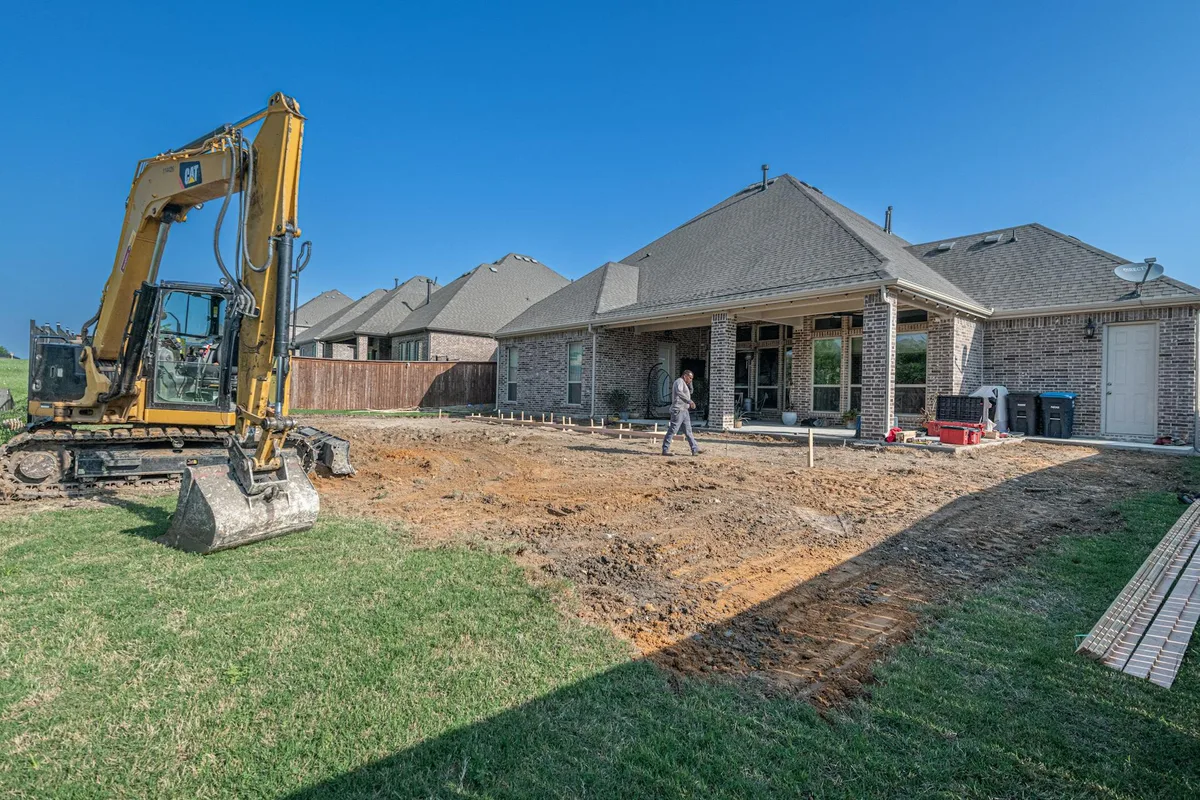
Homeowner loosening and leveling soil in a residential backyard to prepare for sod installation

Last Updated: May 2026

Sod is only as good as what it goes down on. A properly prepped yard gives roots immediate contact with loose, amended soil and a graded surface that moves water away rather than pooling it. A poorly prepped yard produces dead patches, uneven settling, and a lawn that never fills in.

In New Orleans, preparation matters more than in most markets. The native soil is heavy clay, natural drainage is a constant challenge, and summer heat punishes sod that cannot root quickly. Here is the full preparation sequence.

Step 1: Kill and Remove Existing Vegetation

New sod needs direct contact with the soil to root. Any existing grass, weeds, or ground cover underneath creates a mat that blocks root penetration and introduces competing plants that grow up through the new lawn within weeks.

Apply a non-selective herbicide at least 14 days before the installation date, then wait for the vegetation to die fully before removing it. Rushing this, or removing vegetation without killing it first, leaves viable root systems in the soil that regrow through the sod after it goes down.

Dead vegetation needs to come out physically, not get tilled under. Burying organic material creates decomposition pockets that cause the lawn surface to sink unevenly as it breaks down over the following months.

Step 2: Clear Rocks, Debris, and Root Systems

Anything harder than soil needs to come out. Rocks larger than an inch, old mulch, construction debris, and woody root systems all interfere with sod contact and rooting. Previously landscaped yards take longer at this stage, particularly when large shrubs or trees were recently removed.

Tree root masses deserve special attention. A root system under fresh sod creates an air pocket that dries out the sod above it. Remove as much of the root system as practical and fill the void with compacted soil before grading.

Step 3: Correct Drainage and Grade the Surface

This is the step where New Orleans yards require the most attention. Proper grading means the surface slopes away from the foundation at roughly 1 inch per 10 feet, with any low spots that collect standing water filled and leveled.

Clay soil drainage in this market can be genuinely problematic. Yards that flood after every significant rainfall need more than surface grading. In those situations, perforated drain lines, dry wells, or a French drain system installed before sod

Homeowner digging and loosening soil in a residential backyard to prepare the ground for new sod

goes down prevents the same waterlogging from killing the new lawn. This adds to the cost and timeline but eliminates the most common cause of sod failure in New Orleans. How much drainage correction adds to the total installation cost depends on what the site assessment finds.

Step 4: Test and Amend the Soil

New Orleans soil typically runs clay-heavy with a pH between 6.0 and 7.0, which suits most warm-season grasses. A basic soil test from the LSU AgCenter runs around $15 and identifies pH and primary nutrient levels so you know exactly what the lawn needs before sod arrives.

Common amendments for clay-heavy New Orleans soil include coarse sand mixed into the top 4 to 6 inches to improve drainage, compost to add organic matter and improve nutrient retention, lime to raise pH if the soil is too acidic, and sulfur to lower pH for Centipede grass, which prefers slightly acidic conditions.

Amendments need to be worked into the top 4 to 6 inches of soil, not just spread on the surface. A rototiller is the right tool for this, not a garden rake.

Step 5: Rototill to Loosen Compacted Soil

Even after removing old vegetation and grading, the surface layer is typically compacted from foot traffic, heavy rain, and years of compression. Running a commercial rototiller 4 to 6 inches deep breaks up that compaction and creates the loose, friable surface that sod roots can penetrate in the first week after installation.

Tilling also incorporates the amendments worked in during Step 4. Two passes at perpendicular angles give the most uniform loosening. After tilling, the surface will sit 1 to 2 inches higher than before. This is normal. The soil compresses back down over the following weeks as sod establishes and rain settles it.

Step 6: Rake Smooth and Flag Irrigation Heads

The final step before sod delivery is raking the surface smooth and marking any irrigation heads, utility lines, or obstac

Contractor grading and leveling bare soil in a suburban backyard before sod installation

les. A landscape rake removes remaining clumps and high spots left by the tiller. The goal is a surface that looks like a freshly graded baseball infield: smooth, firm, free of lumps.

Even small bumps become visible once sod rolls out because any air gap between the sod underside and the soil prevents rooting in that spot. Mark sprinkler heads with small flags so the installation crew does not cut sod over them.

When Should Sod Arrive After Prep Is Complete?

Sod should arrive the same day prep is completed or the following morning. Prepped soil sitting bare for more than a day loses moisture and can develop a crust that slows root penetration. Do not prep the site a week early and wait for delivery to catch up.

Understanding how long the full installation project takes from prep through completion helps with scheduling sod delivery to land at the right time. Big Easy Sod manages the prep and delivery coordination so the crew does not leave a prepped yard sitting overnight.

What Happens If You Skip Drainage Correction in a New Orleans Yard?

New Orleans sits at or below sea level across much of the metro area. That geography, combined with the dense clay soil common in Jefferson Parish and surrounding communities, means water has nowhere to go quickly after a heavy rain. Skipping drainage correction before sod installation is the leading cause of sod failure in this region.

Improperly graded yards collect standing water after rain events. Sod roots need oxygen in the soil to develop, and roots submerged in standing water for 48 to 72 hours will begin to die. The grass will yellow, then brown, then fail, often within the first month. Once that happens, you are looking at reinstallation costs on top of the original project.

Brown patch fungus is the other consequence. The fungal pathogen that causes large patch, one of the most common lawn diseases in Louisiana, thrives in persistently wet, warm conditions. A yard with poor drainage will cycle through brown patch outbreaks repeatedly, regardless of how well the sod was installed or how carefully it was watered.

Big Easy Sod evaluates drainage and grade as a standard part of every installation. Regrading and drainage correction are included in the project scope when needed, not treated as optional add-ons. If your yard collects water, that issue gets addressed before sod goes down, not after you call back about dead grass.

How Much Does Professional Yard Preparation Add to the Project Cost?

For most standard residential installs in New Orleans, basic preparation, including herbicide application, rototilling, and raking to a smooth grade, is bundled into the installation price. You are not billed separately for the prep labor that every install requires.

When drainage correction is needed beyond standard grading, the cost depends on severity. A modest regrade to redirect water away from the house foundation or toward a drain typically adds $200 to $500 for most residential yards. More significant work involving French drains or catch basin installation will cost more and should be scoped during the quote visit.

Soil amendment for heavy clay adds $50 to $150 depending on yard size and how much amendment is needed. Gypsum breaks up clay structure over time and is worth adding in areas with particularly dense soil. Compost works similarly and also improves organic content. Neither is mandatory for every yard, but both improve rooting conditions in Louisiana clay.

Having Big Easy Sod handle the full preparation ensures the ground is ready when sod arrives. Sod delivered to a yard that is not properly prepped cannot wait, and rushing the prep at the last minute leads to uneven grades and drainage problems that show up weeks later. Call (504) 486-9100 to get a full-scope quote that covers prep, materials, and installation.

Frequently Asked Questions

Do I need to remove all the old grass before installing sod?

Yes. Old grass left under new sod creates a mat that blocks root contact with the soil. Kill it first with herbicide, wait for complete die-off, then remove it before grading and tilling.

How long before sod installation should I apply herbicide?

Apply a non-selective herbicide at least 14 days before your installation date. This gives the existing vegetation time to die fully and allows the herbicide to break down before the new sod arrives.

Do I need to rototill before laying sod in New Orleans?

Yes, for any yard larger than a few hundred square feet. New Orleans clay soil requires mechanical tilling to 4 to 6 inches deep to create the loose surface that sod roots can penetrate in the first week. Skipping this step leaves compacted soil that slows or prevents rooting.

How do I fix drainage issues before laying sod in New Orleans?

Surface drainage problems are corrected with regrading. Low spots that regularly hold standing water after rain may require perforated drain lines or a French drain system. Address drainage before sod goes down because waterlogged soil will kill new sod even when everything else is done correctly.

What soil amendments work best for New Orleans clay soil?

Coarse sand mixed into the top 4 to 6 inches is the most effective amendment for improving drainage in heavy clay. Compost adds structure and nutrients. A soil test tells you which, and how much, your specific yard needs.

Can I prep my yard for sod myself?

Basic prep steps are manageable on small, flat yards without drainage issues. Drainage correction, rototiller rental, and hauling old vegetation all require more equipment and physical labor. Big Easy Sod handles the full prep process as part of a complete installation quote.

Skipping yard prep is the most common reason new sod fails in New Orleans. It is also the part homeowners most often underestimate. Full-service sod installation from Big Easy Sod includes everything from site assessment through final grading so the lawn goes down on properly prepared ground. Get a free on-site quote to see what your yard needs before any work begins.

Should I water the soil before sod installation day?

Lightly moist soil is ideal for installation day. Saturated or muddy soil causes problems when the crew arrives and sod is being laid. If your yard is dry, watering 24 to 48 hours before the installation date is fine. Do not water on the morning of installation day.

How do I know if my drainage is bad enough to need correction before sod?

After a heavy rain, check whether water pools in your yard and sits for more than 12 hours without draining. That threshold is where Big Easy Sod recommends drainage work before installation. Minor pooling that clears within a few hours is usually manageable with grading alone.

When Is the Best Time to Lay Sod in New Orleans?

The best time to lay sod in New Orleans is during spring, from March through May, or early fall, from September through October. Both windows give sod moderate soil temperatures and consistent rainfall to establish before facing extreme heat or seasonal dormancy. Summer installations are possible but require twice-daily watering and carry higher failure risk during heat waves. Big Easy Sod installs sod throughout the year across the New Orleans metro area and advises on timing based on each yard’s specific conditions.
Lush green lawn in spring — ideal season for laying sod in New Orleans

Last Updated: May 2026

New Orleans has a more forgiving climate for sod than most of the country. But timing still matters here. The city’s heat, humidity, and clay-heavy soils create specific windows where sod roots fastest and needs the least intervention to get established.

Spring is the top choice for most homeowners. Early fall is a close second. Summer works with discipline. Winter is rarely worth attempting.

Why Is Spring the Best Time to Install Sod in New Orleans?

Spring, from March through May, gives sod everything it needs to establish quickly. Soil temperatures during this period hit 60 to 75 degrees, which is the sweet spot for warm-season grass root growth. Rainfall is consistent, reducing the supplemental irrigation a newly installed lawn needs during its first critical weeks.

By the time summer heat arrives in June, a spring-installed lawn has 8 to 12 weeks of root development behind it. That root depth is what lets the grass survive New Orleans summer heat without burning out. Active spring growth also means faster knitting between sod pieces, quicker rooting, and less time before the lawn handles normal foot traffic and its first mow.

Preparing the yard correctly before the sod arrives is the step that determines how well that spring window is used. Drainage correction and soil amendment done in late February or early March set the installation up for success.

Can You Lay Sod in New Orleans During Summer?

Summer sod installation works in New Orleans, but it demands a strict watering schedule and some tolerance for a harder process. Soil temperatures from June through August regularly exceed 80 degrees, and surface temps on exposed soil can spike well above that.

Sod laid in those conditions needs water every single day during the first two weeks, twice daily during heat waves, to keep roots from drying out before they can anchor. Professional crews installing in summer know how to adjust: tight laying patterns that minimize exposed seam edges, immediate post-installation irrigation, and daily monitoring during the first week.

That said, plenty of New Orleans lawns go in during summer without issues. If your project requires summer timing, it can work. It takes more water and closer attention during the first month than a spring or fall install. Understanding what to expect in the first 30 days after installation helps whether you are installing in any season.

Is Fall Sod Installation a Good Option in Louisiana?

September and October are excellent months to lay sod in the New Orleans area. Temperatures drop from their summer peak, rainfall remains adequate, and warm-season grasses still have 6 to 8 weeks of active growth before cooler weather slows establishment.

Fall installation gives sod enough time to develop a solid root system before the mild Louisiana winter sets in. New Orleans rarely sees hard freezes, so warm-season grasses stay green much longer than in northern markets. A lawn installed in early Oc

Landscaper laying sod during the optimal planting season in Louisiana

tober typically reaches full establishment by December, giving it a head start on the following spring growing season.

The one caution with fall timing: avoid installing too late. Sod put down in November goes into a mostly dormant state before roots fully establish, which leads to thin coverage come spring. Early fall is the window, not late fall.

What Happens If You Install Sod in Winter in New Orleans?

Winter sod installation is uncommon here for good reason. January and February are the coolest months, with soil temperatures that regularly drop below 55 degrees, the threshold where warm-season grass root growth essentially stalls.

Sod laid in winter will survive most years because New Orleans rarely sees the extended sub-freezing stretches that kill warm-season grass outright. But it will not root and establish until spring temperatures return. That means paying for installation, then maintaining a dormant lawn for months before seeing active growth. Most homeowners are better served waiting for a March planting.

How Does New Orleans Humidity Affect Sod Timing?

High ambient moisture slows the rate at which freshly cut sod dries out, giving it more time to root before water stress kicks in. This makes New Orleans more forgiving than drier Southern markets for spring and summer installations.

The downside: humidity during summer creates favorable conditions for brown patch fungus, which spreads across newly installed St. Augustine lawns before the roots are deep enough to let the grass recover from treatment. If you install in summer, watch for circular browning patterns in the first month and be ready to treat with a fungicide labeled for your grass type. The

Warm-season grass sod installed on a Louisiana residential yard in late spring

guide to commonlawn diseases in New Orleans covers what brown patch looks like and how to respond.

Does Installation Timing Affect Which Grass Type You Should Choose?

Spring and fall installations work well for all four major sod types available in this market. Summer installations favor Bermuda slightly, since it tolerates heat and drought during the rooting period better than St. Augustine or Centipede. Zoysia is also reasonably heat tolerant once it starts rooting.

If you are installing in summer and cannot commit to twice-daily irrigation, Bermuda is the safer material choice. For spring or fall installs, St. Augustine and Zoysia give you more flexibility in terms of shade tolerance and long-term water requirements. The comparison of sod varieties for New Orleans lawns breaks down how each performs across different yard conditions.

How New Orleans Monthly Rainfall Affects Installation Windows

New Orleans averages approximately 62 inches of rainfall per year, and the timing of that rain matters as much as the total volume when planning a sod installation.

The summer months, June through August, are the wettest. Rain falls on 15 or more days per month during that period, with afternoon thunderstorms common throughout the region. That frequency makes scheduling harder and increases the risk of waterlogged sod before roots can anchor. Spring months, March through May, average 4 to 5 inches per month with more predictable patterns and lower daily humidity, making them the most reliable installation window of the year.

Fall, September through October, averages 5 to 6 inches per month but overlaps with the Atlantic hurricane season. That overlap does not rule out fall installs, but it does mean a storm system can delay work or disrupt a freshly installed lawn before roots have developed.

Rain within 24 hours of installation is generally beneficial. Sod needs consistent moisture to survive the initial shock of transplanting, and a light rain after install reduces the irrigation burden during the first critical days. The problem is standing water. Sod sitting in pooled water for more than a few hours will suffocate the root zone. Big Easy Sod monitors weather forecasts and schedules installations around heavy rain events to protect new lawns.

How Long After a Storm or Flood Should You Wait to Install Sod?

After heavy rain, saturated soil cannot support proper sod rooting. The general guideline for New Orleans yards is to wait 3 to 5 days after significant rainfall before installation. The soil needs to drain to the point where it holds moisture without being waterlogged. If you step on it and water squeezes up around your shoe, it is too wet.

Flooded yards require more evaluation before sod goes down. Standing flood water deposits silt and sediment that can create an uneven surface and a soil chemistry problem. If the yard flooded, drainage correction likely needs to happen before installation rather than after. Putting sod on a yard that floods repeatedly is a way to spend money twice.

Post-hurricane installs should wait until all debris is cleared and the soil has fully dried out. That typically means at least 1 to 2 weeks minimum after the storm system passes, depending on how much rain fell and how well your yard drains naturally. Big Easy Sod evaluates yard drainage conditions during the free quote visit and will tell you honestly whether the ground is ready for sod or whether prep work needs to happen first. Call (504) 486-9100 to schedule that assessment.

Frequently Asked Questions

Can you lay sod in March in New Orleans?

Yes. March is one of the best months for sod installation in New Orleans. Soil temperatures are rising into the root-growth range, spring rain is reliable, and the lawn has the full growing season ahead to establish firmly before summer.

What is the worst month to install sod in New Orleans?

January and February carry the most risk. Low soil temperatures stall root growth, meaning a winter installation survives but does not properly establish until spring temperatures return in March or April.

How long does sod take to root in spring versus summer?

Spring sod typically develops initial roots within 10 to 14 days. Summer sod in New Orleans can root in the same timeframe with daily irrigation, but without it, establishment takes 4 to 6 weeks and shows more stress along the way.

Does Big Easy Sod install sod year-round?

Yes. Big Easy Sod installs sod throughout the year across the New Orleans metro area. The team advises on timing based on your specific site conditions during the free quote visit.

How much water does new sod need during a summer install in New Orleans?

During the first week after installation in summer, new sod in New Orleans typically needs watering twice per day, once in the morning and once in the late afternoon, keeping the soil moist 2 to 3 inches deep throughout the establishment period.

Is it better to install sod before or after hurricane season?

Installing before peak hurricane season, which runs June through November, means choosing spring timing. A spring lawn is fully established before the storm season arrives. Fall installation, September through October, works well if no major weather events interrupt the watering schedule during the first month.

Big Easy Sod installs across the New Orleans area, from Uptown to Metairie to the Northshore. The sod installation service page covers what the full process looks like from site visit through established lawn. Request a free quote and get a site visit on the calendar.

What month has the best sod survival rate in New Orleans?

March and April have the highest success rates. Moderate temperatures, soil moisture from winter rains, and a long establishment window before summer heat make spring the most reliable season for new sod in the New Orleans area.

Can new sod survive a New Orleans summer storm?

Established sod handles heavy rain well. Sod in its first two weeks is more vulnerable to displacement and waterlogging from intense storm activity. Big Easy Sod accounts for forecast conditions when scheduling summer installs to give new lawns the best possible start.

How Much Does Sod Installation Cost in New Orleans?

Big Easy Sod installs professional sod throughout New Orleans, Jefferson Parish, and surrounding communities. Sod installation in the New Orleans area typically costs $1.00 to $2.00 per square foot installed, which puts most residential yards between $2,500 and $6,000 for materials and labor combined. The final number depends on yard size, grass variety, and how much drainage correction or soil work the site requires. Big Easy Sod provides free on-site quotes so homeowners know the exact cost before any work begins.
Sod installation crew laying fresh grass rolls on a New Orleans lawn

Last Updated: May 2026

A new lawn makes one of the bigger visual impacts of any home improvement project, and sod is the fastest way to get there. But the price swings more than people expect, and most of that variation traces back to site conditions specific to New Orleans rather than the sod itself.

The short version: most residential yards in metro New Orleans run $2,500 to $6,000 for a complete installation including materials, prep, and labor. Larger properties or those needing drainage work push past that range.

What Does Sod Installation Cost Per Square Foot in New Orleans?

Professional sod installation in New Orleans generally runs $1.00 to $2.00 per square foot, materials and labor together. Sod grass itself costs $0.35 to $0.70 per square foot depending on variety, and installation labor adds $0.65 to $1.30 per square foot on top of that.

A typical residential yard in Metairie, Mid-City, or the Westbank has roughly 2,000 to 4,500 square feet of actual lawn area after accounting for the house footprint, driveway, and beds. At $1.50 per square foot installed, that comes to $3,000 to $6,750 for a standard job. The full-service sod installation process at Big Easy Sod includes site prep, sod delivery, and installation quoted together so there are no add-on fees after the work is done.

Which Grass Types Cost More to Install?

Grass variety affects the material portion of the quote because different sod types carry different farm costs. Here is how the four main New Orleans options compare at the material level, per square foot:

  • Bermuda: $0.35 to $0.55, the lowest material cost but requires full sun
  • St. Augustine (Floratam): $0.40 to $0.60, the most widely installed in the metro area
  • Centipede: $0.45 to $0.65, low maintenance once established
  • Zoysia: $0.55 to $0.80, denser and more drought-tolerant, slower to establish

Palmetto St. Augustine, the variety recommended for shaded New Orleans yards, tends toward the upper end of the St. Augustine range. The types of grass sod page covers all five varieties with a breakdown of which conditions each handles best.

What Factors Drive the Total Price Higher?

Square footage is the starting point, but site conditions in New Orleans add to the cost more than in most markets.

Drainage correction is the biggest variable here. New Orleans has notoriously poor natural drainage, and many older yards have low spots that pool water after heavy rain. Regrading those areas before sod goes down adds $500 to $2,000 depending on severity.

Homeowner reviewing landscaping estimate with contractor for sod installation

Skipping drainage work and laying sod anyway is the leading cause of sod failure in this market.

Soil amendments matter on clay-heavy lots, which describes most of the metro area. Mixing coarse sand and compost into the top 4 to 6 inches of soil improves drainage and root penetration. Plan for $300 to $800 for a typical yard depending on what the soil test shows.

Old lawn removal adds labor. Clearing existing grass on a standard residential lot typically runs $200 to $600 depending on density and debris volume.

Slope and tight access increase labor time by 10 to 20 percent. Narrow side gates, steep grades, and obstacles that make sod delivery difficult all require more hands-on work per square foot.

Is Sod Worth the Cost Compared to Seeding in New Orleans?

Seeding costs less upfront but rarely makes sense for New Orleans yards. St. Augustine, the dominant lawn grass in this market, does not produce viable seed at all. Establishing it from plugs or sprigs takes multiple growing seasons to reach the coverage and density that sod delivers in the first month.

In a climate where weeds, chinch bugs, and summer heat stress can devastate a thin or bare lawn within weeks, getting full coverage immediately is worth the premium. Most homeowners who price both options end up choosing sod once they account for the time and repeated intervention a seeded or plugged lawn requires.

How Do You Get an Accurate Sod Installation Quote?

Phone quotes built from lot size data are rarely accurate. The actual square footage of lawn area, soil condition, and drainage situation of a specific yard determine the real cost, and those vary significantly even on similarly sized lots in the same neighborhood.

An on-site visit gives you a firm number. A crew member measures the actual lawn area, assesses drainage and soil, and quotes accordingly. You can schedule a free site visit through the free quote page with no obligation to move forward. If you are planning the project around a specific season, the

Fresh sod rolls ready for installation delivered to a residential property

besttiming for sod installation in New Orleans post covers when spring and fall installations tend to cost less due to better soil conditions requiring less prep work.

What Does Sod Installation Cost for Larger Properties?

Commercial and large residential properties use the same per-square-foot structure, but large-volume jobs typically come with lower per-unit rates. A property manager installing 20,000 square feet pays less per square foot than a homeowner installing 2,000 square feet because mobilization and delivery fees spread across the larger job.

For commercial quotes, the on-site visit matters even more because large properties often have varied conditions across different zones of the installation area.

What Hidden Costs Catch New Orleans Homeowners Off Guard?

Sod installation quotes vary widely depending on what the contractor includes in the base price. In New Orleans, a few cost categories consistently catch homeowners off guard when they only get an itemized breakdown after the job starts.

Old sod and vegetation removal is one of the most commonly excluded line items. If your yard has existing grass that needs to be stripped and hauled away, some contractors charge an additional $0.25 to $0.50 per square foot on top of the install price. For a 2,000-square-foot yard, that adds $500 to $1,000 to the total. Big Easy Sod includes prep costs in the free quote so you know the full number before any work begins.

Soil amendment is another area where surprises happen. New Orleans and Jefferson Parish yards tend toward heavy clay, and some installers charge separately for gypsum or compost applications that help break up that clay layer. Ask upfront whether soil prep is bundled or billed separately.

Irrigation system adjustment is often overlooked entirely. New sod changes the water absorption rate of your yard, and existing irrigation heads may need to be raised, repositioned, or replaced to cover the new lawn evenly. Budget $75 to $200 for this if your system needs work.

Finally, debris haul-away fees and permit requirements for significant regrading can add to the total. Most residential installs in New Orleans do not require a permit, but yards with drainage correction work that involves major grade changes may need one. Big Easy Sod walks through every potential cost category during the site visit, so the quote you receive reflects the actual job.

How Does Sod Pricing Compare Across Jefferson Parish and the Northshore?

Within the metro New Orleans area, including Jefferson Parish, Metairie, Kenner, and the West Bank, sod pricing per square foot is consistent. Labor rates and material costs do not vary significantly within the core service area.

The Northshore is a different story. Destinations like Mandeville, Madisonville, Covington, and Abita Springs are 40 to 60 miles from New Orleans across the causeway or through Metairie. Travel time for crew and equipment, along with sod delivery logistics, can add a modest travel charge for far Northshore jobs. The size of the project matters here. A large Northshore installation will absorb that travel cost across more square footage, keeping the per-foot number competitive. A small Northshore yard may see a slightly higher total due to the drive.

Big Easy Sod provides full pricing transparency during the on-site quote visit. There are no estimates submitted by phone or email before someone has walked your actual yard. That on-site approach eliminates the gap between what you expect to pay and what the final invoice shows. Call (504) 486-9100 to schedule a free quote visit across the greater New Orleans area and Northshore.

Frequently Asked Questions

How much does it cost to sod a 2,000 square foot yard in New Orleans?

A 2,000 square foot lawn in New Orleans typically runs $2,000 to $4,000 installed, including materials, prep, and labor. Drainage correction or heavy clay soil amendment can push the total higher.

Does the price include removing my old lawn?

Old lawn removal is typically a separate line item in the quote. The cost depends on how thick the existing grass is and how much debris needs hauling away, usually $200 to $600 for a standard residential lot.

What is the cheapest sod type to install in New Orleans?

Bermuda has the lowest material cost per square foot, but it requires 8 or more hours of direct sun. St. Augustine costs slightly more but performs better in the partial shade common to New Orleans residential yards.

Will poor drainage increase my sod installation cost?

Yes. Yards with standing water, pronounced low spots, or heavy clay soil that needs amendment carry higher total costs because drainage correction is part of a successful installation. Skipping that prep leads to sod failure, which costs more in the long run.

Does Big Easy Sod charge for the initial quote?

No. Big Easy Sod provides free on-site quotes for residential and commercial sod installation projects throughout the New Orleans metro area.

How long does sod last in New Orleans once it is installed?

A properly installed and maintained sod lawn lasts indefinitely. St. Augustine and Zoysia lawns in New Orleans commonly stay healthy for 15 to 20 years or longer with routine care.

Can DIY installation save money on a New Orleans yard?

On small, flat yards without drainage issues, DIY can save $400 to $900. The savings shrink once equipment rental, sod delivery fees, and soil amendment costs are factored in. The full comparison of DIY versus professional sod installation covers what homeowners typically encounter when they do it themselves.

Ready to get a firm number for your yard? Request a free on-site quote and get a price based on your actual lawn area, soil, and drainage conditions, not an estimate pulled from a database.

Does Big Easy Sod offer any payment options for large installs?

Contact Big Easy Sod during the quote visit to discuss payment scheduling for larger projects. Most installs are priced and scheduled clearly upfront, and the team can walk through the options that work for your project scope.

How much does it cost to replace sod that died after installation?

Replacement cost depends on how much area needs redoing and whether any prep issues, such as drainage problems or insufficient watering during establishment, need to be corrected first. Big Easy Sod addresses warranty questions on a case-by-case basis during the quote process.

Common Lawn Diseases in New Orleans and How to Treat Them

Quick Summary: The most common lawn diseases in New Orleans are large patch, gray leaf spot, take-all root rot, brown patch, and dollar spot. New Orleans’s humid subtropical climate, with annual humidity between 72% and 77% and over 66 inches of rain per year, creates ideal conditions for fungal outbreaks from spring through fall. Big Easy Sod recommends early morning watering, sharp mowing blades, and limited nitrogen applications during peak disease seasons to keep most fungal problems from taking hold. Caught early, most lawn diseases respond well to cultural adjustments and, when needed, targeted fungicide treatments.

Brown patch fungal disease spreading across St. Augustine grass lawn

Last Updated: May 2026

New Orleans is a great city for growing grass. It is also a great city for growing fungus. The same heat and humidity that makes St. Augustine and Zoysia thrive creates near-perfect conditions for the pathogens that attack them. Knowing which disease you are dealing with, and what triggers it, makes the difference between a quick fix and months of recovery.

The five diseases below account for the majority of lawn problems Big Easy Sod sees across the New Orleans metro. Each one has distinct symptoms, a specific seasonal window, and a treatment approach that actually works in the NOLA climate.

What Is Large Patch and Why Is It So Common in New Orleans?

Large patch, caused by the soil-borne fungus Rhizoctonia solani, is one of the most widespread and destructive lawn diseases in Louisiana. According to the LSU AgCenter, it is most active during spring and fall when nighttime temperatures range from 60 to 75 degrees and daytime highs stay below 85 to 90 degrees. Those are exactly the conditions New Orleans experiences for months at a time.

The fungus attacks the base of leaf sheaths, causing leaves to separate from the crown of the plant. What you see above ground are medium to large circular patches with a yellowish border on St. Augustine grass, or a reddish cast on centipede grass. As the disease progresses, the patches thin out, sink slightly, and fill in with weeds.

Large patch thrives on excess nitrogen, poor drainage, and wet turf. The cultural fixes matter more than fungicide here. Apply no more than one pound of nitrogen per 1,000 square feet during active disease periods, irrigate only in the early morning, and raise your mowing height to reduce stress on the plant. When fungicide is needed, active ingredients including azoxystrobin, propiconazole, myclobutanil, and thiophanate-methyl are effective according to LSU AgCenter guidelines.

What Does Gray Leaf Spot Look Like and Which Grasses Does It Affect?

Gray leaf spot is a summer disease that primarily targets St. Augustine grass, though centipede grass and bermudagrass can also be affected. The LSU AgCenter reports it is typically observed from midsummer to early fall in Louisiana, during long stretches of hot, humid weather. Initial symptoms are small, brownish, round spots on leaf blades that expand into larger oval or elongate lesions with dark brown margins and light tan centers.

The disease spreads fast in warm, moist conditions. Shaded or poorly ventilated areas of a lawn tend to show symptoms first. If you see gray, fuzzy growth on the lesions, that is the fungal sporulation, and it means the disease is actively spreading to surrounding grass.

The primary cultural fix is avoiding excess nitrogen, particularly quick-release formulations, during summer months. Water deeply and as infrequently as possible without causing drought stress, always in the early morning. For chemical control, copper-based fungicides or sulfur sprays applied weekly at the first sign of disease can slow the spread. Fungicide applications at 10-day intervals help once the disease is established.

What Is Take-All Root Rot and Why Is It Hard to Treat?

Take-all root rot, caused by the soil-borne fungus Gaeumannomyces graminis var. graminis, is one of the more difficult lawn diseases to manage because it attacks below the soil surface where you cannot see the damage until it is advanced. The LSU AgCenter notes it primarily affects St. Augustine grass and bermudagrass, with symptoms appearing as overall yellowing and thinning that later turns into brown, irregular patches resembling drought stress or large patch disease.

Close-up of dead grass patches caused by fungal infection in humid climate

The distinguishing feature is the root system itself. Diseased roots are short, dark, brittle, and significantly fewer in number than healthy roots. When you pull affected stolons from the soil, they detach easily. Under magnification, you may see black strands of fungal mycelium on stolons and leaf sheaths. The disease is stress-driven, meaning it tends to appear after periods of extended rainfall, drought, soil compaction, or poor drainage.

Cultural management is the first line of defense. Maintain soil pH between 5.5 and 6.0, since the fungus develops more readily above pH 6.5. Use slow-release, acidifying nitrogen fertilizers with adequate potassium and magnesium. Aerate regularly to improve drainage. When fungicide is required, azoxystrobin, propiconazole, and thiophanate-methyl are options, though the LSU AgCenter cautions that chemical control alone rarely resolves the underlying stress factors driving the disease.

How Do You Identify Brown Patch in a New Orleans Lawn?

Brown patch is caused by Rhizoctonia solani, the same fungus responsible for large patch, but it appears under different conditions. While large patch is a cool-season disease in Louisiana, brown patch develops during the warmer months when daytime temperatures reach the mid-80s and nighttime temperatures stay above 70 degrees. The LSU AgCenter describes it as one of the most destructive lawn diseases in the state.

The disease starts as small patches roughly a foot in diameter that turn yellow and then reddish-brown or straw-colored as leaves die. Patches expand to several feet across if conditions stay favorable. Brown patch affects bermudagrass, St. Augustine, and centipede grass, but bermudagrass tends to suffer the worst damage.

Nutrient and water management are the two most important controls. Excessive nitrogen during active disease periods makes the problem significantly worse. Use slow-release nitrogen sources when temperatures and humidity create risk conditions, avoid applying fertilizer in late afternoon or evening, and de-thatch if thatch exceeds half an inch, since the fungus survives in the thatch layer between seasons.

What Is Dollar Spot and What Causes It in New Orleans Yards?

Dollar spot appears as small, straw-colored circles roughly the size of a silver dollar, sometimes merging into larger irregular patches when the disease is active across multiple areas. It tends to attack lawns with low nitrogen levels, appearing most often during warm days with cool nights and heavy morning dew, which is a common weather pattern in New Orleans during spring and early fall.

Applying fungicide treatment to prevent lawn disease in New Orleans humidity

Unlike large patch or gray leaf spot, dollar spot often signals a fertility problem rather than a watering problem. The fix frequently starts with proper nitrogen fertilization on the right schedule. Avoid late afternoon or evening watering, prevent thatch buildup, and keep mowing heights appropriate for the grass type. Copper-based fungicides or Physan 20 can provide chemical control when cultural practices alone are not enough.

How Do You Prevent Lawn Fungus in New Orleans?

Most fungal outbreaks in New Orleans lawns trace back to the same handful of mistakes: watering in the evening, applying too much nitrogen during humid weather, letting thatch build up, and mowing with a dull blade that tears grass instead of cutting it. Fixing these habits prevents the majority of disease problems before they start.

Water in the early morning so grass dries by midday. Keep thatch below half an inch by dethatching annually. Mow at the recommended height for your grass type and keep blades sharp. Test your soil every two to three years to confirm pH and nutrient levels are appropriate. These steps do more to prevent fungal disease than any fungicide treatment applied after the fact.

For lawns with recurring disease problems in the same location year after year, soil drainage is usually the root cause. Poor drainage keeps the root zone saturated, which stresses turf and makes it far more vulnerable to fungal infection. Core aeration, organic matter amendments, and in some cases re-grading address the problem at the source. Big Easy Sod’s lawn care program includes seasonal disease assessments for properties with chronic issues.

Louisiana Lawn Disease Seasonal Reference

DiseasePeak Season in NOLAPrimary Grasses AffectedKey Trigger
Large PatchSpring and fall (60-75F nights)St. Augustine, centipede, zoysia, bermudaExcess nitrogen, wet turf
Gray Leaf SpotMidsummer to early fallSt. Augustine (primary), centipedeHigh nitrogen, prolonged humidity
Take-All Root RotAny season, stress-triggeredSt. Augustine, bermudaPoor drainage, soil pH above 6.5
Brown PatchWarm months (nights above 70F)Bermuda, St. Augustine, centipedeExcess nitrogen, thatch
Dollar SpotSpring and early fallAll types, especially bermudaLow nitrogen, cool nights, heavy dew

Frequently Asked Questions

How do I know if my lawn has a fungal disease or drought stress?

Drought stress causes uniform browning or blue-gray coloring across the lawn that follows sun exposure patterns. Fungal disease usually appears in circular or irregular patches with distinct borders and may show different colors at the patch edges. If browning appears in circular shapes with yellow borders after humid weather, suspect disease rather than drought.

Should I apply fungicide as a preventive measure in New Orleans?

Preventive fungicide applications are worth considering in early spring and fall if your lawn has had recurring large patch or brown patch problems in previous years. Apply before nighttime temperatures drop into the 60 to 75 degree range for large patch. For most lawns without a disease history, good cultural practices are sufficient.

Can lawn diseases spread from one yard to another?

Yes. Fungal spores travel by wind, rain splash, foot traffic, and mowing equipment. If a neighboring property has an active disease problem, clean your mower blades with a diluted bleach solution between properties and avoid walking from an infected area into healthy turf.

What fungicides work for large patch in Louisiana?

The LSU AgCenter recommends fungicides with active ingredients including azoxystrobin, captan, maneb, mancozeb, myclobutanil, propiconazole, tebiconazole, and thiophanate-methyl for large patch control. Always follow label rates and application intervals. Rotating between active ingredients helps prevent resistance development.

Will my lawn recover from take-all root rot?

Yes, with proper management. Recovery requires correcting the underlying stress conditions, adjusting soil pH, improving drainage, and applying appropriate fertilization. Severely damaged sections may need resodding, particularly if the root system is completely destroyed across a large area. New sod should not be installed until conditions are corrected.

Is St. Augustine grass more prone to disease than other grass types?

St. Augustine is the most popular grass in New Orleans and performs well in the climate, but it is more susceptible to gray leaf spot and large patch than zoysia or bermuda. Centipede grass shares many of the same vulnerabilities. Proper watering timing and nitrogen management reduce disease risk significantly across all grass types.

How do I treat fairy ring in my lawn?

Fairy ring, which appears as circular formations of stunted or dead grass caused by fleshy fungi in organic-matter-rich soil, is one of the hardest diseases to eliminate with chemicals. The most effective treatment is removing an 18-inch depth of soil in the affected area and resodding. Preventing it starts with never burying organic debris like roots or stumps during lawn establishment.

When should I call a professional for lawn disease?

Call a professional when disease patches are expanding despite cultural corrections, when you cannot identify the disease based on symptoms, or when more than 25% of the lawn is affected. Some diseases like take-all root rot require soil testing and targeted intervention that goes beyond what off-the-shelf fungicides can address.


Catching a disease early is always cheaper and faster than treating a lawn that has been suffering for weeks. Pay attention to color changes, unusual patches, or spots where grass stops bouncing back after foot traffic. Those are your early warning signs. For recurring disease problems or lawns that need a full assessment, Big Easy Sod’s maintenance program includes disease diagnosis and treatment planning. Reach us at 504-608-3321 or visit bigeasysod.com to schedule a lawn evaluation.

How Should You Prepare Your New Orleans Lawn for Winter?

Quick Summary

Preparing a New Orleans lawn for winter centers on one rule that most homeowners get wrong: stop fertilizing by Labor Day. High-nitrogen applications in September or October push soft new growth that is the first tissue to die when cold temperatures arrive, leaving the lawn weaker going into spring than if fertilizer had been withheld entirely. Beyond that, Louisiana winter prep involves maintaining irrigation through dormancy, mowing to the correct height before the first frost, and addressing bare spots or compaction before the soil closes for the season. Big Easy Sod helps homeowners across Greater New Orleans build a fall care plan specific to their grass type and soil conditions.

Fallen autumn maple leaves scattered across green grass field in fall outdoor setting

Last Updated: May 2026

New Orleans doesn’t see the hard winters that damage lawns in northern states, but the Louisiana Gulf Coast gets cold enough to push warm-season grass into dormancy, and what happens in fall determines how the lawn comes out in spring. Big Easy Sod’s guidance for Greater New Orleans homeowners comes down to a clear sequence: stop nitrogen fertilizing before September, keep watering through the dormant period, mow at the right height before the first frost, and deal with compaction and bare spots before the soil temperature drops. Homeowners already managing aeration timing alongside winter prep can find the fall aeration window details in the full breakdown of fall lawn aeration for Louisiana clay soil.

When Should You Stop Fertilizing a Louisiana Lawn Before Winter?

Stop applying nitrogen fertilizer by Labor Day, the first Monday of September, for all warm-season lawns in Greater New Orleans. Nitrogen applied in September or October stimulates new shoot growth that is tender and frost-vulnerable. That new growth is the first tissue to die when overnight temperatures drop below 40 degrees Fahrenheit in November and December, leaving the lawn with dead patches going into the spring green-up window.

Close-up of brown and green dormant grass in early winter dry lawn

The lawn does not need nitrogen heading into dormancy. What it needs is to harden off: slow its growth rate, move carbohydrates into the root system, and reduce the leaf tissue that cold temperatures damage. A potassium application (potassium sulfate or muriate of potash at recommended rates) in September can improve cold hardiness across all Louisiana warm-season grass varieties, but nitrogen should not accompany it. Big Easy Sod’s scheduled fertilization service follows a Louisiana-specific calendar that stops nitrogen in August and switches to a potassium-only fall application for clients who request it.

Should You Keep Watering Your Lawn Through the Louisiana Winter?

Yes. Dormant grass still requires soil moisture. Louisiana winters bring extended dry stretches between rain events, and warm-season grasses in Zone 9b can experience winter desiccation when the soil dries out during those dry periods. The roots are alive and pulling moisture even when the blades are brown and dormant.

Reduce irrigation frequency as the lawn goes dormant but do not shut it off. In practice this means one deep watering per week through December and January on weeks without measurable rainfall, and skipping only during weeks with an inch or more of rain. Resume the standard growing-season schedule when daytime temperatures consistently reach the 70s in late February. Homeowners who shut off irrigation entirely through winter and resume in spring often find the lawn slow to green-up, not because of cold damage but because of dry root stress accumulated through the dormant months.

What Mowing Height Should You Use Before Your Lawn Goes Dormant?

Mow warm-season grass slightly shorter than the summer maintenance height in October, then stop mowing once growth slows to nearly nothing. The reasoning: tall grass going into dormancy mats down under the weight of winter rain, creating conditions for fungal disease at the soil surface. Short grass with no new growth accumulation dries faster and has less thatch buildup going into spring.

Target heights for the final fall mowing by grass type:

MonthTaskWhy It MattersGrass Types
>September>Final fertilization (low-N)>Feeds roots without pushing growth before cold>All
>October>Reduce mowing frequency>Grass growth naturally slows; avoid scalping>All
>October–November>Set final mowing height>Protects crown from cold; reduces disease risk>All
>November>Stop irrigation (if no rain)>Reduces fungal disease risk during dormancy>St. Augustine, Zoysia
>November–December>Aerate or dethatch (if needed)>Opens soil for spring root surge>Bermuda, Zoysia
>December–January>Water once if dry spell exceeds 3 weeks>Prevents crown desiccation in mild winters>All
>February>Watch for early green-up>Signal to resume light maintenance routine>All
Person operating gas lawn mower for final fall grass cutting session
  • St. Augustine: mow to 3 inches (summer height is 3.5 to 4 inches). Do not scalp St. Augustine in fall.
  • Zoysia: mow to 1.5 inches (summer height is 2 to 2.5 inches).
  • Bermuda: mow to 1 inch (summer height is 1 to 1.5 inches). If you plan to overseed with ryegrass, mow to 1 inch before broadcasting seed.

Do not mow after the first frost. Frost-damaged blades that are cut immediately after a freeze are more vulnerable to further cold damage than blades left in place to recover.

Does Dethatching or Aeration Help Before Louisiana Winter Dormancy?

Fall aeration is one of the most beneficial pre-winter steps for New Orleans lawns on clay soil. Core aeration opens channels in the compacted clay that fill with soil and organic matter through winter rain events, improving drainage and root development for spring. The timing window is late October through early November, before the first frost. Detailed guidance on the fall aeration process and frequency for Louisiana clay is in the winter prep overview for Louisiana lawns, which covers the full fall care sequence.

Dethatching is beneficial in fall for St. Augustine lawns with visible thatch buildup over 0.5 inches. St. Augustine accumulates thatch faster than Zoysia or Bermuda, and a thick thatch layer going into winter creates the humid, closed conditions that favor brown patch fungal disease during Louisiana’s wet, warm-for-winter December and January periods. Big Easy Sod’s aeration and dethatching service handles both in a single fall visit for homeowners who need both done.

What Should You Do If Your Lawn Has Bare Spots Going Into Winter?

Bare spots in a New Orleans lawn going into winter will not fill in on their own during dormancy. The underlying cause should be identified and addressed in fall before the soil closes for the season. The three most common causes of bare spots in Louisiana warm-season lawns are chinch bug damage on St. Augustine (which leaves circular dead patches), compaction-related root failure in high-traffic areas, and shade progression from tree canopy growth that now blocks too much light for the grass variety installed.

For bare spots caused by compaction or traffic: core aerate, topdress with compost, and let the surrounding grass fill in during spring green-up. For shade-related failure: assess whether a more shade-tolerant variety is needed and plan a spot replacement after spring green-up, when new sod can establish before summer heat arrives. For chinch bug damage: treat the perimeter of the damaged area with bifenthrin, then plan sod repair with Big Easy Sod in spring. Call (504) 608-3321 to schedule a fall lawn assessment across Greater New Orleans, Metairie, Kenner, the Westbank, or the Northshore.

Frequently Asked Questions

When should you stop fertilizing your lawn in Louisiana?

Stop applying nitrogen fertilizer by Labor Day in Louisiana. Nitrogen applied after September stimulates tender new growth that is the first tissue to die when fall and winter temperatures drop, weakening the lawn going into spring green-up. A potassium-only application in September can improve cold hardiness without the drawbacks of late-season nitrogen.

Should you water your lawn in winter in New Orleans?

Yes, but less frequently. Dormant warm-season grass in Zone 9b still requires soil moisture through Louisiana winter. Water once per week deeply during dry stretches in December and January. Shutting off irrigation entirely through winter causes dry root stress that slows spring recovery, even without visible damage to the dormant blades.

Should you dethatch St. Augustine grass in fall in Louisiana?

Yes, if the thatch layer exceeds 0.5 inches. St. Augustine accumulates thatch faster than other warm-season varieties in Louisiana, and thick thatch going into winter creates humid conditions that promote brown patch fungal disease during the mild, wet Louisiana winter months. Dethatching in October before dormancy removes that risk and opens the soil surface for better air circulation.

What causes brown patch disease on Louisiana lawns in winter?

Brown patch is caused by Rhizoctonia solani fungus, which thrives when nighttime temperatures are between 60 and 75 degrees Fahrenheit combined with high humidity and wet turf surfaces. These conditions are common in Louisiana from late October through early December. Proper fall mowing height, adequate drainage, and avoiding late-night irrigation all reduce brown patch risk heading into the Louisiana winter.

Does Big Easy Sod offer fall lawn care services in Greater New Orleans?

Yes. Big Easy Sod provides fall lawn maintenance services across Greater New Orleans, including aeration, dethatching, scheduled fertilization, and lawn health assessments. Call (504) 608-3321 to schedule a fall service visit or ask about an annual maintenance plan for your lawn.