
Quick Summary
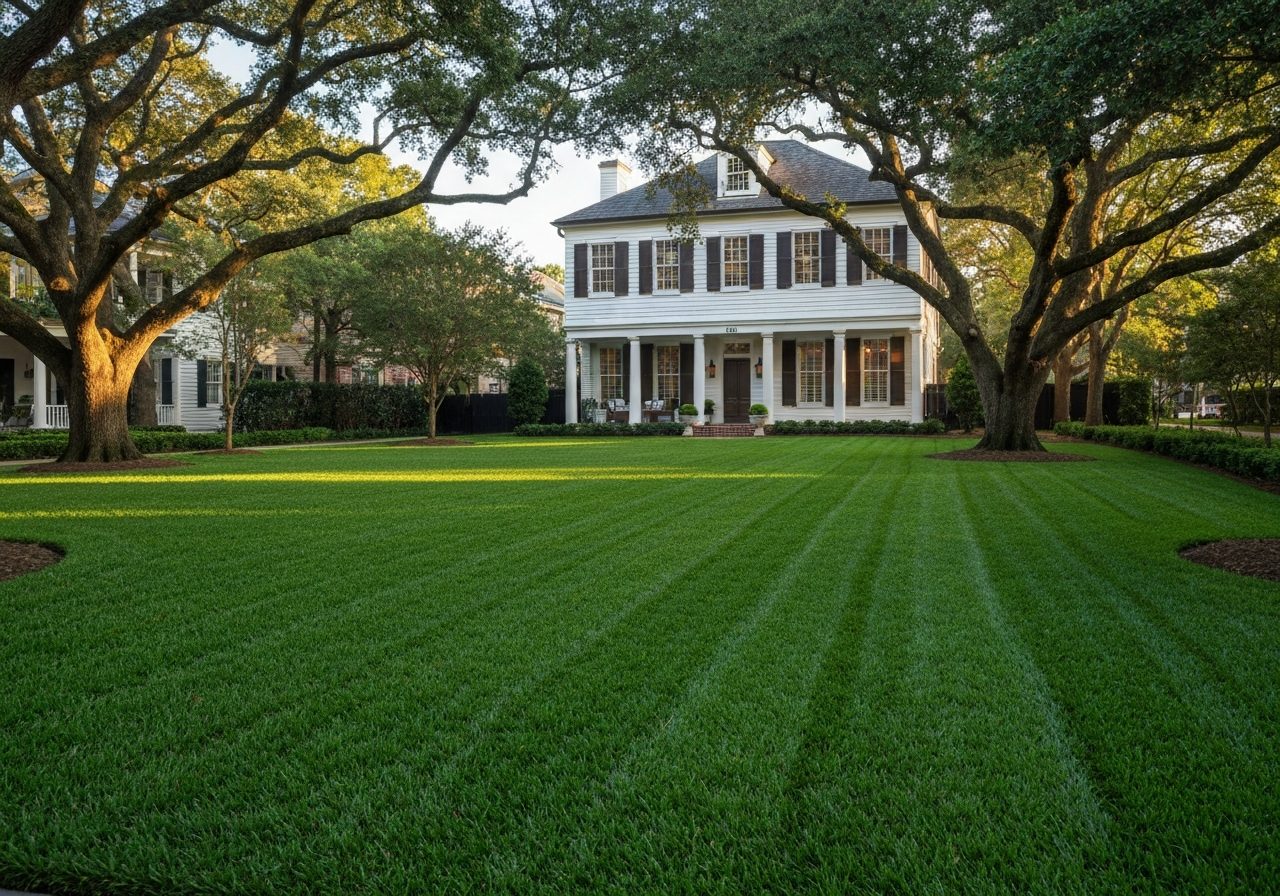
For most open, sunny New Orleans yards Floratam remains the sensible default, because it is what Louisiana farms grow in volume and it carries some chinch bug and SAD resistance. Where live oaks or a neighboring roof put real shade on the yard, Floratam is the wrong choice, since the LSU AgCenter rates its shade tolerance as poor. Palmetto suits shaded lots better, and Raleigh is the option for colder sites north of the lake. Big Easy Sod sources whichever of these fits the yard rather than whichever is on the truck.
Last Updated: September 2026
On this page
- Which St. Augustine cultivars can you actually buy in Louisiana?
- How do the cultivars compare on blade, shade, cold and chinch bugs?
- Is Floratam still the right default for a New Orleans yard?
- Does Palmetto really handle shade better?
- When is Raleigh worth the trade-off?
- Are the newer releases worth asking for?
- Which cultivar suits which New Orleans yard?
- Frequently Asked Questions
St. Augustine is the dominant lawn grass in New Orleans for good reason. The LSU AgCenter rates it the most shade tolerant of the warm season grasses, ahead of zoysia and centipede, which matters in a city full of mature oaks. What people rarely get told is that the cultivar makes almost as much difference as the species, and most yards get whatever the supplier had that week.
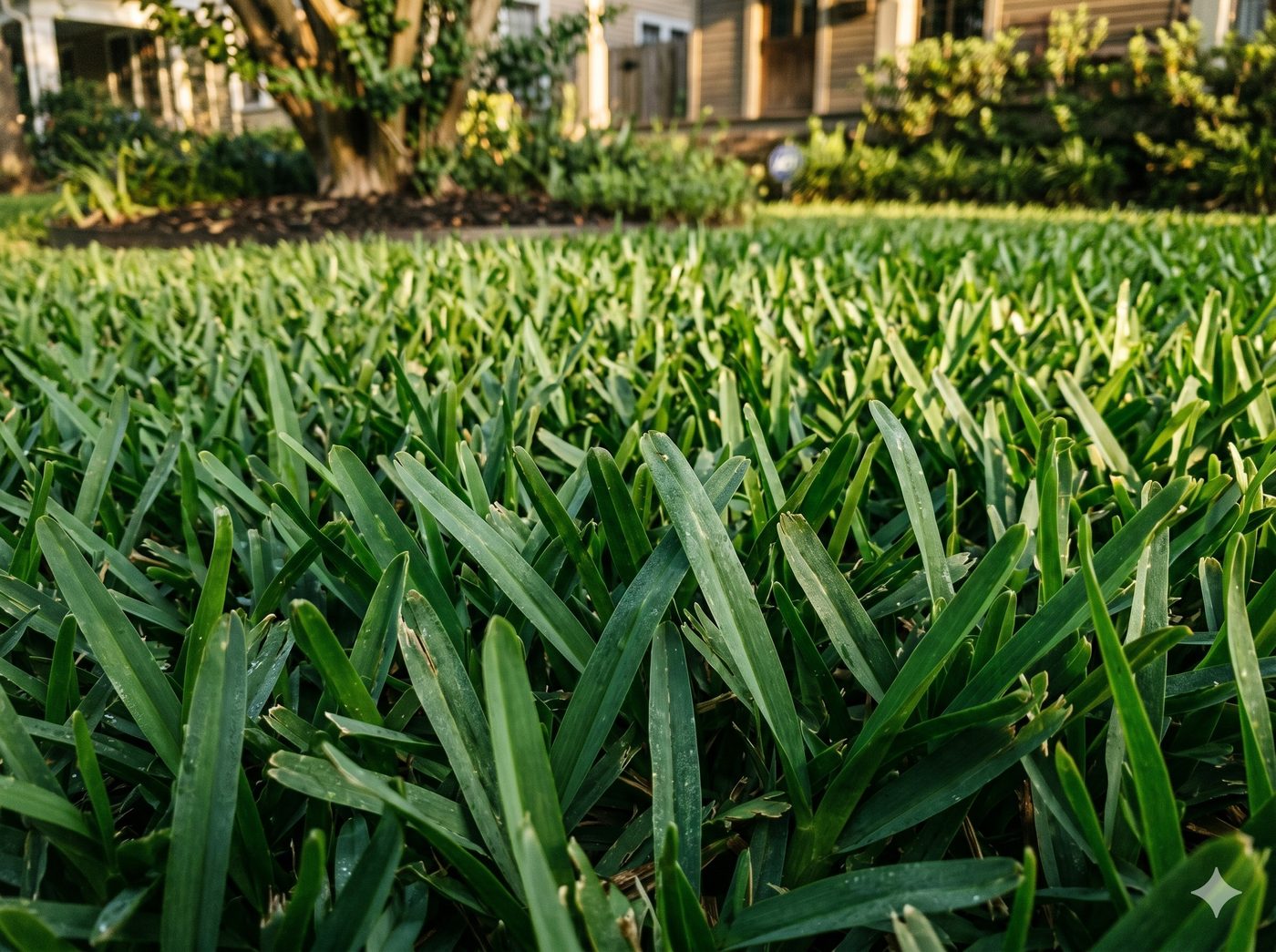
That matters because these cultivars are not interchangeable. One of them has poor shade tolerance and poor cold tolerance and is still the most widely planted grass in the region. Another handles shade noticeably better and is harder to get hold of. Big Easy Sod installs across Orleans and Jefferson Parishes and the Northshore, and the differences below are the ones that come up most often on jobs here. If you are still choosing between species rather than cultivars, our comparison of which grasses suit different New Orleans yards is the better starting point.
Which St. Augustine cultivars can you actually buy in Louisiana?
Four turn up regularly on Louisiana sod farms: Floratam, Palmetto, Raleigh and Seville. Others exist and are worth asking about, but availability is the practical constraint. A cultivar that performs beautifully in trials is no use if no farm within delivery distance is growing it this season.
Ask any installer which cultivar they are quoting, by name. If the answer is just “St. Augustine”, the yard is getting whatever the supplier cut that week, and that is how a shaded lot can end up with the least shade tolerant option on the list.
How do the cultivars compare on blade, shade, cold and chinch bugs?
Blade width comes down to preference, but shade, cold and chinch bug performance are the three that decide whether a lawn survives in this region. The table below sets the four cultivars sold here against each other on all four, so the trade-offs are visible in one place before you commit to an order.
A word on sourcing. The Floratam and Raleigh positions come from LSU AgCenter guidance. Palmetto and Seville are as reported by growers and suppliers, which is a weaker source, so treat those two rows as a starting point to confirm rather than as tested data.
| Cultivar | Blade | Shade | Cold | Chinch bugs | Best fit |
|---|---|---|---|---|---|
| Floratam | Coarse | Poor | Poor | Some resistance | Open, sunny yards |
| Palmetto | Medium | Better than Floratam | Moderate | No special claim | Yards with real shade |
| Raleigh | Medium | Moderate | Better than Floratam | More susceptible | Colder sites north of the lake |
| Seville | Fine | Not established | Poor | Tolerant | Fine blade, mild winters |
Two caveats on reading that. Shade tolerance is relative, not absolute, and no St. Augustine cultivar thrives in deep shade under a dense canopy. And chinch bug resistance has shifted over the years as populations adapted, so treat it as a starting position rather than a guarantee. The signs of chinch bug damage in a browning lawn are worth knowing whichever cultivar goes down.
Is Floratam still the right default for a New Orleans yard?
For open sunny yards, yes. Floratam is the coarse bladed standard, it carries some resistance to St. Augustine Decline and to chinch bugs, and it is what Louisiana farms grow in volume, which keeps it available and keeps the price sensible. In a yard that gets most of a day of sun it performs and it is easy to replace.
The LSU AgCenter is direct about where it fails. It rates Floratam poor for both shade tolerance and cold tolerance, and advises against planting it north of New Orleans because of that cold sensitivity. Those two weaknesses are exactly the conditions that catch people out here. A yard that was sunny when the lawn went in twenty years ago is often not sunny now, and Floratam will thin under a canopy that has closed over it.
Worth knowing too: a Floratam lawn that has been fine for years can start thinning without anything changing in how it is cared for, simply because the trees above it grew. That is the most common version of this problem in older neighborhoods, and it gets misdiagnosed as a watering or fertilizer fault for a season or two before anyone looks up. Our notes on the problems St. Augustine runs into and how to deal with them cover the ones that look similar.
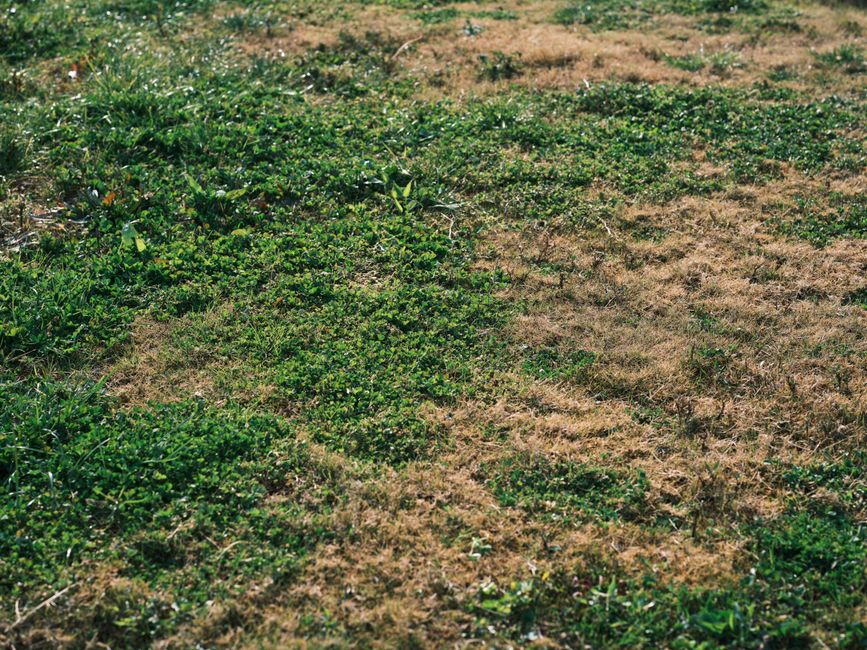
Its coarse blade is also a genuine preference question rather than a defect. Some people want the thick, broad look. Others find it too rough underfoot compared with a finer cultivar.
Does Palmetto really handle shade better?
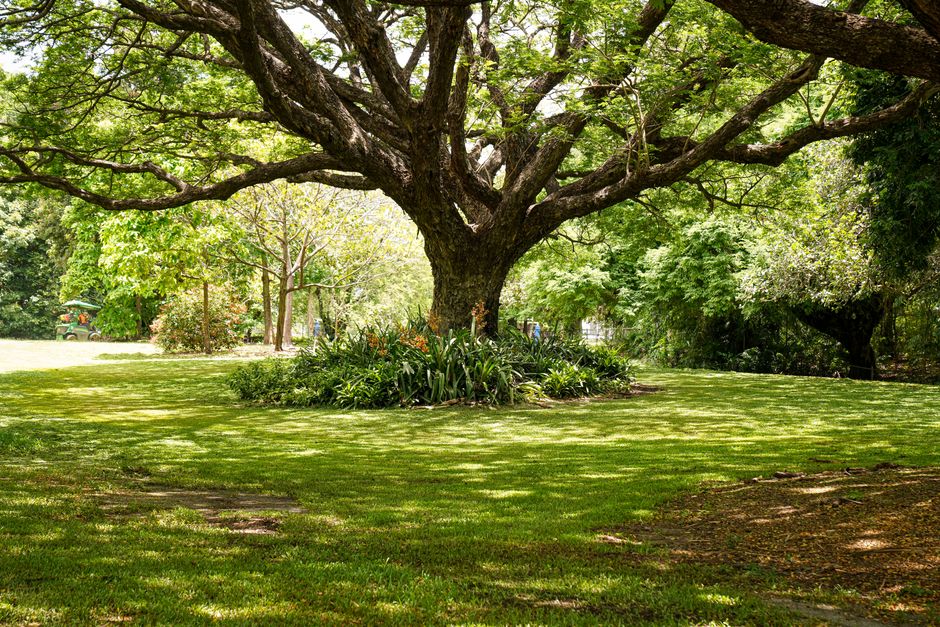
Better than Floratam, yes, and that is the comparison worth making rather than any absolute claim. Palmetto is a medium bladed cultivar marketed on shade performance, and in practice it holds up under the filtered light of a live oak canopy where Floratam thins out. It is the one we most often suggest for a shaded New Orleans lot.
Two things to be realistic about. It is grown in smaller quantities than Floratam, so availability and lead time vary by season, and it is worth asking before the job is booked rather than after. And better shade tolerance is not the same as shade proof. Under a canopy dense enough that little direct light reaches the ground, no St. Augustine will hold, and the honest answer is thinning the canopy or accepting a planting bed instead of grass.
Where a yard is part sun and part deep shade, using one cultivar throughout is usually still right. Our Palmetto sod page covers what we can source and when.
When is Raleigh worth the trade-off?
Raleigh is the cultivar usually reached for on colder sites, which is why it turns up more often north of Lake Pontchartrain than in Orleans Parish. LSU rates Floratam poor on cold and advises against planting it north of New Orleans, so on a site with a freeze history Raleigh is worth comparing directly.
The trade-off is pest pressure. LSU AgCenter research recorded significantly higher chinch bug numbers on Raleigh than on Floratam, so choosing it for cold hardiness means accepting more chinch bug vigilance through summer. In a New Orleans yard that rarely sees a damaging freeze, that trade rarely pays. Further north it can.
Are the newer releases worth asking for?
They are worth asking about, with a caveat. Newer St. Augustine releases such as CitraBlue come out of university breeding programs and are selected for traits including disease performance and color. Whether one is available through a Louisiana farm in the season you are buying is a separate question from whether it exists.
Treat marketing claims on any new cultivar as a starting point rather than settled fact, particularly around shade and pest resistance, because independent local performance data takes years to accumulate. If a newer cultivar is available and the price is comparable, there is no reason not to consider it. There is also no reason to delay a job waiting for one.
Which cultivar suits which New Orleans yard?
Sun and shade decide it, and everything else is secondary. Walk the yard at midday and again in late afternoon and note where direct light actually falls, because most people overestimate how much sun a yard gets once trees have matured. It tells you more about the yard than the cultivar spec does.
- Open yard, most of a day of sun, no significant canopy: Floratam
- Live oak or neighboring roof putting real shade across part of the yard: Palmetto
- North of the lake, or a site with a history of freeze damage: Raleigh
- Deep shade with almost no direct light: no St. Augustine will hold, so thin the canopy or plant beds
A practical way to settle it: photograph the yard from the same spot at about 9am, midday and 4pm on a clear day. Anywhere that is in shade in two of the three shots is a shade site whatever it looks like on a casual glance, and that is the part of the yard the cultivar choice has to suit. Yards that split cleanly between a sunny front and a shaded back are common in this city, and in those cases the shade tolerant cultivar throughout is usually the safer call, because the sunny half will accept it while the shaded half will not accept Floratam.
Whatever goes down, the installation matters as much as the cultivar. A shade tolerant grass laid on compacted clay with no soil preparation still fails. Our St. Augustine sod page covers what we carry, and sod installation across Greater New Orleans sets out what the work includes.
Frequently Asked Questions
Can I mix St. Augustine cultivars in one yard?
It is possible but rarely worth it. Different cultivars have different blade widths and growth rates, so the seam between them stays visible, and the lawn ends up needing two mowing heights.
Which St. Augustine is most shade tolerant?
Palmetto is the one usually put forward for shade, and it is reported to hold up better than Floratam, which LSU rates poor on shade. No St. Augustine cultivar succeeds in deep shade where almost no direct light reaches the ground.
How do I know which cultivar my existing lawn is?
Blade width is the quickest clue: Floratam is noticeably coarser than Seville. Identification from appearance alone is unreliable though, and if the lawn predates you, the honest answer is often that nobody knows.
Does Big Easy Sod carry more than one St. Augustine cultivar?
Big Easy Sod sources by what the yard needs rather than stocking a single option, so which cultivars are available in a given week depends on the Louisiana farms cutting that season. Ask when you get the estimate.
Is Floratam bad for New Orleans?
No, it is the sensible default for sunny yards and the reason it dominates is that it works here. It is only the wrong choice where the yard has meaningful shade or a real freeze risk.
Will changing cultivar fix a lawn that keeps failing?
Only if the cultivar is genuinely mismatched to the light. Where the cause is compaction, drainage or watering, a new cultivar fails the same way the last one did.
Get the cultivar matched to the yard before you order
The cultivar decision is quick once someone has seen where the light actually falls. If the lawn you are replacing failed, diagnose that first, and our guide to bringing a thinning St. Augustine lawn back covers whether replacement is needed at all. Otherwise call (504) 608-3321 or send your measurements.
