
Quick Summary
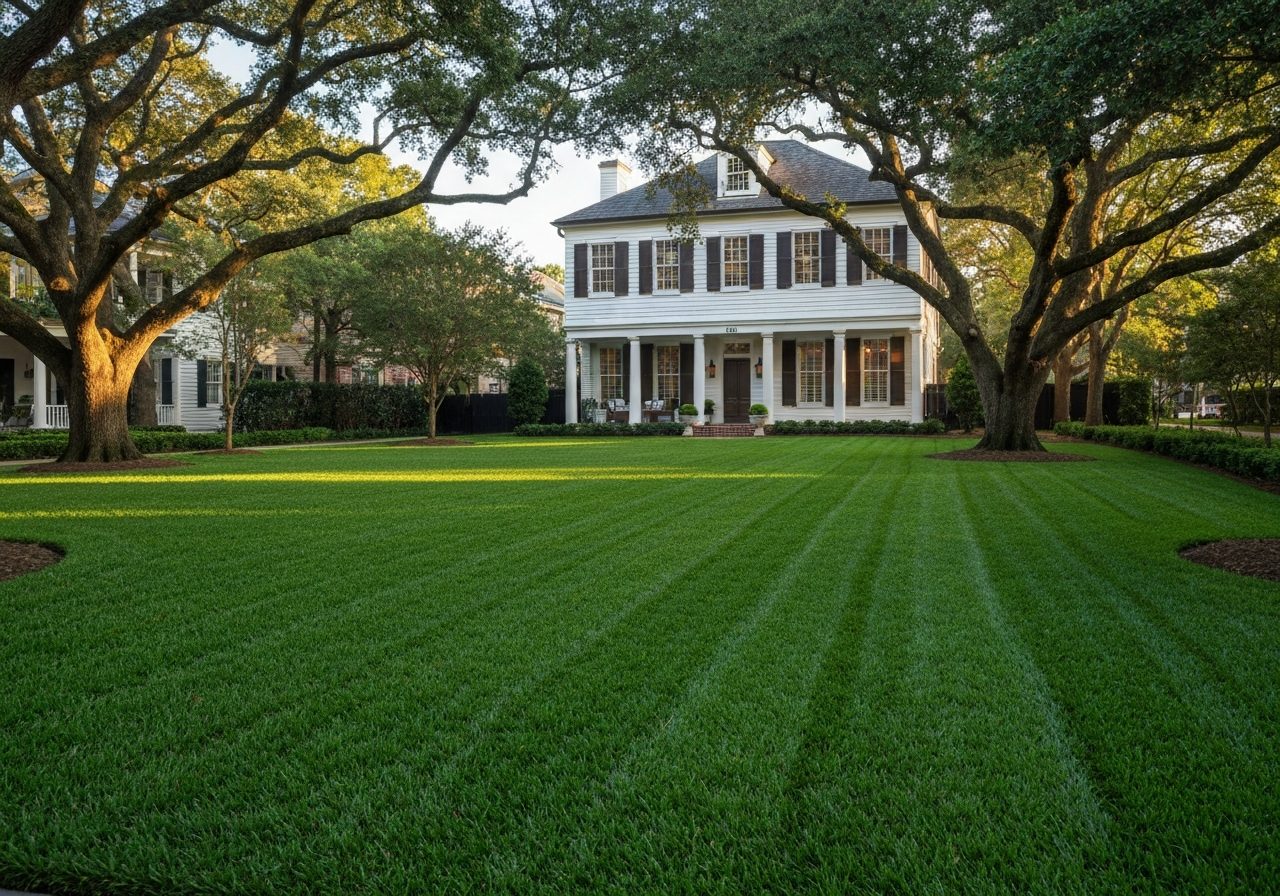
Most thinning St. Augustine in New Orleans can be brought back, but only if the runners are still alive and the steps happen in the right order. Relieve compaction first, correct watering second, and feed last, because fertilizer applied to a stressed lawn pushes top growth the roots cannot support. Give a recovering lawn a full growing season to close in. Big Easy Sod resods across Greater New Orleans when a lawn is past saving, and the honest cutoff is roughly half the yard gone.
Last Updated: September 2026
On this page
- Is the grass actually still alive?
- What order do the recovery steps go in, and why does order matter?
- How do you fix soil compaction on Gulf Coast clay?
- How is watering to recover different from watering to maintain?
- When does feeding a stressed lawn help, and when does it make things worse?
- How long does St. Augustine take to fill back in?
- When does recovery cost more than replacement?
- Frequently Asked Questions
A St. Augustine lawn that has gone thin and patchy is usually recoverable. What decides it is not how brown the surface looks, but whether the runners underneath still have life in them, and whether the thing that damaged the lawn has actually been dealt with. Treating the symptom while the cause is still running is how people spend two seasons and end up resodding anyway.
This is the treatment side. If you are still working out what went wrong, our companion piece on what makes St. Augustine turn brown around New Orleans walks through the diagnosis. Big Easy Sod works across Orleans and Jefferson Parishes and the Northshore, and the sequence below is the order we work in on clay-heavy yards.
Is the grass actually still alive?
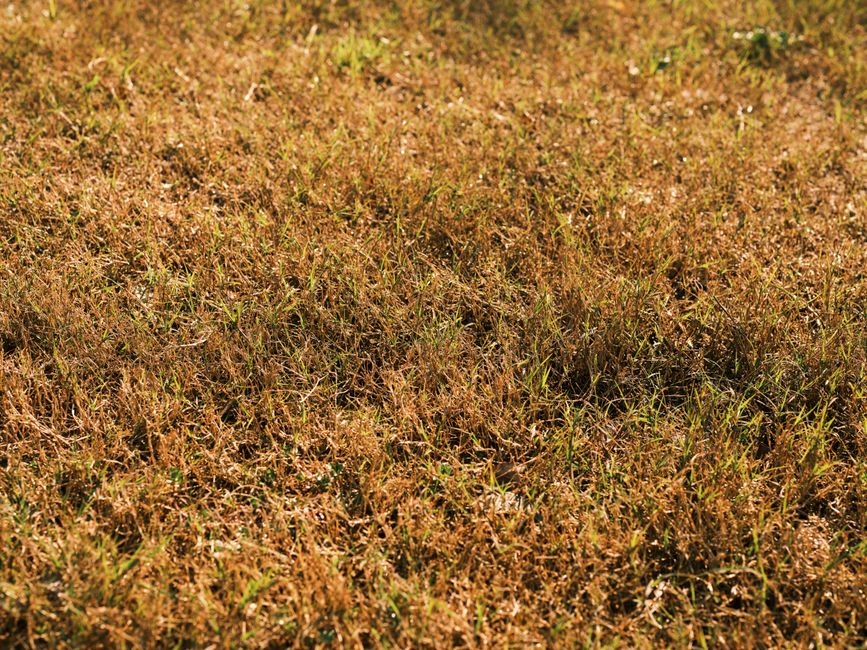
Before spending anything, find out what you are working with. St. Augustine spreads by above ground runners called stolons, and those runners are where recovery comes from. Pull gently on a brown section. If it lifts away and the stems snap dry, that area is gone. If it holds and bends, it is dormant.
Check several spots across the yard rather than one. Lawns rarely fail evenly, and the useful number is roughly what share of the total still has living runners. Scratch a stolon with a thumbnail too. Green or pale cream underneath the outer layer means living tissue. Brown and brittle all the way through does not.
Do this before buying anything. A lawn that is 80 percent alive needs a different plan and a different budget from one that is 30 percent alive, and no product tells the two apart for you.
What order do the recovery steps go in, and why does order matter?
Order matters more than any individual step. The reason lawns fail to recover is almost always that someone fertilized first, because it is the step that feels most like doing something. Feeding a lawn whose roots are sitting in compacted, waterlogged clay forces top growth the root system cannot supply, and the lawn goes backwards.
The working sequence is straightforward:
- Relieve compaction so water and air can reach the root zone
- Correct the watering, which usually means less often and much deeper
- Deal with any active pest or disease pressure
- Only then feed, and lightly
- Wait, and mow high while you wait
Each step makes the next one work. Water applied to compacted ground runs off rather than soaking in, and fertilizer applied before the watering is right tends to burn. Skipping to the end rarely saves time.
How do you fix soil compaction on Gulf Coast clay?
Clay is the root problem in most New Orleans yards. It packs tight under foot traffic and heavy rain, and once compacted it sheds water at the surface instead of letting it through. Roots stay shallow because there is nowhere to go, and a shallow rooted lawn is the first thing to brown when heat arrives.
Core aeration is the fix, and the word core matters. Pulling plugs out creates real channels. Spike aerators that push a hole through simply compress the walls of it, which on clay makes the problem worse. Aerate during active growth so the grass can knit over the holes, and leave the plugs on the surface to break down. Our notes on why aeration matters on lawns in this climate cover timing in more detail.
Topdressing after aerating helps on the worst yards, but use screened material compatible with the soil already there, because a different texture layered on top creates its own drainage problem. Keep it thin. Burying a struggling lawn under half an inch of anything smothers the runners you are trying to save. Keep mowers and parked vehicles off the recovering areas as well, because the traffic that compacted the ground in the first place will undo the aeration within weeks.
How is watering to recover different from watering to maintain?
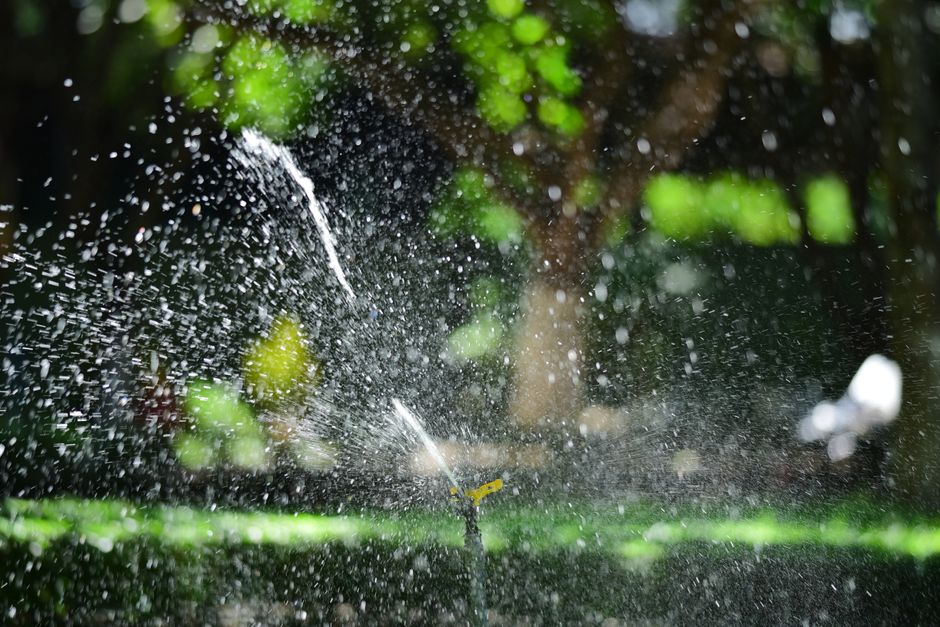
An established lawn wants infrequent deep soaking. A recovering lawn wants the same thing, only more carefully, and the mistake people make is watering it like new sod. Light daily sprinkling keeps the surface damp and teaches roots to stay at the top, which is the opposite of what a thin lawn needs.
Aim for deep and infrequent. Two or three sessions a week that genuinely wet the top several inches do more than daily surface watering, adjusted down whenever rainfall has already done the job. Check with a screwdriver rather than guessing, pushing it into the soil an hour after watering. If it slides in easily you are getting through. If it stops short, water is running off and aeration is still the bottleneck.
Water early in the morning. Evening watering leaves blades wet overnight, which is how fungal problems take hold in a humid climate, and a lawn already under stress has very little margin.
When does feeding a stressed lawn help, and when does it make things worse?
Fertilizer helps a lawn that has been aerated, is watering properly and has living runners ready to spread. It actively harms a lawn that is drought stressed, waterlogged, or fighting an active disease. In those cases nitrogen pushes leaf growth on a plant that cannot support it, and can burn roots already under pressure.
Wait until the recovery basics are in place, then feed lightly rather than heavily. Two modest applications spread across the season do more than one large one, and a soil test is worth doing first because Gulf Coast soils vary block to block and phosphorus is often already sufficient. Our seasonal guide to feeding a lawn through the New Orleans year sets out the timing, and if you would rather not track it, scheduled fertilization handles the calendar.
Never fertilize in the peak of summer heat as a rescue measure. It is one of the fastest ways to finish off a lawn that was still recoverable.
Weeds are the other reason order matters. Bare ground fills with something, and if it is not St. Augustine runners it is often crabgrass or sedge, both of which establish faster than the lawn you are trying to save. Note they need different controls: crabgrass is a grass, and sedge regrows from underground tubers, so hand pulling often leaves those behind. Herbicides on a stressed St. Augustine lawn can do more harm than the weeds were doing, and this grass is sensitive to several common products, so use only something labeled for St. Augustine and for the weed and temperature you actually have.
How long does St. Augustine take to fill back in?
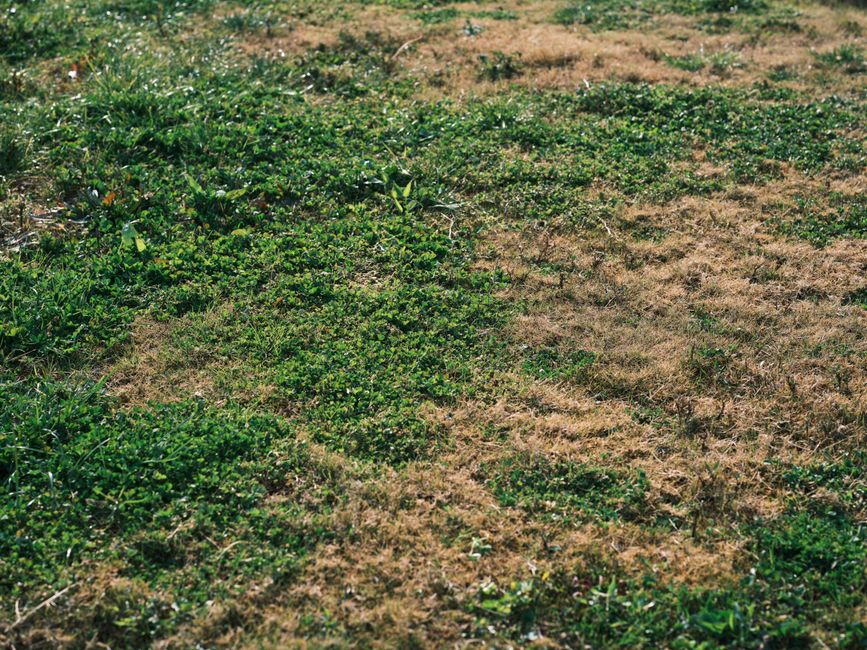
Give it a full growing season. St. Augustine spreads by runners rather than by seed, so bare areas close from the edges inward, and the rate depends on how far the runners have to travel. Small thin patches surrounded by healthy grass can close in six to eight weeks during active growth. Larger bare areas take considerably longer.
Large isolated bare areas are the ones usually worth patching rather than waiting on, because exposed soil invites weeds and washes in heavy rain while natural closure stays unpredictable. As a working rule we treat anything much beyond a couple of feet across as a patching job, though how fast runners actually travel depends on the season and how healthy the surrounding grass is.
Mow high throughout. The LSU AgCenter puts St. Augustine at about 2.5 to 3 inches in full sun and 3 to 3.5 inches in shade, and advises never removing more than a third of the blade in one cut. Every pass takes leaf area the plant needs to rebuild roots, and scalping a recovering lawn undoes weeks of progress in an afternoon.
When does recovery cost more than replacement?
There is no scientific threshold here. As a rough guide, once around half the yard has no living runners, or the same areas have failed two seasons running despite the basics being right, treatment starts costing more in products and months than it returns. How the survivors are spread through the lawn matters as much as the percentage does.
Two other situations point the same way. A lawn failing because of a drainage fault will keep failing until the ground is corrected, so money spent on the grass is money spent twice. And a lawn thinning because the yard has grown into deep shade may simply be the wrong grass for what the site has become, which is worth checking against which grasses suit different New Orleans yards.
Where the damage is confined to defined areas rather than spread through the lawn, replacing only the failed sections keeps the healthy grass and is normally the cheaper option. Where it is genuinely widespread, sod replacement and reseeding puts grass down in a day, though establishment still takes the same weeks any new sod needs.
Frequently Asked Questions
Can brown St. Augustine come back, or is it dead?
Brown blades often sit above living runners, so color alone does not settle it. Pull a section: if it resists and the stems bend rather than snap, the lawn is dormant or stressed rather than dead.
Should I dethatch a struggling St. Augustine lawn?
Not as a first move. Dethatching is aggressive and tears at runners, which is the tissue a recovery depends on. Core aeration achieves more on clay soil with far less damage.
How soon after aerating can I fertilize?
Wait until you have seen new growth and the watering is right, usually a few weeks. Feeding immediately after aeration on a stressed lawn pushes growth the roots are not yet able to support.
Will watering more often bring a thin lawn back faster?
No, and it commonly makes things worse. Frequent light watering keeps roots shallow. Fewer, deeper sessions pull roots down, which is what a recovering lawn needs.
Does Big Easy Sod repair patches, or only whole lawns?
Both. Big Easy Sod handles partial replacement where the damage sits in defined areas, and full resodding across Greater New Orleans where a lawn is too far gone to recover.
Is it worth reviving a lawn in deep shade?
Often not, if the shade has increased since the lawn went in. Grass that no longer gets the light it needs will thin again after any recovery, so the variety or the tree canopy has to change.
Find out whether the lawn is worth saving
The pull test takes five minutes and costs nothing, though it only tells you whether the grass is alive, not what killed it. If the same patches keep failing each season, a look at the yard settles which route is cheaper. Call (504) 608-3321, or send the measurements of the failed areas.
