Last Updated: October 25, 2026
Table of Contents
- Which pests and diseases hit Louisiana lawns most often?
- What do chinch bugs look like, and how do you catch them early?
- How do you identify armyworms and sod webworms?
- What is brown patch, and how do you keep it off the lawn?
- What is gray leaf spot and dollar spot?
- How do you prevent most pest and disease problems in the first place?
- When should you call a lawn pro instead of handling it yourself?
- Frequently Asked Questions
- Ready to replace a section the pests already took?
Quick Summary: Louisiana lawns deal with a short list of recurring pests and diseases: chinch bugs, armyworms, sod webworms, brown patch, gray leaf spot and dollar spot. Most are easier to prevent than to cure. Watering in the morning, holding fertilizer to a sensible rate, and catching early signs on a weekly walk keeps the yard off the treatment list.
Which pests and diseases hit Louisiana lawns most often?
Louisiana warm-season lawns deal with a short, repeating list of problems. On the insect side, southern chinch bugs, armyworms and sod webworms are the common ones. On the disease side, brown patch, gray leaf spot and dollar spot show up most years, especially on St. Augustine. LSU AgCenter tracks all of these as recurring Gulf Coast lawn concerns.
Most of these problems hit St. Augustine lawns the hardest, and St. Augustine is one of the common choices for shaded New Orleans yards. Big Easy Sod installs replacement sod across Greater New Orleans and the Northshore, and the triage below helps you catch the common issues before they take whole sections of the lawn.
What do chinch bugs look like, and how do you catch them early?
Chinch bugs are small insects that feed on St. Augustine by sucking sap from stems and stolons. Adults are about ant-sized, with black bodies and white wings that form an X across the back. Nymphs are smaller, orange to black, with a pale band across the body. LSU AgCenter tracks them as a recurring St. Augustine pest.
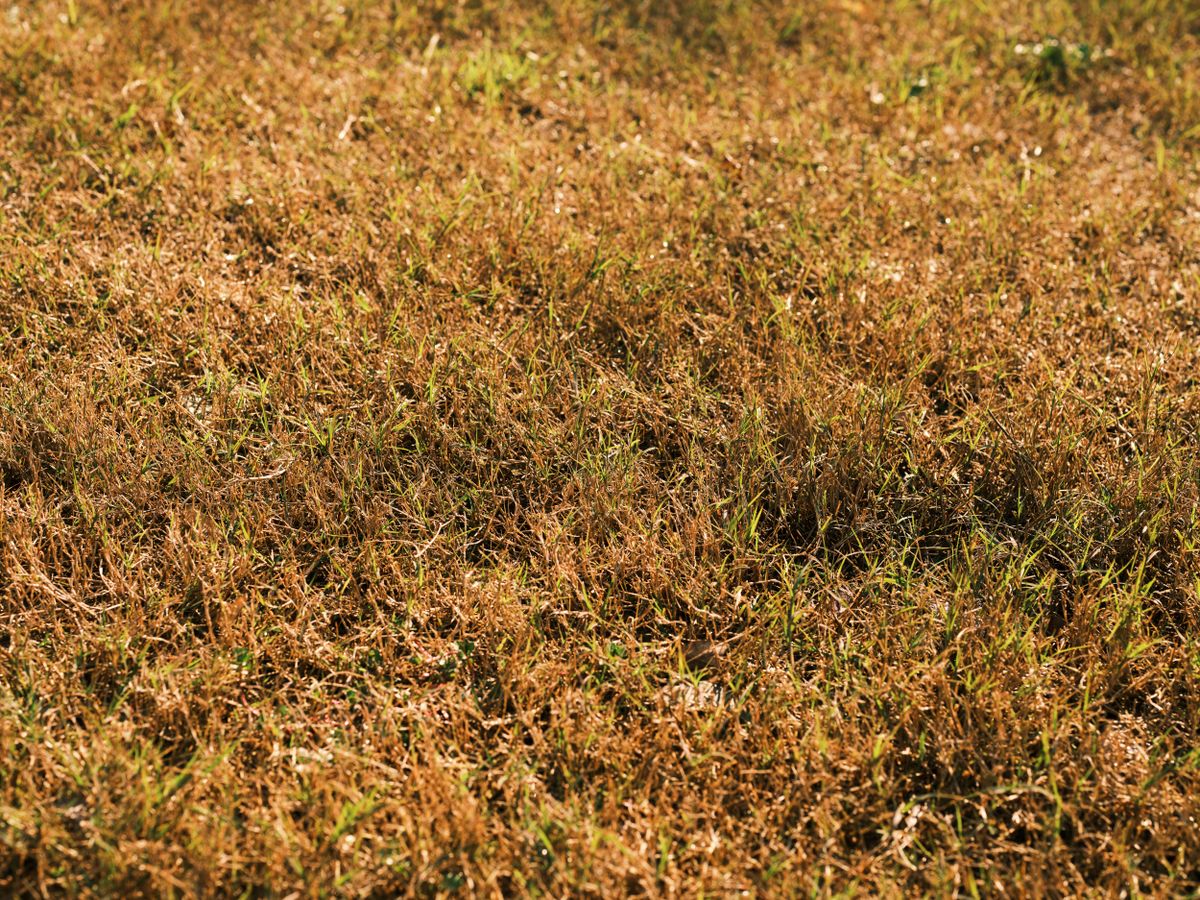
Chinch bug damage shows as yellowing patches that turn brown and die, usually in the sunniest, hottest, driest parts of the lawn first. A quick field test is to push an open-ended coffee can into the grass, fill it with water, and watch for bugs floating to the surface within a few minutes. Catching them early makes treatment far simpler than after a patch has already died.
How do you identify armyworms and sod webworms?
Armyworms and tropical sod webworms are both caterpillars that chew the blades off a warm-season lawn, often leaving the base intact. The damage usually looks like a thin, closely cropped patch rather than a yellow one. Peak armyworm season in Louisiana is late summer and early fall. Sod webworms run through most of the growing season.
Both pests tend to hit St. Augustine first, though they will spread to zoysia and Bermuda in a bad year. If you see small moths flying up from the lawn in waves when you mow, you are usually looking at webworm adults. Birds pecking at the lawn in groups is another clue; they are feeding on the larvae. Our guide to St. Augustine browning in New Orleans covers the overlap between pest and disease signs.
What is brown patch, and how do you keep it off the lawn?
Brown patch is the most common fungal disease on St. Augustine lawns in Louisiana. It appears as roughly circular brown patches of dying grass, usually in the cool, wet months when temperatures drop into the 60s and 70s and the lawn stays damp overnight. The LSU AgCenter calls it a yearly fall and spring concern on St. Augustine.
Prevention beats treatment. Water in the morning so the lawn dries before dusk. Keep nitrogen off the lawn in cool months, when extra feeding fuels the fungus. Dethatch if the thatch layer has grown thick. If brown patch takes hold, fungicide applications can slow it, but a bad year on an untreated lawn can take out large sections before green-up. For dieback that keeps returning, our St. Augustine Decline in Louisiana write-up covers the related pattern.
What is gray leaf spot and dollar spot?
Gray leaf spot is a fungal disease that hits St. Augustine lawns in warm, humid weather, which the Gulf Coast delivers reliably. It shows as small gray or brown spots on the blades, often with a dark border, and can spread into larger thinned-out sections. Dollar spot shows as small, silver-dollar-sized patches of straw-colored grass, usually on undernourished lawns.
Both respond to the same prevention plan as brown patch: morning watering, sensible fertilizer, and no over-irrigation. Dollar spot in particular often clears up with a light nitrogen application, since it tends to show up on lawns running short on feed. If multiple diseases are present on the same lawn in the same year, that is a signal to call a licensed applicator rather than DIY.
| Problem | Variety hit hardest | Season | ID clue | Fix starts with |
|---|---|---|---|---|
| Chinch bug | St. Augustine | Hot, dry summer | Yellowing in sunniest spots; coffee-can float test | Insecticide + lawn watering |
| Armyworm | St. Augustine (any warm-season) | Late summer, early fall | Thin, closely cropped patches; birds feeding | Insecticide per label |
| Sod webworm | St. Augustine (any warm-season) | Growing season | Moths flying up when you mow | Insecticide per label |
| Brown patch | St. Augustine | Cool, wet spring and fall | Circular brown patches, 60-70F weather | Morning watering + skip N |
| Gray leaf spot | St. Augustine | Warm, humid weather | Gray-brown blade spots with dark borders | Reduce overhead watering |
| Dollar spot | Any warm-season | Growing season on undernourished lawns | Silver-dollar-sized straw patches | Correct nutrition per soil test |
How do you prevent most pest and disease problems in the first place?
The prevention plan for Louisiana lawns is boring on purpose. Mow at the right height for the variety. Water deeply and infrequently in the morning so the lawn dries before dusk. Hold fertilizer to the rate the grass needs, and skip nitrogen in the cool months when fungi are active. Keep thatch in check with occasional dethatching.
Walk the yard every week or two. Catching a yellow patch at 2 feet across is a different job than catching the same problem at 20 feet across. The Jefferson Parish lawn care calendar covers the seasonal timing for the main maintenance tasks.
When should you call a lawn pro instead of handling it yourself?
DIY works for isolated problems caught early. Call a professional once the damage has spread across more than a few square feet, multiple issues are present at once, or you have tried a treatment and the problem keeps coming back. Pesticide and fungicide labels are strict for a reason, and misapplication can kill the lawn faster than the pest.
If the damage is already past the point of treatment, resodding the dead sections is sometimes cheaper than another season of treating a lost cause. The sod installation service page covers how a replacement job gets scoped.
Frequently Asked Questions
Should I treat the whole yard or just the damaged section?
Most insect and fungal treatments are broadcast across the lawn, since the problem is almost always wider than the visible damage. Spot treatments can work for very small, caught-early patches, but relying on them for anything bigger usually wastes product.
Will new sod bring pests with it?
Fresh sod from a Louisiana farm is typically inspected before leaving. Carrying a pest into a new yard is rare, though it is not impossible. Watering and establishing the lawn on schedule gives it the best chance to shrug off whatever happens to show up.
Can I prevent all of this with a different grass variety?
Not entirely, but variety matters. St. Augustine takes the most pest pressure of the four common Louisiana grasses. Centipede, zoysia and Bermuda all deal with their own issues but tend to see fewer insect problems. Call us at (504) 608-3321 if you are weighing a variety switch.
Where can I identify a specific pest or disease?
The LSU AgCenter publishes identification guides for the common Louisiana lawn pests and diseases, and your parish extension office can confirm an identification from a photo or sample.
Ready to replace a section the pests already took?
If a pest or disease has already killed a section of the lawn, resodding is often the cleanest path back to a healthy yard, as long as the underlying cause has been handled first. Send us the square footage, a photo of the damage, and what has already been treated and we will come back with a quote.