
Quick Summary
Seed is cheaper per square foot, but for most New Orleans yards it is not a choice at all. St. Augustine, the dominant lawn grass in this market, does not produce viable seed, so a St. Augustine lawn can only be started from sod, plugs or sprigs. Where seed is possible, it buys a lower material cost in exchange for months of bare ground in a climate that fills bare ground with weeds.
Last Updated: September 2026
On this page
- Is it cheaper to reseed or sod in New Orleans?
- Can you grow St. Augustine from seed?
- Which New Orleans grasses can actually be seeded?
- How long does each option take to give you a lawn?
- What does the comparison look like once time is counted?
- When does seeding actually make sense here?
- Frequently Asked Questions
On paper seed wins easily. A bag of seed costs a fraction of a pallet of sod, and that is the comparison most people start from. It is also the wrong comparison for a large share of New Orleans yards, for a reason that has nothing to do with money.
Big Easy Sod installs across Greater New Orleans and the Northshore, and this question comes up on nearly every quote. The answer turns first on which grass you want, because that decides whether seed is even available.
Is it cheaper to reseed or sod in New Orleans?
Seed costs less per square foot, and for the grass most local lawns are made of it is not an option at all. That single fact settles the question for a large share of yards here before any price comparison starts, which is why the decision is about the variety first and the budget second.
Where seed is genuinely available, the money question is real but incomplete. Seed buys a lower material cost and pays for it in time, and time in this climate is not free: bare ground through a Gulf Coast summer is an invitation to weeds, washouts after heavy rain, and repeated intervention that costs money of its own.
Sod buys the opposite trade. It costs more up front, and it gives you a covered lawn immediately rather than months of establishment. Our guide to what sod installation costs in New Orleans sets out the installed figures if you want the sod side priced properly.
Can you grow St. Augustine from seed?
No. St. Augustine does not produce viable seed, so it cannot be established that way at all. It is the dominant lawn grass across this market, which means for a very large share of New Orleans yards the reseed option does not exist and the real choice is between sod, plugs and sprigs.
Plugs and sprigs are the alternatives people reach for when the sod price lands, and they are worth understanding rather than assuming. Both start from living plant material rather than seed, both cost less in materials than full sod, and both ask for multiple growing seasons to reach the coverage a sod install delivers in its first month.
That waiting period is the part that gets underestimated. A plugged lawn is a partly bare lawn for a long time, and in this climate partly bare means weed pressure, uneven establishment and extended weed control before it closes. Our comparison of the St. Augustine cultivars available in Louisiana covers which ones are worth asking for.
Which New Orleans grasses can actually be seeded?
Bermuda and centipede are both available as seed, and among the zoysias only Zoysia japonica is sold that way commercially, according to University of Florida extension. So seeding is a real option here, but only if you want one of those grasses rather than St. Augustine.
Each of those carries its own constraint. Bermuda needs at least eight hours of direct sun and will thin under any real shade, so a seeded bermuda lawn under a live oak fails for reasons unrelated to how it was started. Centipede is slow to establish even from sod, and slower again from seed.
The zoysia point matters most to anyone comparing cultivars. The seeded japonica types are the coarser ones, so choosing seed also means choosing away from the fine bladed matrella cultivars. Our guide to which sod type suits a New Orleans yard sets out what each grass wants.
How long does each option take to give you a lawn?
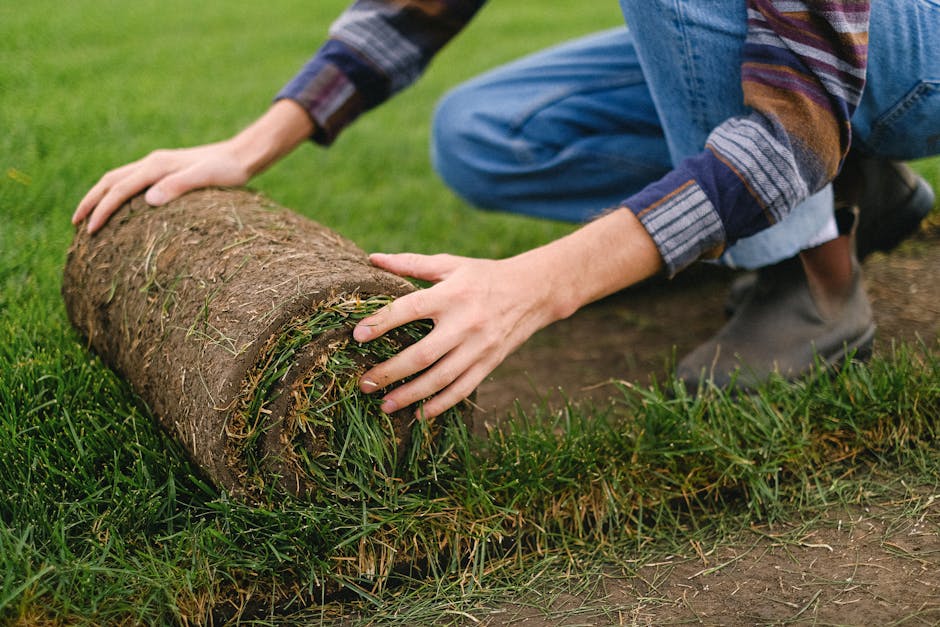
Sod covers the ground the day it is laid and roots over the following weeks. Seed gives you bare soil first, then thin patchy growth, then a lawn if the weather cooperates, and plugs or sprigs ask for multiple growing seasons to close in completely.
The gap is not just aesthetic. A rooted sod lawn is holding soil in place within weeks, which matters on a site that sheds water after a storm. Seeded ground is loose and open until the grass knits, and a single heavy rain in that window can move a meaningful share of the seed somewhere you did not want it.
What happens underneath a new sod lawn during those weeks is covered in our guide to how long new sod takes to root in Louisiana, which is the equivalent establishment window for the sod route.
What does the comparison look like once time is counted?
Seed is cheaper in materials and more expensive in everything else. You are paying in months of watering a bare yard, in weed control on ground that has no turf competing, and in the real chance of overseeding thin areas again the following season before the lawn finally closes.
Sod front loads the cost and removes most of that. Ground preparation is needed either way, which is the part people leave out of the comparison entirely, and it is often the largest single line on a lawn project regardless of which route you pick.
That preparation is worth pricing before choosing. Our guide to preparing a yard before sod goes down covers the grading, clearing and leveling that both options need, and skipping it is the most common reason either one fails.
When does seeding actually make sense here?
On a large area where the budget will not stretch to sod, on a yard in full sun where bermuda is genuinely the right grass, and where nobody needs to use the space for a season. Those conditions do occur, and where they all hold seeding is a reasonable choice rather than a compromise.
There is also a middle route that gets overlooked. Overseeding an existing lawn is a different job from starting one, and it is a normal seasonal practice here rather than an alternative to sod. Our guide to whether to overseed a New Orleans lawn in fall covers that case.
Where the yard is small, shaded, visible from the street, or needs to be usable this season, sod is usually the answer even when seed is technically possible. That is a judgement about the yard rather than a rule, which is why it is worth talking through before ordering anything.
Frequently Asked Questions
Is seed cheaper than sod?
Per square foot of material, yes, substantially. Once ground preparation, months of watering, weed control on open ground and the likelihood of reseeding thin areas are counted, the gap narrows considerably.
Why can’t you seed St. Augustine grass?
It does not produce viable seed. St. Augustine is established from sod, plugs or sprigs instead, which is why the seed option simply does not exist for the most common lawn grass in this market.
Can I seed bermuda grass in New Orleans?
Yes, bermuda is available as seed. The constraint is light rather than the method: bermuda needs at least eight hours of direct sun, so a seeded bermuda lawn in a shaded yard fails for the same reason a sodded one would.
How long before a seeded lawn looks like a lawn?
Considerably longer than sod, which is complete on day one. Seed goes through bare soil and patchy growth first, and plugs or sprigs can take multiple growing seasons to close in fully.
Do I still need to prepare the ground if I am seeding?
Yes. Grading, clearing and soil work are needed whichever route you choose, which is why they belong in both sides of any cost comparison, even though the finish each one wants can differ.
Is a plugged St. Augustine lawn cheaper than sod?
In materials, yes. It also leaves you with a partly bare lawn for multiple growing seasons, and in this climate open ground between plugs is where weeds establish first.
Get the variety settled before you compare prices
Which grass suits the yard decides whether seeding is even available, so it is the question worth answering first. Once the variety is set, the comparison becomes straightforward. Call (504) 608-3321, or tell us the light and size of the yard and we will tell you which grasses are actually on the table. If the answer is sod, our installation service covers delivery and laying.
