Last Updated: October 9, 2026
Table of Contents
- Is centipede sod the right low-maintenance grass for a New Orleans yard?
- What makes centipede the easiest warm-season grass to live with?
- Where does centipede struggle in a New Orleans or Northshore yard?
- How does centipede sod go down, and how long before it roots?
- What does centipede ask for after installation?
- What is centipede decline, and how do you keep your lawn clear of it?
- How does centipede compare to St. Augustine and zoysia for a Louisiana lawn?
- Frequently Asked Questions
- Ready to order fresh centipede sod?
Quick Summary: Centipede is the easiest warm-season sod to live with in New Orleans, and it is a major grass grown on Louisiana sod farms. It wants acid soil, light fertilizer, and full sun to light shade. Heavy shade, high foot traffic or clay-heavy soil push you toward St. Augustine or zoysia instead.
Is centipede sod the right low-maintenance grass for a New Orleans yard?
Centipede is a strong fit for a New Orleans yard with full sun or light shade, good drainage, and slightly acidic soil. It runs on a lighter fertilizer schedule than St. Augustine or zoysia, grows slowly, and is well suited to the Louisiana climate. Heavy shade, high foot traffic or clay-heavy soil push you toward another grass instead.
If low maintenance is the whole reason you are shopping for new sod, centipede is usually the first grass worth considering. If you are not sure whether your yard fits, Big Easy Sod delivers and installs centipede across Greater New Orleans and the Northshore, and we match the grass to the yard before any pallet goes on the truck.
What makes centipede the easiest warm-season grass to live with?
Centipede earns its reputation on three habits: it eats very little fertilizer, it grows slowly, and it tolerates acid soil. LSU AgCenter guidance caps centipede at about one pound of nitrogen per 1,000 square feet per year, well below what a St. Augustine or Bermuda lawn asks for. Mowing drops off at the same time.
Centipede prefers acid soil in the 5.0 to 6.0 pH range. A soil test is the only reliable way to know yours; sandy loam and loamy Northshore yards sit inside the range more often than the heavy clay closer to the river. You often skip the lime that neutral-soil grasses need, and the grass is at home in that chemistry rather than fighting it. If you want background on the Louisiana warm-season options we carry, the rundown of the best sod types for New Orleans lawns walks through every variety.
Where does centipede struggle in a New Orleans or Northshore yard?
Three conditions give centipede trouble in Louisiana. Heavy shade is the biggest. Centipede tolerates light shade, but once a yard sits in deep shade most of the day, the lawn thins out and gets patchy. St. Augustine handles that same spot better and is our usual pick for shaded Northshore yards.
The second condition is high foot traffic. Centipede recovers slowly, so a yard with kids running the same path to the back fence will show that path by midsummer. The third is soil that drifts above a 6.5 pH or that is heavy clay with poor drainage. Centipede sits unhappily in waterlogged clay, which is a real factor near the river and in the lower parts of New Orleans East. If St. Augustine is already on your shortlist for the shade reason, the side-by-side read on zoysia versus St. Augustine in New Orleans covers which one wins in which conditions.
How does centipede sod go down, and how long before it roots?
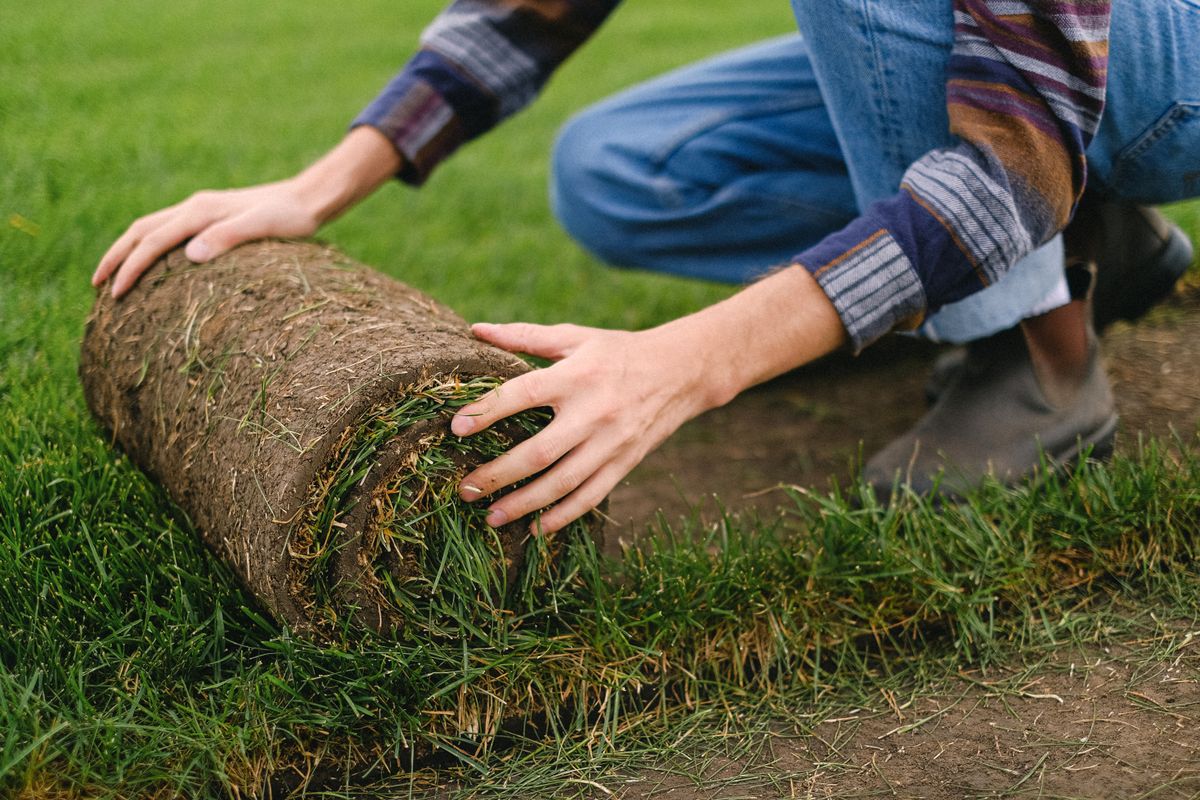
Centipede sod goes down like other warm-season varieties: we strip or kill the existing lawn, grade the base so water runs off, and lay fresh rolls edge to edge with the joints staggered. The yard then gets rolled to press the sod into the soil. Visible rooting shows in about two weeks, with full establishment running four to six weeks.
Timing matters for all of this. Centipede sodded in late spring or early summer, when the soil is warm and we are not in a drought stretch, roots the fastest. A late-fall install still takes, but establishment stretches into the following spring. The best time to install sod in New Orleans walks month by month, and the sod installation service page covers how our crew handles base prep, delivery and rolling.
What does centipede ask for after installation?
Centipede asks for a lot in the first two weeks and almost nothing after. For fourteen days, the sod needs water twice a day, morning and late afternoon, enough to keep the top inch of soil consistently damp. After the rolls knit in, taper to one deep soak a week in the growing season.
Mow at one to two inches, never cutting more than a third of the blade off in a pass. Bag or mulch as you prefer. Dethatch every couple of years if the thatch layer gets past half an inch, and keep the soil pH tested every three or four years. Fertilize no more than once in late spring, using a slow-release product rated for centipede at the LSU AgCenter rate above. That is almost the whole aftercare plan.
What is centipede decline, and how do you keep your lawn clear of it?
Centipede decline is a well-known pattern across Southeast lawns, where patches of an otherwise healthy centipede lawn die back in late spring after a cold winter. LSU AgCenter guidance points to over-fertilization with nitrogen, thatch buildup, soil pH drifting out of the 5.0 to 6.0 band, cold injury and other site stress as the main triggers.
In most cases, decline reflects care that is too aggressive rather than a disease the lawn caught. The prevention plan is boring on purpose. Hold fertilizer to one pound of nitrogen per 1,000 square feet per year, applied once in late spring. Dethatch every couple of years if the thatch layer gets past half an inch. Test soil pH every three or four years. If decline does show up, patching with fresh centipede rolls is cleaner than overseeding, since overseed timing fights the warm-season growth cycle. The pattern is in the same family as the one covered in our write-up on St. Augustine Decline in Louisiana, though the triggers and fix are different.
| Grass | Sun need | Foot traffic | Fertilizer load | Shade tolerance |
|---|---|---|---|---|
| Centipede | Full sun to light shade | Low to moderate | Lightest (~1 lb N/yr) | Light shade only |
| St. Augustine | Sun to heavy shade | Moderate | Moderate to heavy | Best in shade |
| Zoysia | Full sun to light shade | Moderate to high | Moderate | Light to moderate |
| Bermuda | Full sun only | High | Heaviest (4-6 lb N/yr) | Poor in shade |
How does centipede compare to St. Augustine and zoysia for a Louisiana lawn?
St. Augustine is the shade champion of the warm-season set. For heavy tree cover, it beats centipede on shade tolerance and fills gaps faster, though it costs more to feed and mow. Zoysia sits in the middle: better foot-traffic recovery than centipede, finer texture than St. Augustine, lighter feed than St. Augustine but heavier than centipede.
The one-sentence version: pick centipede when you want the least work, pick St. Augustine when you have heavy shade, pick zoysia when you need foot-traffic recovery or a finer-looking lawn and are willing to feed it more. For most New Orleans yards with a decent amount of sun, centipede is the lightest grass to keep up year after year. The centipede grass sod page on our site covers the pallet options and ordering details.
Frequently Asked Questions
How much centipede sod will I need?
Measure your yard in square feet, then order about ten percent more to cover cuts, waste and the odd patch along edges or around flower beds. A standard Big Easy Sod pallet of centipede covers around 450 to 500 square feet.
Can I lay centipede sod myself?
You can. The two parts that catch homeowners are grading the base so the yard drains and keeping the first two weeks of watering consistent. If either feels like too much, call us at (504) 608-3321 and we will quote delivery alone, delivery plus install, or install over a yard you have already prepped.
Can centipede handle Louisiana winters?
Centipede goes dormant in the cooler months and greens back up in spring. A hard freeze can leave patches brown for longer than usual, but a healthy centipede lawn comes back without reseeding in most south Louisiana yards.
Should I plant centipede from seed or from sod?
Sod. Centipede seed is slow to germinate and uneven in Louisiana soil. Sod gets you a finished lawn in a day, roots inside two weeks, and skips the weed-pressure problem that bare-soil seeding runs into.
Ready to order fresh centipede sod?
If you want a low-maintenance lawn grown on Louisiana sod farms, centipede is the right starting point. Send us the square footage and what the current yard looks like and we will come back with a quote that spells out the pallets, delivery window and install cost separately.