Last Updated: October 11, 2026
Table of Contents
- What does “sod and dirt filling” actually mean in New Orleans?
- Why do New Orleans yards need fill before new sod?
- How much fill does a yard usually need?
- What is the difference between fill dirt, topsoil and sand?
- Why does fill in New Orleans clay keep settling?
- What does the full fill-and-sod process look like?
- How does fill change the cost of a new sod install?
- Frequently Asked Questions
- Ready to talk about a fill and resod together?
Quick Summary: Sod and dirt filling is grading a yard, bringing in fill or topsoil, and finishing with fresh sod. New Orleans yards often need it because clay soil settles and old lawns leave low spots. The usual approach is fill in 6 to 8 inch lifts with each layer tamped, topped with screened topsoil, then sod.
What does “sod and dirt filling” actually mean in New Orleans?
Sod and dirt filling is the combined work of correcting a yard’s grade with fresh dirt and finishing with new sod. A crew brings both, grades, firms up the base, and lays rolls over the fresh dirt. The alternative is ordering fill one month and sod the next, which usually costs more time and sometimes more money.
If a yard has sunken spots, puddles after rain, or has lost grass over shifting clay, a straight resod often does not hold. Big Easy Sod handles grading and sod across Greater New Orleans and the Northshore, which keeps the schedule tight and the quote clearer.
Why do New Orleans yards need fill before new sod?
Much of New Orleans sits on soft clay that can shift. On affected yards, a lawn that was level at build time often develops low spots along slabs, around downspouts, and under old trees. Fresh sod on an uneven base can look fine for a season, then the grade shows through and water pools where it did before.
Fill before sod resets the base. The crew identifies lows, raises them, grades the yard so water runs away from the house, and firms the fill before any sod goes down. The sod installation service page covers how base prep rolls into a full job.
How much fill does a yard usually need?
Residential yards in New Orleans often need a few cubic yards of fill or topsoil for a resod, with volume depending on how much the grade has drifted. A single sunken strip along a slab needs noticeably less than a backyard with several lows. Larger lots and new construction sites run higher still.
The honest answer on your yard comes from a walkthrough, not a rule of thumb. A walkthrough is the right way to size the job, and we can talk through what the fill and the sod each involve.
| Material | Primary use | Where it belongs |
|---|---|---|
| Fill dirt | Build volume, raise grade | Underneath, structural layer |
| Topsoil | Grow grass, feed roots | Top 2 to 4 inches where sod sits |
| Sand | Drain fast | Under paths, in engineered root-zone mixes |
What is the difference between fill dirt, topsoil and sand?
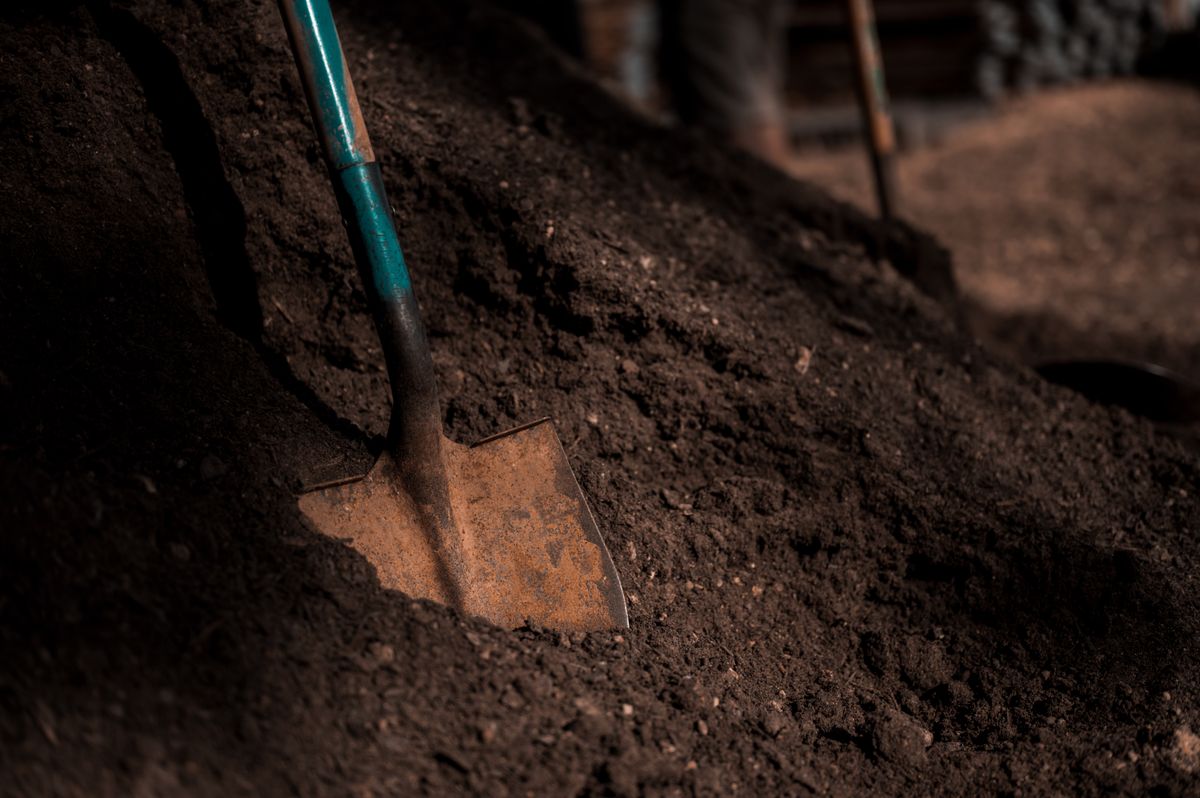
Fill dirt is subsoil used to build volume. It raises a grade but does not grow grass well on its own. Topsoil is screened, carries organic content, and feeds roots. Sand drains fast and suits specific uses like under paths. A sod project usually sets fill underneath, with topsoil in the top few inches where the sod sits.
The common mistake is ordering topsoil for everything. Topsoil is pricier than fill, and using it to raise a grade several inches wastes money and still packs down. Fill goes under, topsoil goes on top. Our rundown of the best sod types for New Orleans lawns covers which varieties sit best on each soil profile.
Why does fill in New Orleans clay keep settling?
Uncompacted fill in New Orleans clay commonly keeps moving after the trucks leave. Rain pushes fine particles down, dry stretches shrink the clay, and a yard that was flat on install day often develops sinks in the first season. A wavy, rolling surface usually points to fill that skipped the firming step.
The usual fix is to place fill in 6 to 8 inch lifts, firming each layer with a plate compactor or hand tamper before the next one goes down. Done that way, the yard still settles, but noticeably less than fill that was dumped and left loose. For an existing lawn where fill has already dropped, the yard-prep walkthrough covers the steps.
What does the full fill-and-sod process look like?
The crew starts by stripping or killing the existing lawn so the fill sits on bare soil instead of grass that will decompose and sink. Low spots get filled in lifts with each lift firmed. The yard is graded to shed water away from structures, then capped with a thin layer of screened topsoil where the sod will sit.
Fresh rolls go down edge to edge with the joints staggered, and the whole yard is rolled. Water goes on the same day. The best time to install sod in New Orleans guide covers which months root fastest, which matters more after a fill job because the sod has new material to catch into.
How does fill change the cost of a new sod install?
Fill adds two line items to a sod quote: the dirt and the labor to move and grade it. Dirt is sold by the cubic yard, and prices move with fuel and demand. Labor depends on access, how far the fill moves from the truck, and whether the crew is spreading by hand or equipment.
Fill can also save money later. A properly firmed and graded base tends to hold its shape, which can mean no touch-up topdressing in year two and no partial resod where a sink pulled the sod apart. For a plain cost comparison on the sod half, the sod replacement cost breakdown walks through the dollars.
Frequently Asked Questions
Can I buy the fill and lay the sod myself?
You can. The pieces that catch homeowners are firming between lifts and getting the grade correct around the house. Both are fixable in week one and expensive to fix in year two. Call us at (504) 608-3321 if you want a second set of eyes on the grading before you order sod.
Will the sod look different where new fill is underneath?
In the first six weeks, yes, slightly. New fill holds moisture differently than the surrounding soil, and sod on top sometimes greens up a little faster or slower. The difference usually blends out as the lawn establishes.
Can we fill around a slab or foundation?
Yes, within limits. Fill against a slab must stop below the siding or weep screed, and in flood-aware parts of New Orleans the finished grade near the house is often controlled by code. If the project is close to a slab, flag it and have a qualified inspector or your builder confirm the elevation before the dirt lands.
Should I pay for soil testing first?
For a residential yard, usually no. For a sod project at a commercial site or a new build, a soil test tells you if pH will fight the grass variety you picked. Your parish extension office or the LSU AgCenter can run a soil test; cost and turnaround depend on the test type and the season.
Ready to talk about a fill and resod together?
If your yard has sinks, slopes or old low spots that keep pulling the lawn apart, a sod-plus-fill visit is usually a cleaner job than resodding first and fixing the grade a year later. Send us the square footage, a photo of the worst area, and the current grass variety and we will come back with a quote.