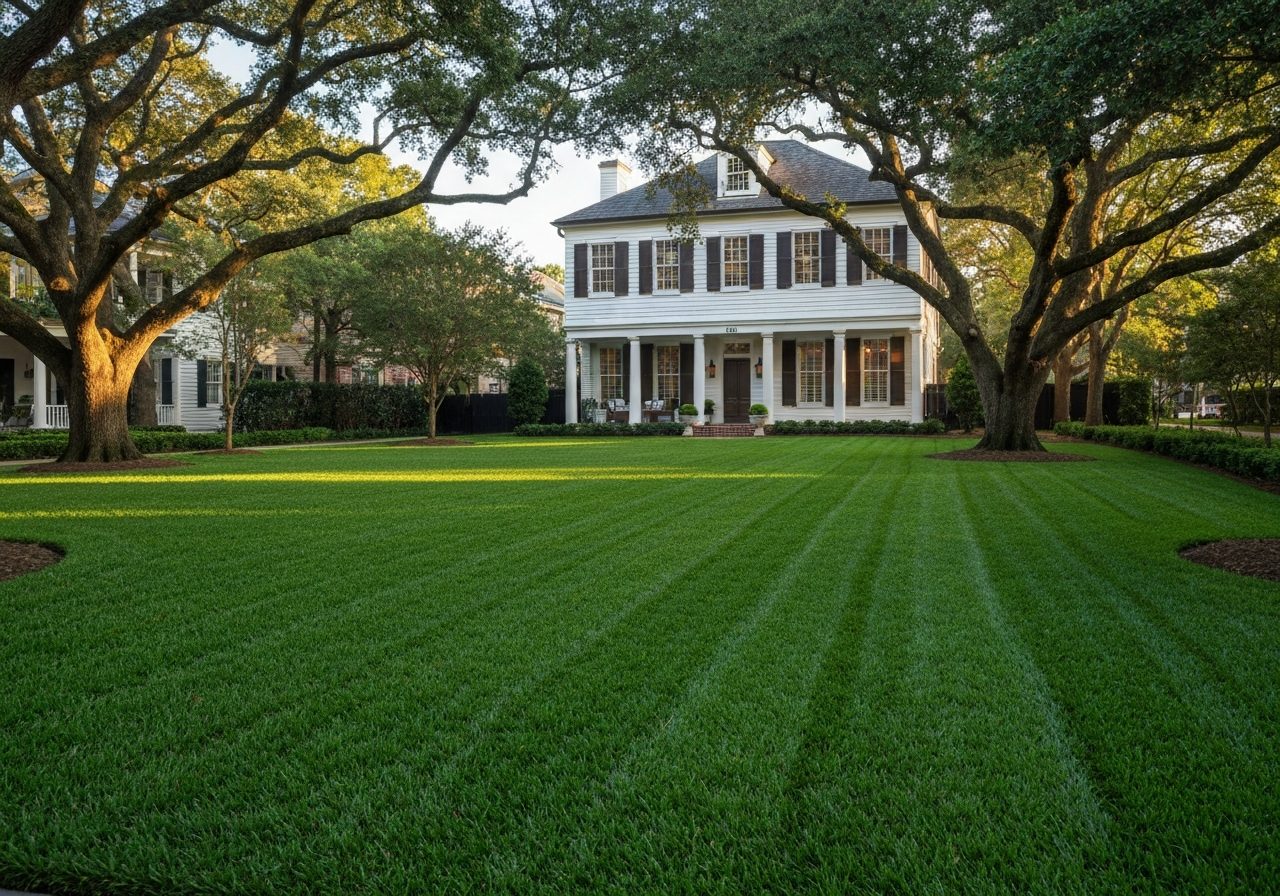
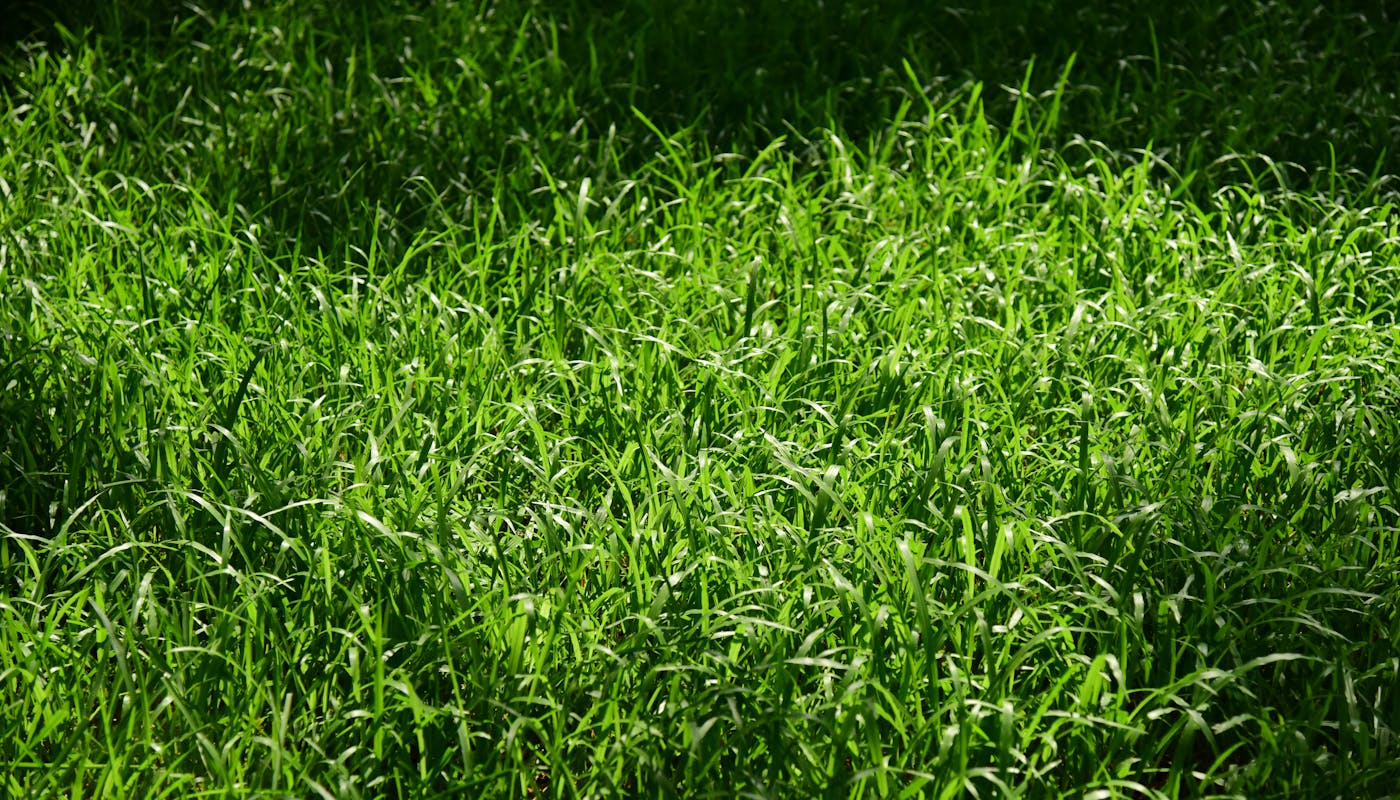
Zoysia is not one grass. The lawn varieties sold under that name fall into three groups and dozens of named cultivars, and the differences between them are big enough that two lawns labeled “zoysia” can look and behave nothing alike. A Zeon lawn under live oaks and an Empire lawn in open sun are different products with different care needs and different price points.
This guide compares the zoysia varieties homeowners actually shop between, including the head-to-head matchups people ask about most: Zeon against Emerald, Zenith against Emerald, Empire against Zeon, and Innovation against Zeon. At the end you will find which ones we stock and install here in southeast Louisiana at Big Easy Sod, and why the local climate narrows the field.
What Are the Three Types of Zoysia Grass?
Almost every zoysia cultivar sold for lawns traces back to one of three groups, or to a cross between them. Knowing which species a variety belongs to tells you most of what you need to know before you read a single spec sheet.
Zoysia japonica is the coarsest and most cold-hardy group. Blades are wider, the grass establishes faster, and it handles freezes that would damage finer types. Meyer, Empire, JaMur, Palisades, El Toro, and Crowne are japonica. Zenith is a seeded japonica.
Zoysia matrella, sometimes sold as Manila grass, is the fine-textured, shade-tolerant group. It makes the most refined lawn of the three, grows more slowly, and is less forgiving of cold. Diamond, Cavalier, Cashmere, and Zeon are matrella.
Interspecific hybrids cross japonica with matrella or pacifica to combine fine texture with more resilience. Emerald, Victoria, and DeAnza sit here. These are the varieties most often marketed as premium lawn zoysia.
The practical rule: japonica gives you toughness and speed, matrella gives you refinement and shade tolerance, and the hybrids try to give you both. Everything below is a variation on that trade-off.
Zoysia Variety Comparison Chart
| Variety | Species | Blade Texture | Shade Tolerance | Cold Hardiness | Established By |
|---|---|---|---|---|---|
| Zeon | Matrella | Very fine | Excellent, tolerates ~3 to 4 hours sun | Moderate | Sod only |
| Emerald | Hybrid | Very fine | Good, wants more sun than Zeon | Moderate | Sod only |
| Zenith | Japonica | Medium | Moderate | Very good | Seed or sod |
| Empire | Japonica | Coarse | Moderate | Very good | Sod only |
| JaMur | Japonica | Medium | Moderate | Very good | Sod only |
| Innovation | Japonica | Medium coarse | Average | Excellent | Sod only |
| Meyer | Japonica | Coarse | Moderate | Excellent | Sod or plugs |
| Diamond | Matrella | Ultra fine | Excellent | Low | Sod only |
Zeon Zoysia vs Emerald Zoysia: Which Fine-Bladed Zoysia Wins?
This is the closest matchup on the list. Zeon is a fine-bladed matrella and Emerald is a fine-bladed interspecific hybrid, and both give you dark green color and a tight, low-growing lawn. On a pallet the difference is subtle.
The separation is shade and thatch. Zeon generally holds density in less direct sun than Emerald does, in the range of 3 to 4 hours on a typical lot, while Emerald wants more light to stay thick. Site conditions move those numbers, so treat them as guidance rather than a guarantee. In a New Orleans yard ringed by live oaks and crape myrtles, that margin often decides whether the lawn thins out under the canopy by August.
Emerald’s second drawback is thatch. It builds a spongy layer faster than Zeon, which means more frequent aeration and dethatching to keep it healthy. The LSU AgCenter notes Emerald carries good salt and shade tolerance, which matters on properties closer to the lake and the coast.
Verdict: Zeon for shaded or mixed-light yards and for owners who want lower maintenance. Emerald if you want the same refined look, have more open sun, and are near salt exposure.
Zenith Zoysia vs Emerald Zoysia: Seeded Value or Premium Hybrid?
These two are rarely cross-shopped on looks, because they are not in the same class. Zenith is a seeded japonica with a medium blade. Emerald is a fine-bladed hybrid available only as sod.
Zenith’s appeal is cost and cold hardiness. Because it can be seeded, it is the cheapest way to put zoysia on a large area, and it carries the japonica group’s freeze tolerance. In a 2008 LSU AgCenter trial in Baton Rouge, Zenith established well and showed good promise for Louisiana conditions.
The trade-off is finish quality. Seeded japonica cultivars produce good lawns rather than great ones, and Zenith will never match Emerald’s density or fine texture. Seeding also means a slow, weedy establishment window instead of an instant lawn.
Verdict: Zenith when budget and acreage drive the decision. Emerald when appearance is the point and you want the lawn finished the day it is laid.
Empire Zoysia vs Zeon Zoysia: Durability or Refinement?
Empire is a japonica with a noticeably coarser blade, bred for heat and hard conditions. Zeon is the fine-bladed matrella. This matchup is genuinely about what the lawn is for.
Empire spreads aggressively, recovers from traffic well, and as a japonica it generally takes hard cold better than a matrella like Zeon. For a yard with dogs, kids, and full sun, that durability is usually worth more than blade width.
Zeon wins on appearance and shade, full stop. It is the variety people choose when they want the lawn to look manicured without mowing it like a golf green.
Verdict: Empire for high-traffic, full-sun, budget-conscious installs. Zeon for shaded lots and for owners who care how the lawn photographs.
Innovation Zoysia vs Zeon Zoysia: Does the Newer Cultivar Beat the Standard?
Innovation is a newer japonica released jointly by the Kansas State and Texas A&M breeding programs, bred primarily for cold hardiness in the transition zone. It gets cross-shopped against Zeon because both are sold as premium lawn zoysia.
It delivers on cold. Innovation has shown cold hardiness on par with Meyer, the benchmark for cold-hardy zoysia since its 1952 release. It greens up earlier in spring, holds color later into fall, and recovers from wear faster than Zeon does.
Where it gives ground is texture and shade. Innovation is medium coarse with an emerald cast, not fine bladed, and its shade tolerance is average rather than exceptional. Those are exactly the two traits that make Zeon worth its price in southeast Louisiana.
Verdict: Innovation is the better grass in the transition zone, where winter kill is a live risk. In the New Orleans metro, where hard freezes are the exception, the cold-hardiness advantage buys you little and Zeon’s shade performance matters more. This is a case where the newer cultivar is not automatically the better local choice.
Zenith Zoysia vs Empire Zoysia: Two Ways to Buy Japonica
Both are japonica, both are cold-hardy, and both are coarser than the hybrids. The decision comes down to how you want to install it.
Zenith is seeded, cheaper per square foot, and slower to a finished lawn. Empire is sod only, more expensive up front, denser, and gives you a finished-looking lawn on install day, though it still needs rooting time before heavy use. Empire also holds a more uniform appearance over time, because sod starts as a single genetic clone while seeded stands vary.
Verdict: If you can wait a season and want to cover ground cheaply, Zenith. If you want the lawn to exist on install day, Empire.
Which Zoysia Varieties Grow Best in New Orleans?
Southeast Louisiana filters this list hard. We sit in a subtropical climate with roughly 62 inches of rain a year, clay-heavy soil that drains slowly, mature tree canopy across most established neighborhoods, and winters mild enough that extreme cold hardiness is rarely the deciding factor.
That combination rewards shade tolerance and disease resistance and penalizes varieties bred mainly for freeze survival. It is also why cultivars that dominate transition-zone recommendations, Innovation and Meyer among them, are not automatically the right call here.
We stock and install three zoysia varieties chosen against those conditions:
- Zeon is our default recommendation for residential New Orleans yards. Fine bladed, dense, and the best shade adaptability of any zoysia we carry, which matters under live oaks.
- JaMur is the Northshore answer. Medium blade with better cold hardiness than Zeon, which suits Covington, Mandeville, and Madisonville properties that see colder winter nights than the city does.
- Empire is the workhorse. Coarser and less refined than Zeon, but very cold tolerant, an aggressive spreader, and a strong performer in difficult sites.
Drainage deserves its own warning. Zoysia of any variety will decline where water stands, and clay soil that holds moisture after a heavy rain is a common cause of thin patches. If part of your yard stays wet, that section needs grading or drainage work before sod goes down, not a different cultivar. Our guide to installing sod in flood-prone yards covers how we handle those lots.
How Do You Choose the Right Zoysia Variety for Your Yard?
Work through these in order. The first question usually settles it.
Measure your sun. Track the shadiest part of the lawn across a full day in midsummer. Below about 4 hours of direct sun, the japonica types tend to thin out and a matrella like Zeon is the safer pick. Canopy density and drainage matter too, and heavy shade can defeat any zoysia. Six or more hours opens the whole list.
Decide how the lawn gets used. Dogs and children argue for Empire or JaMur. An ornamental front yard argues for Zeon.
Check your drainage. Slow-draining clay needs correcting first. No zoysia cultivar tolerates standing water for long.
Set the budget honestly. Fine-bladed varieties like Zeon and Emerald cost more per pallet than the japonica types. Our breakdown of what sod installation costs in New Orleans shows how variety, yard size, and prep work move the number.
Be realistic about maintenance. Zoysia generally needs less water than St. Augustine once rooted, though soil and irrigation setup affect that, and it is not maintenance free, and the finer varieties want a sharper mower and a consistent schedule. If you are weighing the two species against each other, our comparison of zoysia and St. Augustine for New Orleans lawns lays out the differences.
What Happens After the Zoysia Goes Down?
Variety selection is the first decision, not the last one. Zoysia is slower to knit than St. Augustine, and the first month sets whether the lawn establishes evenly. New sod typically roots in 2 to 6 weeks in Louisiana conditions, and watering during that window is the single biggest factor in the outcome. Our week-by-week schedule for watering a zoysia lawn covers frequency and depth, and how zoysia sod is planted and maintained walks through the full establishment process.
Once established, zoysia rewards consistency: correct mowing height for the variety, fertilization timed to the growing season, and aeration when thatch builds. Coming out of dormancy each spring, expect a slower green-up than your neighbor’s St. Augustine. That is normal for the species, not a sign the lawn failed.
Get Zoysia Installed in Greater New Orleans
We deliver and install zoysia sod across New Orleans, Metairie, Kenner, Gretna, Slidell, and the Northshore. Our team will walk the yard, measure the sun through the canopy, check how the soil drains, and tell you which of the three varieties we carry actually fits the site, including when the honest answer is that a different grass species suits the lot better.
See current options on our zoysia grass sod page, read what is involved in professional sod installation, or ask about ongoing sod maintenance and lawn care once the lawn is in.
Call (504) 608-3321 or request a free quote and we will get you a measured estimate for your yard.
Frequently Asked Questions
What is the best Zoysia grass for New Orleans?
Zeon is the best fit for most New Orleans residential yards, because it holds density in roughly 3 to 4 hours of direct sun and the city’s mature tree canopy shades a large share of established lawns. For Northshore properties in Covington, Mandeville, and Madisonville that see colder winter nights, JaMur offers better cold hardiness than Zeon. Empire is the choice for high-traffic, full-sun yards where durability matters more than blade texture.
What are the three types of Zoysia grass?
Zoysia japonica is the coarse, cold-hardy group and includes Meyer, Empire, JaMur, and Palisades. Zoysia matrella is the fine-textured, shade-tolerant group and includes Diamond, Cavalier, and Cashmere. Interspecific hybrids cross the two and include Emerald and Zeon, which combine fine texture with better resilience.
Which Zoysia variety is the most shade tolerant?
Among widely available lawn varieties, Zeon has the strongest shade performance and holds density in about 3 to 4 hours of direct sun. Emerald is close behind but generally wants 4 to 5 hours. The matrella types such as Diamond are also highly shade tolerant but are less cold hardy and are more often used on golf courses than home lawns.
Is Innovation Zoysia better than Zeon?
Innovation is more cold hardy than Zeon, greens up earlier in spring, and recovers from wear faster, which makes it the stronger choice in transition-zone climates where winter kill is a real risk. In the New Orleans metro that advantage matters little, and Zeon’s finer blade and better shade tolerance are worth more on a typical local lot.
How does Zoysia compare to St. Augustine for New Orleans lawns?
Zoysia is denser, more wear tolerant, and generally needs less water once established, and its finer varieties look more manicured. St. Augustine establishes faster, greens up earlier in spring, and handles deep shade in some situations. Zoysia is slower to knit after installation, so it asks for more patience in the first month.
Can you grow Zoysia from seed in Louisiana?
Only some varieties. Zenith is a seeded japonica and is the practical option for covering large areas cheaply. The fine-bladed hybrids that most homeowners want, Zeon and Emerald among them, are vegetative and are available only as sod. Seeding also means a slow establishment window with more weed pressure than laying sod.
Does Zoysia grass go dormant in New Orleans winters?
Yes. Zoysia is a warm-season grass and goes dormant and straw colored once soil temperatures drop, usually from late fall until early spring. Dormancy is not damage. Zoysia is also slower to green up in spring than St. Augustine, so a lawn that still looks brown in March is typically on schedule rather than failing.
Does Big Easy Sod carry multiple Zoysia varieties for New Orleans installations?
Yes. We stock Zeon, JaMur, and Empire, which covers shaded city lots, colder Northshore properties, and high-traffic full-sun yards respectively. We will measure the sun and check drainage on site before recommending one, and we will say so if a different grass species is the better answer for your lot.