
Quick Summary
St. Augustine Decline is a viral disease caused by Panicum mosaic virus, so no fungicide will touch it and no amount of fertilizer will cure it. It shows first as a faint mottling on the blades that is easily mistaken for mite damage, then as a general yellowing that looks like iron deficiency. The LSU AgCenter names Floratam, Floralawn, Raleigh and Seville as resistant varieties, and management rests on resistant varieties plus practices that keep growth vigorous.
Last Updated: September 2026
On this page
- What is St. Augustine Decline, and why is it not a fungus?
- What does SAD look like on the blade?
- How does SAD spread through a lawn?
- Why do fungicide and fertilizer both fail on SAD?
- Which St. Augustine cultivars resist SAD?
- When does replacement become the answer?
- How do you avoid bringing SAD back with new sod?
- Frequently Asked Questions
A St. Augustine lawn that yellows, thins and keeps failing to respond to treatment is usually assumed to have a fungus or a feeding problem. Where both have been tried and neither held, St. Augustine Decline is worth ruling in or out, because it behaves differently from everything else that troubles this grass.
Big Easy Sod replaces failed lawns across Greater New Orleans, and this is one of the few lawn problems where the LSU AgCenter records that removing and replacing the turf may be necessary. The detail below follows LSU AgCenter guidance for Louisiana.
What is St. Augustine Decline, and why is it not a fungus?
SAD is a viral disease caused by Panicum mosaic virus, which the LSU AgCenter records as affecting St. Augustine grass in Louisiana and across the Gulf Coast. The same virus causes centipede mosaic. Because it is viral rather than fungal, nothing sprayed on the lawn will cure it.
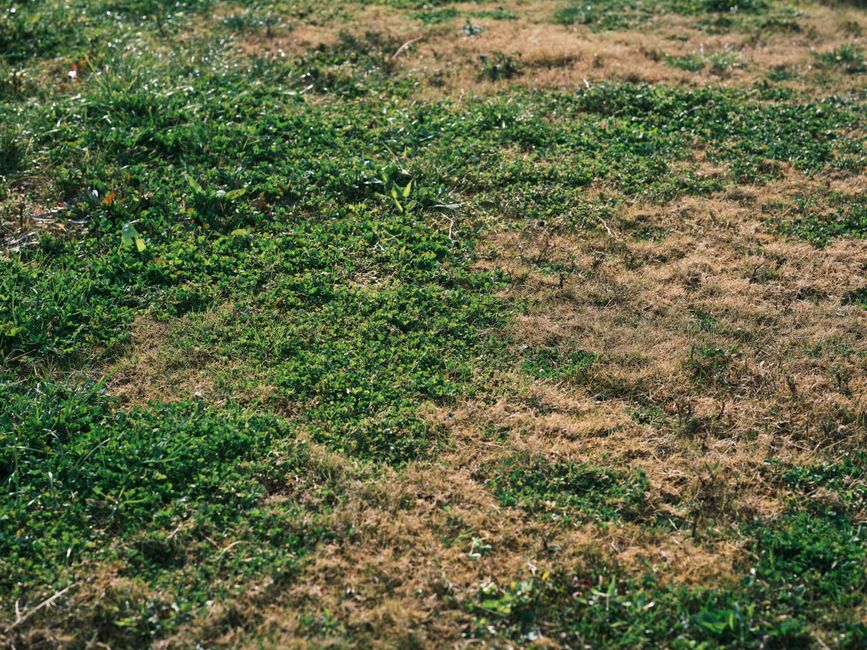
That distinction is the whole reason this disease frustrates people. Fungal problems in this climate often respond to a fungicide, a watering change or a mowing change, so when a lawn ignores all three the natural assumption is that the wrong product was used. With SAD the products were never going to work.
The LSU AgCenter is also clear that once plants are infected there is no cure, though good growing practice can mask or reduce the severity. Infected turf is additionally more vulnerable to other diseases and to ordinary stress, which is why a SAD lawn often presents as several problems at once.
What does SAD look like on the blade?
It starts as chlorotic mottling or stippling on the leaf blades, mild enough that it often goes unnoticed or gets blamed on mite feeding. As it progresses the blades take on a general yellowing that looks convincingly like an iron or other nutrient deficiency.
Look closely at individual blades rather than at the lawn from standing height. Mottling means irregular pale flecks and streaks scattered through the green, not a uniform pale color and not the defined patches that fungal problems more often produce. A hand lens helps more than a photograph here.
Later the stand simply loses vigor and thins, and weeds or other grasses move into the gaps. The LSU AgCenter notes this deterioration is particularly true of turf in shaded areas, so the thinning tends to show up worst where the lawn is shaded. Our guide to what makes St. Augustine turn brown around New Orleans covers the more common causes worth eliminating first.
How does SAD spread through a lawn?
Two routes bring it in: infected sod at installation, or contaminated equipment. Once it is established, the LSU AgCenter records that it moves only by mechanical means, through mowing, edging and other practices that carry infected sap from diseased plants to healthy ones.
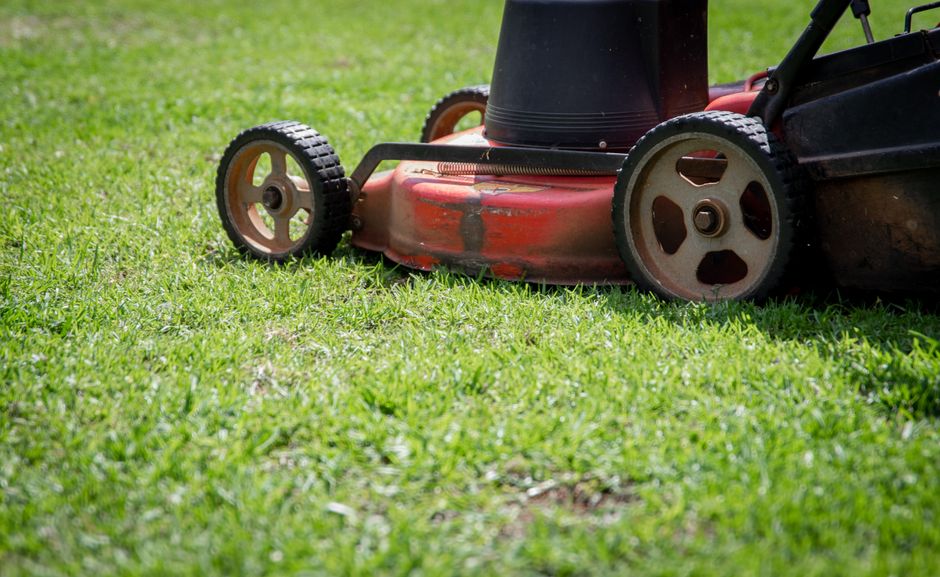
Transmission being mechanical only is unusual, and genuinely useful to know. It means the spread of SAD across a lawn is largely a consequence of how the lawn is maintained, and that the mower is the main thing moving it.
The timing detail matters too. The LSU AgCenter records that sap transmission is generally greater when the turf is wet, so mowing and edging should be restricted to periods when the grass is dry. On a lawn already showing symptoms, that single change helps slow the spread and costs nothing.
Why do fungicide and fertilizer both fail on SAD?
Fungicide fails because there is no fungus to kill. Fertilizer fails for a subtler reason: the yellowing mimics a nutrient deficiency, so feeding looks like the obvious answer, and it greens the lawn up briefly without touching the virus that is causing the decline.
That brief improvement is what keeps people spending. A feed masks the symptom for a while, the lawn slides back, and the conclusion drawn is that it needs feeding more often rather than that the diagnosis was wrong. Iron applications do the same thing for the same reason.
Good cultural practice is still worth maintaining, because the LSU AgCenter notes it helps mask or reduce severity and infected turf is more susceptible to other stresses. The honest framing is that it buys condition and time, not recovery. Our guide to the lawn diseases that actually are fungal around New Orleans covers the ones that do respond to treatment.
Which St. Augustine cultivars resist SAD?
The LSU AgCenter names Floratam, Floralawn, Raleigh and Seville as resistant varieties suitable for sprigging into affected areas. Resistant varieties and good cultural practice are the whole management strategy, because no chemical controls the virus and cultural practice only masks the symptoms rather than removing the cause.
There is a trade-off worth raising before anyone orders. Palmetto is the cultivar usually reached for in shaded New Orleans yards, and it does not appear on that LSU list of resistant varieties. That is not the same as being susceptible, and it is a question to put to the supplier rather than an assumption to act on.
Where a yard is both shaded and has confirmed SAD, those two requirements pull in different directions, and the choice is worth making deliberately rather than by default. Our comparison of Floratam, Palmetto and Raleigh for New Orleans yards sets out what each one trades away, and the St. Augustine sod page lists what we can source.
When does replacement become the answer?
When the stand has thinned far enough that weeds are filling it, replacement is the realistic route. The LSU AgCenter notes that affected areas can instead be sprigged with a resistant variety, which gradually outcompetes and replaces the weaker infected grass without a full tear out.
Those are genuinely two different jobs with different costs. Sprigging a resistant variety into a partly affected lawn is the slower route and asks for patience. Replacing the lawn in full is the quicker route, and our full replacement service is the sensible call once most of the lawn is gone.
Before committing to either, it is worth confirming the diagnosis, because several cheaper problems look similar early on. Our guide to reviving a thinning St. Augustine lawn works through the recoverable causes, and sod replacement and reseeding covers the options once it is clear the lawn will not come back.
How do you avoid bringing SAD back with new sod?
Choose a resistant variety, and clean equipment between an infected lawn and a new one. Mow when the grass is dry, since the LSU AgCenter records that sap transmission is generally greater on wet turf, and keep the mower off the old area after the new sod goes down.
The equipment point extends past your own mower. A crew that cuts several lawns in a day carries sap between them, so it is a fair question to ask whoever maintains the lawn, and a fair thing to mention if a neighboring yard is visibly affected.
The other half is the sod itself, since infected sod is one of the two documented introduction routes. Ask which cultivar is being delivered rather than accepting St. Augustine as a sufficient description, and note that the wider problems affecting this grass are covered in our guide to common St. Augustine problems and how to solve them.
Frequently Asked Questions
Can St. Augustine Decline be cured?
No. The LSU AgCenter states that once plants are infected there is no cure. Sound growing practice can mask or reduce the severity, but the virus remains, and the LSU AgCenter records that affected turf eventually dies out.
What does SAD look like compared with a fungal disease?
SAD produces irregular yellow mottling and stippling scattered through the blades, then a general yellowing. Fungal diseases here tend to produce defined patches or lesions with recognizable edges, which is why blade level inspection separates them.
Will fungicide help St. Augustine Decline?
No. SAD is caused by a virus, and the LSU AgCenter states plainly that no chemicals can control it. Management depends on resistant varieties and on cultural practices that keep growth vigorous.
Which St. Augustine varieties are resistant to SAD?
Floratam, Floralawn, Raleigh and Seville, per the LSU AgCenter. Affected areas can be sprigged with one of these, and the resistant variety will gradually outcompete and replace the infected grass.
Can SAD spread to my neighbor’s lawn?
Only mechanically. It has no insect vector, so it travels on shared mowing and edging equipment rather than through the air or the soil, which makes equipment hygiene the practical control.
Does SAD affect any grass other than St. Augustine?
The same virus causes centipede mosaic in centipede grass. Those are the two grasses the LSU AgCenter names, so they are the ones to watch in a mixed lawn.
Get the diagnosis settled before you spend anything
Several cheaper problems look like SAD in its early stages, and the treatments for those are worth exhausting first. If the yellowing has ignored both fungicide and feeding, a close look at the blades is the next step. Call (504) 608-3321, or send photographs of the affected blades and the wider lawn and we will tell you whether it is worth replacing.
